Videos

2 experts are featured in this series

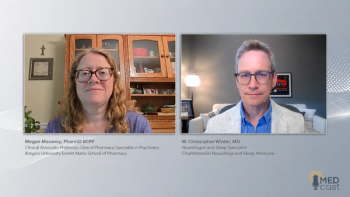
Maroney outlines the key safety considerations pharmacists and clinicians should weigh when prescribing solriamfetol for EDS in narcolepsy or OSA. She highlights the drug's favorable interaction profile—since it isn't a substrate for major CYP enzymes, unlike modafinil, armodafinil, and pitolisant—making it a practical option for patients managing comorbidities on polypharmacy regimens.

4 experts are featured in this series

Al-Ola Abdallah outlined the key adverse events associated with bispecific antibodies, noting that while CRS occurs in over 70% of patients, the majority of cases are grade 1 or 2 and therefore manageable in outpatient settings with appropriate infrastructure, while ICANS is less commonly observed at severe grades compared with CAR T-Cell therapy.

4 experts are featured in this series

Zahra Mahmoudjafari explained that REMS programs are a Food and Drug Administration (FDA) mechanism designed to ensure that the safety risks associated with specific therapies are clearly communicated to prescribers, healthcare facilities, pharmacies, and patients, noting that each REMS program is unique and that BCMA-directed therapies currently carry REMS requirements for bispecific antibodies due to cytokine release syndrome (CRS) and neurotoxicity risks, and for belantamab mafodotin due to ocular toxicity, while the REMS programs previously required for CAR T-Cell therapies were recently removed.


4 experts are featured in this series

Zahra Mahmoudjafari noted that while patients with high disease burden, a history of severe cytokine release syndrome (CRS) or neurotoxicity, poor performance status, or limited caregiver support were historically considered less suitable for community-based administration, significant progress has been made as community centers develop strong patient selection criteria, outpatient roadmaps, and escalation strategies, often in partnership with academic centers for initial step-up dosing.