
Opinion|Videos|August 6, 2026
Adverse Event Management for Bispecific Antibodies and CAR T-Cell Therapies in Relapsed/Refractory Multiple Myeloma
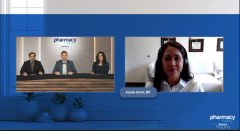
Al-Ola Abdallah outlined the key adverse events associated with bispecific antibodies, noting that while CRS occurs in over 70% of patients, the majority of cases are grade 1 or 2 and therefore manageable in outpatient settings with appropriate infrastructure, while ICANS is less commonly observed at severe grades compared with CAR T-Cell therapy.
Advertisement
Episodes in this series
In this episode, 'Adverse Event Management for Bispecific Antibodies and CAR T-Cell Therapies in Relapsed/Refractory Multiple Myeloma,' the expert oncologists and oncology pharmacists explored the following questions:
What are the key adverse events associated with the bispecific antibodies?
Describe the burden that cytokine release syndrome (CRS) and immune effector cell-associated neurotoxicity syndrome (ICANS) place on patients and healthcare settings. What do you do at your institution to improve patient outcomes?
What are the common side effects observed with CAR T-Cell therapies?
How are they monitored for and managed?
Al-Ola Abdallah outlined the key adverse events associated with bispecific antibodies, noting that while CRS occurs in over 70% of patients, the majority of cases are grade 1 or 2 and therefore manageable in outpatient settings with appropriate infrastructure, while ICANS is less commonly observed at severe grades compared with CAR T-Cell therapy. He emphasized the critical importance of aggressive supportive care given that grade 3 and 4 infection rates can reach 70%, including prompt hospitalization for fever, growth factor support for neutropenia, prophylactic antibiotics, and intravenous immunoglobulin (IVIG) for hypogammaglobulinemia, which he noted is frequently seen across all three B-cell maturation antigen (BCMA)-directed therapy classes. Dr. Abdallah then reviewed the adverse event profile of CAR T-Cell therapies, describing a generally similar but more severe toxicity profile compared with bispecifics given the nature of single-infusion administration, and highlighted prolonged cytopenia as a particular challenge where stem cell boost may offer benefit, as well as rare but emerging concerns including delayed neurological toxicity with Parkinsonian features and enterocolitis that warrant close monitoring at high-volume centers.
Throughout the conversation, the experts provided a comprehensive reflection on the field and the factors that may shape how clinicians approach care moving forward.
In the next episode, 'Pharmacist-Led Patient Education, Unmet Needs, and Overcoming Barriers in BCMA-Targeted Therapy for Relapsed/Refractory Multiple Myeloma,' panelists continue their discussion on relapsed/refractory multiple myeloma and highlight best practices for pharmacists in educating patients receiving BCMA-targeted therapies, the remaining unmet needs for successful utilization of these agents, and how pharmacists can serve at the front line in overcoming access and education barriers.
Advertisement
Related to this article
The all-oral combination is supported by phase 3 LITESPARK-011 data showing improved progression-free survival compared with cabozantinib.
The FDA approved lirafugratinib for adults with previously treated, advanced cholangiocarcinoma harboring an FGFR2 fusion or other rearrangement after the REFOCUS trial showed a 46% ORR.

Isatuximab plus Iberdomide maintenance helps MRD-positive myeloma patients turn MRD-negative after transplant, with manageable safety.
Insulin efsitora alfa-gobe (Onswik; Eli Lilly) is designed to deliver steady basal insulin levels over a full 7-day duration.
Vallerie McLaughlin, MD, explains why the ERS update strongly recommends sotatercept for patients with pulmonary arterial hypertension (PAH) who don't reach low-risk status on initial therapy.

Long-term CASSIOPEIA Registry results show that daratumumab maintenance supports sustained minimal residual disease negativity in transplant-eligible patients with newly diagnosed multiple myeloma.

Imaging data from the CONTENTed study suggest the type 2 inflammation that drives severe asthma may affect more than the airways.

Infection prevention during bispecific antibody treatment requires pharmacists to coordinate baseline screening, antimicrobial prophylaxis, immunoglobulin monitoring, vaccination, and rapid evaluation of suspected infections.
Advertisement
Advertisement
Trending on Pharmacy Times
1
After 180 Years, Multiple Myeloma Gets a Definition of Cure
2
Severe Asthma's Effects May Extend Beyond the Lungs, Brain Imaging Study Suggests
3
Alcohol and GLP-1 Therapy: Key Counseling Points for Pharmacists
4
Psilocybin-Assisted Therapy for AUD: Emerging Evidence, Clinical and Cost Implications, and Treatment Gaps
5