
Christina O'Connor, PharmD, advises at least 2 g ceftriaxone every 24 hours and considering alternatives to ertapenem in select critically ill patients.
Christina O'Connor, PharmD, advises at least 2 g ceftriaxone every 24 hours and considering alternatives to ertapenem in select critically ill patients.

With AI handling manual calls and clinical notes, pharmacists and technicians can refocus on getting patients to care and keeping them on therapy.

At issue is whether faster clearance of unbound drug shortens free time above the minimum inhibitory concentration, a question with substantial literature and strong opinions on both sides.
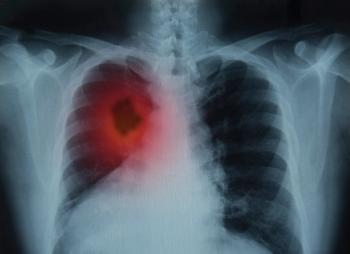
Sita Bhatt, PharmD, explains how new lung cancer therapies and oral oncology programs are expanding pharmacists’ roles in education, toxicity management, and access for underserved patients.

In part 3 of this interview, Michael Mina, MD, PhD, discusses VYD2311’s variant-resistant design and the role pharmacists may play in explaining emerging immunization options.
Jeff Goff, RPh, MS, walks through how UPMC has operationalized IV iron therapy from screening through infusion, and outlines how his team approaches hypophosphatemia monitoring and patient selection in light of the FDA's boxed warning.
Justin Arnall, Breanna Taylor, and Jeff Goff weigh in on hypophosphatemia risk across IV iron formulations, strategies for managing infusion reactions, and whether generic versus branded products affect reaction rates in practice.
Justin Arnall, Breanna Taylor, and Jeff Goff break down how dosing schedules, infusion chair time, and preparation complexity factor into product selection and infusion center capacity, and how pharmacists can help institutions deliver IV iron more efficiently.
Justin Arnall, Breanna Taylor, and Jeff Goff examine how step therapy, prior authorizations, and logistical hurdles delay IV iron treatment, and where pharmacists can intervene to secure overrides and streamline access for patients.
The panel discusses when cystatin C–based eGFR equations can improve kidney function estimates for drug dosing in older adults and patients with obesity, and why clinical judgment and follow-up remain essential.
The panel explains how to weigh safety and efficacy near kidney function dosing thresholds and how pharmacists can work with informatics teams to build BSA-adjusted estimated glomerular filtration rate (eGFR) into the electronic health record (EHR).

In an interview with Pharmacy Times, Victoria P. Werth, MD, discusses the 52-week AMETHYST findings for investigational litifilimab, meaningful improvement in cutaneous lupus, and when persistent symptoms warrant specialist reassessment.

In an interview with Pharmacy Times, Ali A. Habib, MD, explains investigational cemdisiran’s mechanism and every-12-week dosing schedule, highlighting pharmacist responsibilities related to vaccination, infection-risk counseling, and potential use in generalized myasthenia gravis.
A panel of pharmacists explain how to bridge estimated creatinine clearance and the race-free CKD-EPI eGFR in dosing decisions while the field moves toward contemporary kidney function equations.

Heart failure with preserved ejection fraction (HFpEF) is often missed in primary care, and pharmacists can close care gaps by optimizing GDMT, including the nonsteroidal MRA finerenone.

Moving medical cannabis to Schedule III may expand research and access, but pharmacists need to be ready to counsel patients on drug interactions, cannabis use disorder, and psychiatric risks.

In an interview with Pharmacy Times, Ali A. Habib, MD, discusses hospitalization findings from the NIMBLE trial of investigational cemdisiran in generalized myasthenia gravis and explains why small event numbers require cautious interpretation.

In part 2 of this interview, Michael Mina, MD, PhD, discusses LIBERTY study data showing that VYD2311 boosted neutralizing activity without interfering with mRNA COVID-19 vaccine response.
Justin Arnall, PharmD, BCOP, Breanna Taylor, PharmD, BCOP, and Jeff Goff, RPh, MS, discuss how expanding IV iron indications across cardiology, oncology, and CKD are reshaping the pharmacist's role in formulary strategy, product stewardship, and patient identification.

In an interview with Pharmacy Times, Christine Brown, PhD, and John Williams, PhD, discuss how an investigational meditope-enabled CAR T-cell platform could offer control through adapter dosing and the pharmacist’s role in its clinical development.

When even federal guidance sparks debate, an expert advises pharmacists to consider the source and point patients to long-standing healthful eating.

In an interview with Pharmacy Times, Christine Brown, PhD, and John Williams, PhD, discuss preclinical research on a meditope-enabled platform designed to redirect CAR T cells toward additional tumor targets and support their expansion after infusion.
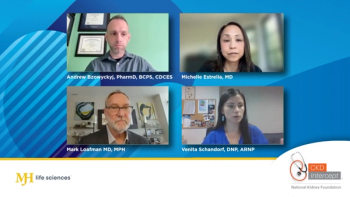
Panelists explain how health systems can use the National Kidney Foundation’s CKDintercept initiative to build interdisciplinary, value-based kidney care, starting with small patient groups and setting time-bound treatment goals.
The cardiovascular-kidney-metabolic (CKM) framework can replace siloed care with comanagement across specialties, centered on an engaged patient and supported by making fuller use of clinical pharmacists.
The cardiovascular-kidney-metabolic framework puts the urine albumin-to-creatinine ratio at the center of risk stratification, so that a positive result leads to earlier treatment rather than just being documented.
A panel of 4 health care professionals describe how their health systems adopted the race-free 2021 CKD-EPI equations.
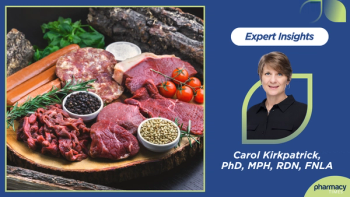
From red meat to 'big and fluffy' LDL, a lipid expert unpacks fat and cholesterol misconceptions that persist among patients and clinicians.

Pharmacists play a large role in mavacamten care, screening for interacting drugs that can raise exposure and may require dose adjustment or withholding.
In an interview with Pharmacy Times, Paula Rodríguez-Otero, MD, PhD, discusses less frequent linvoseltamab dosing, CRS monitoring, and how community practices could prepare for its potential use in high-risk smoldering multiple myeloma.

One molecule now carries both a prevention and a treatment indication, and the panel outlines how pharmacists serve as the critical checkpoint against dispensing errors and inadvertent monotherapy.