

Emily Holcomb, PharmD, BCPS, ISMP Safe Medication Management Fellow, discusses her CPhT 2021 conference presentation regarding targeted medication safety best practices.
Emily Holcomb, PharmD, BCPS, ISMP Safe Medication Management Fellow, discusses her CPhT 2021 conference presentation regarding targeted medication safety best practices.

Amy Summers, PharmD, BCSCP, consultant at Restore Health Consulting, discusses her CPhT 2021 conference presentation regarding proposed changes to the USP <795> and <797>.

Adam Olszewski, MD, associate professor of medicine in Alpert Medical School at Brown University, discusses his SOHO 2021 conference presentation on prognostication and treatment of Burkitt lymphoma in the modern era.

Jameshia Below, PharmD, an assistant professor of pharmacy practice at the University of Louisiana Monroe College of Pharmacy, explains the initial management process for oncologic emergencies, the treatments currently available, and treatments coming in the drug pipeline.

An overview of this year's NCPA Annual Convention, including highlights from sessions about pharmacy technicians, point-of-care testing, misinformation, and new drugs and clinical pearls in community pharmacy.

Jameshia Below, PharmD, an assistant professor of pharmacy practice at the University of Louisiana Monroe College of Pharmacy, explains what the most common complications from cancer treatment are that can lead to oncologic emergencies and how can they be identified.

Melissa Pein, a pharmacy technician supervisor at Children’s Mercy Kansas City Hospital, discusses her CPhT 2021 conference presentation regarding pharmacy technicians and the role they play in vaccinations

Meredith Ayers, CPhT, pharmacy technician at Bremo Pharmacy and presenter at the annual NCPA Convention 2021, discusses the expanding role of pharmacy technicians.

Pezzino discussed new specific prescriptions and treatments compared to current treatment modalities, indications and routes of administration of new drugs in the community setting, and important pharmacokinetic properties of these new drugs.

Ching discussed topics such as additional testing services, recommendations for point-of-care services, and strategies to help increase point-of-care testing services.

Anjanette Wyatt, PharmD, said pharmacists can play a major role in helping patients distinguish trustworthy facts from misinformation.

National Community Pharmacists Association (NCPA) President Brian Caswell, RPh, said he is incredibly proud of the work community pharmacists have done over the past year.
Jameshia Below, PharmD, assistant professor of pharmacy practice at the University of Louisiana Monroe College of Pharmacy, explains how oncologic emergencies present in patients, and how each type can be recognized.
Jameshia Below, PharmD, an assistant professor of pharmacy practice at the University of Louisiana Monroe College of Pharmacy, explains what oncologic emergencies are and how they are classified.
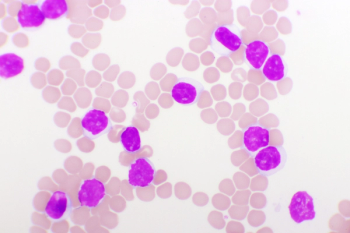
Patients with relapsed or refractory chronic lymphocytic leukemia are generally divided by those exposed to Bruton's tyrosine kinase inhibitors (BTKi), patients relapsing after venetoclax, and patients relapsing after BTKi and B-cell lymphoma-2 inhibitors.

Lauren C. Pinter-Brown, MD, FACP, of UCI Health and Chao Family Comprehensive Cancer Center, explains what the role of the pharmacist is during the treatment of patients with advanced cutaneous T cell lymphoma.

The recommendation for managing cytopenias among patients treated with tyrosine kinase inhibitors is to discontinue treatment at the onset of grade 3 or higher.

Lauren C. Pinter-Brown, MD, FACP, of UCI Health and Chao Family Comprehensive Cancer Center, addresses the areas that may need further investigation to progress advanced cutaneous T cell lymphoma treatments in the future.

Risk stratification for survival should not dictate treatment, but stratification for thrombosis risk should play an important role in treatment decisions.
Lauren C. Pinter-Brown, MD, FACP, of UCI Health and Chao Family Comprehensive Cancer Center, explains what research is underway in the advanced cutaneous T cell lymphoma field that she is currently keeping an eye on.

Lauren C. Pinter-Brown, MD, FACP, of UCI Health and Chao Family Comprehensive Cancer Center, describes some of the challenges providers face during the treatment of patients with advanced cutaneous T cell lymphoma and how to address them.

Lauren C. Pinter-Brown, MD, FACP, of UCI Health and Chao Family Comprehensive Cancer Center, addresses how the treatment of advanced cutaneous T cell lymphoma has changed in recent years and whether there have been any advancements of note.
Lauren C. Pinter-Brown, MD, FACP, of UCI Health and Chao Family Comprehensive Cancer Center, provides an overview of key trials that have been conducted in the advanced cutaneous T cell lymphoma space in recent years.
Lauren C. Pinter-Brown, MD, FACP, of UCI Health and Chao Family Comprehensive Cancer Center, explained whether the current advanced cutaneous T cell lymphoma (CTCL) treatment strategies available are applicable for all patients with advanced CTCL and how patients are selected for treatment.

Lauren C. Pinter-Brown, MD, FACP, of UCI Health and Chao Family Comprehensive Cancer Center, described what advanced cutaneous T cell lymphoma is in terms of classification and what current treatment approaches are available.

Pharmacy Times spoke with Dr. Bradley Monk, investigator for KEYNOTE-826, #LBA2, which was presented at the ESMO Congress 2021, about the study and its importance to the world of cervical cancer.

A presentation at the Society of Hematologic Oncology 2021 Annual Meeting reviewed the treatment of amyloidosis in multiple myeloma.
Presenter Maria-Victoria Mateos, MD, PhD, University Hospital of Salamanca-IBSAL, Salamanca, Spain, discussed how optimal sequencing in MM has changed from those outlined in the older EU guidelines.
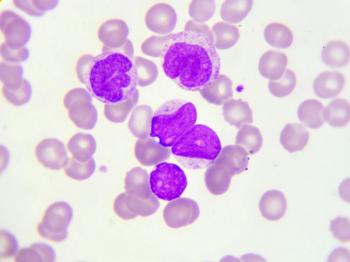
With CAR T-cell therapies showing promise for follicular lymphoma and marginal zone lymphoma, clinicians must weigh toxicity and tolerability almost as strongly as efficacy because patients can live years with these diseases

The efficacy of pirtobrutinib does not depend on prior therapy, reason for prior BTK inhibitor discontinuation, or C481 mutation status, according to the presentation.