

Pharmacy technicians are continuing to prove their worth as pharmacies shift their focus to the future, according to Jessica Langley-Loep, executive director of education and advocacy at the National Healthcareer Association.
Pharmacy technicians are continuing to prove their worth as pharmacies shift their focus to the future, according to Jessica Langley-Loep, executive director of education and advocacy at the National Healthcareer Association.

Tom Wheelwright, CPA, founder and CEO of WealthAbility, discussed his perspective on taxes and how pharmacies can use them to their advantage.

Pharmacy Development Services business coach Patrick Lott discussed the impacts that a positive culture and effective leadership can have both on employee satisfaction and patient outcomes.

PDS founder and executive chairman Dan Benamoz, RPh, discussed a few of the most exciting speakers and opportunities happening during the conference.

Marci Strauss, PharmD, discussed how pharmacists are reacting to the ongoing shift toward performance-based reimbursement models.

Dan Benamoz, RPh, founder and executive chairman of PDS, and Chip Phillips, CEO, discussed their plans for the meeting and what they're focused on for the future of pharmacy.

The results of a pilot program investigating the efficacy of remote patient monitoring for patients with cancer showed that it helped to keep high-risk individuals out of the hospital.

Communication, flexibility, and virtual solutions will remain key as the COVID-19 pandemic continues.

Jacob D. Soumerai, MD, of Harvard Medical School and Massachusetts General Hospital, discusses next steps in the research assessing zanubrutinib, obinutuzumab, and venetoclax in the treatment of previously untreated chronic lymphocytic leukemia.
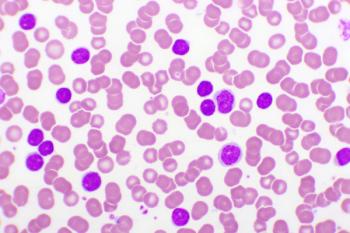
Jacob D. Soumerai, MD, of Harvard Medical School and Massachusetts General Hospital, discusses trial results showing the safety and efficacy of zanubrutinib, obinutuzumab, and venetoclax in the treatment of previously untreated chronic lymphocytic leukemia.
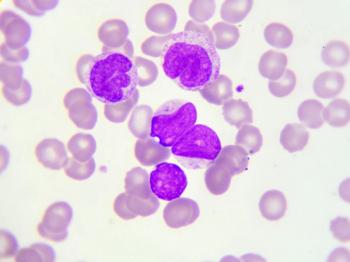
Jacob D. Soumerai, MD, of Harvard Medical School and Massachusetts General Hospital, discusses the adverse events experienced by patients with previously untreated chronic lymphocytic leukemia when treated with zanubrutinib, obinutuzumab, and venetoclax.

Judy Neville, program director of the college of pharmacy and pharmacy technician program at the University of Nebraska Medical Cancer, discusses what to look forward to for the AAPT conference in 2022.
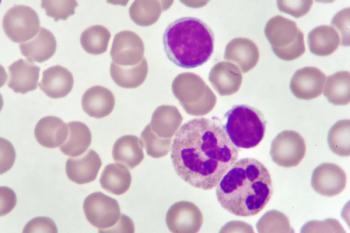
Jacob D. Soumerai, MD, of Harvard Medical School and Massachusetts General Hospital, addresses the primary endpoint in the trial assessing zanubrutinib, obinutuzumab, and venetoclax in previously untreated chronic lymphocytic leukemia.
Jacob D. Soumerai, MD, of Harvard Medical School and Massachusetts General Hospital, discusses minimum residual disease-driven time limited therapy with zanubrutinib, obinutuzumab, and venetoclax in previously untreated chronic lymphocytic leukemia.

Patients with hormone receptor-positive breast cancer doubled their median progression-free survival following a switch to fulvestrant plus palbociclib.

Patients with breast cancer treated with pyrotinib plus capecitabine had a 31% lower risk of death than those treated with lapatinib and capecitabine

New technology provides information on the benefit of adding atezolizumab to chemotherapy as a neoadjuvant treatment for patients with early high-risk and locally advanced triple-negative breast cancer.

However, active disease alone for hospitalized patients was not associated with greater odds of dying from COVID-19, nor was receiving ongoing cancer treatment.

Uterine cancers that developed in patients with breast cancer treated with tamoxifen had fewer phosphoinositol-3-kinase (PI3K) pathway mutations and may have been driven by tamoxifen-induced PI3K pathway activation.

Emicizumab-kxwh demonstrated a favorable safety profile and effective bleed control in people with mild or moderate hemophilia A without factor VIII inhibitors.

Study results show that clonal hematopoiesis of indeterminate potential is associated with a lower likelihood of developing AD.
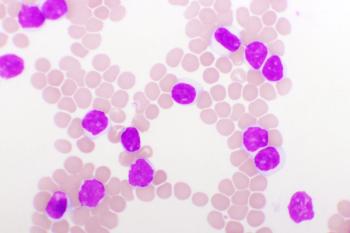
Matthew Davids, MD, MMSc, associate professor of medicine at Harvard Medical School, discusses the results of a longer-term follow up for iFCR therapy for individuals with chronic lymphocytic leukemia .

The investigators said this increase in risk is particularly pronounced in those with more advanced disease.

Overall, approximately 41% of those receiving Axi-cel and 16% of those receiving standard of care survived for 2 years without needing additional cancer treatment or experiencing cancer progression.
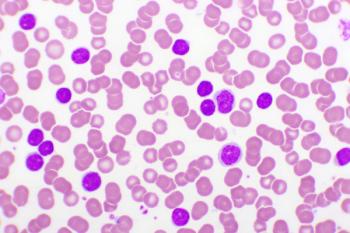
Matthew Davids, MD, MMSc, associate professor of medicine at Harvard Medical School, discusses how common chronic lymphocytic leukemia is for younger individuals

Matthew Davids, MD, MMSc, associate professor of medicine at Harvard Medical School, discusses how the results of a longer term study differ for individuals who were younger with chronic lymphocytic leukemia as opposed to those who are older.

Myriam Mendila, MD, chief medical officer and global head of medical affairs at Novartis Oncology, discusses ongoing trials assessing efficacy and safety of asciminib in the treatment of chronic myeloid leukemia.
The standard-of-care for patients with LBCL consists of chemotherapy and additional high intensity chemotherapy followed by stem cell transplantation.

CAR T-cell therapy shows durable long-term survival in patients with refractory LBCL, company’s Kite subsidiary says.
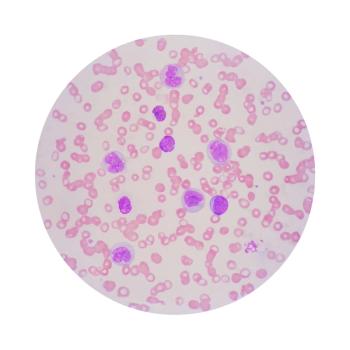
Matthew Davids, MD, MMSc, associate professor of medicine at Harvard Medical School, discusses what the results of the initial iFCR study showed and what the highlights of the longer-term follow up were for individuals with chronic lymphocytic leukemia.