

As best practices are established throughout the specialty pharmacy’s entire network, better patient outcomes become possible.
As best practices are established throughout the specialty pharmacy’s entire network, better patient outcomes become possible.

Expert notes that any unease around the use of radiopharmaceuticals is just due to a lack of familiarity with the field.

Training pharmacy technicians to evaluate tasks such as appropriate site of care and plan benefits can reduce the workload for the pharmacist.

Tina Saleh, PharmD, PGY1 specialty pharmacy resident at the University of Illinois Hospital and Health Science System, discusses how oral anticancer agents differ from infusions and how pharmacists can improve tolerability for patients.

Certain areas of chapters written by US Pharmacopeia have evolved since being made official and have become standard best practices today.

Angela Livingood, PharmD, MHA, BCGP, CPHQ, diversion specialist at Novant Health, discusses what drug diversion is and why it is important for pharmacists to be aware of it.

Brooke Looney, PharmD, certified specialty pharmacist in the Oncology Clinic at Vanderbilt Specialty Pharmacy, discusses medication changes and adverse events for patients starting encorafenib and binimetinib.

Shields Health Solutions poster presentations highlight a comprehensive approach to specialty patient care and successful results from an expanded offering of instructional programs.

Nicholas Robert, MD, chief medical officer at Ontada, discussed disparities in biomarker testing and how they are being addressed.

New recommendations provide some harmonization to make it easier for clinicians to lower the barriers to assessing and identifying eligible patients for the pneumococcal vaccine.

COVID-19 vaccine recommendations have parallel tracks for adults and parallel tracks for children broken down into whether an individual is immunocompromised.

Kayla Cierniak, PharmD, MS, BCPS, FISMP, medication safety officer in oncology at Seidman Cancer Center discusses the Bar Code Medication Administration and some challenges the initiative faced.

Arpit Mehta, PharmD, MPh, MHA, director of Pharmacy at Allegheny General Hospital, discusses innovations in health-system patient care models to improve patient outcomes.

Katherine Harte, PharmD, a PGY2 ambulatory care pharmacy resident at the Rhode Island Hospital in Providence, Rhode Island, discusses the impact of pharmacist management on SGLT2 inhibitors and GLP-1 receptor agonist utilization in patients with type 2 diabetes mellitus.

Migraines can have a high cost for the health care system overall, with an estimated $1 billion dollars or more spent in indirect and direct costs.

Although it has clear benefits when monitoring and managing cancer, Feinberg said more widespread use of circulating tumor DNA will take time.

Expert emphasizes that it is important to acknowledge the critical role of pharmacists in overcoming barriers to vaccinations.

Aimee Banks, PharmD, BCPS, MSCS, clinical pharmacist in the Multiple Sclerosis Clinic at Vanderbilt University Medical Center, discusses new hematology, oncology, and autoimmune therapies in the pipeline that pharmacists should be aware of.

Investigators report that the 2 individuals receiving the 120-mg dosage had 3 probable immune-related adverse events, which provides supportive evidence of immune activation.

In an analysis of data from 2 patient cohorts included in the phase 2 BYLieve study, investigators found that the data may indicate an increased dependence on the mutant PI3K-α.
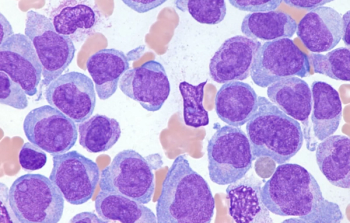
Results from a phase 3b study showed that venetoclax combined with azacitidine or decitabine can safely be initiated in a US community-based outpatient setting.

Blinded independent central review analysis also adds confidence to the findings.

The American Society of Health-System Pharmacists’ conference includes educational opportunities that feature the latest products, services, and technology in the industry.
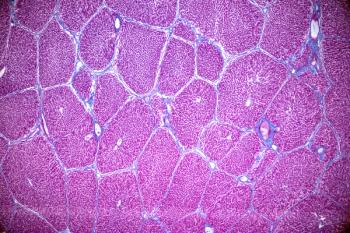
JZP458, a recombinant Erwinia-derived ASNase from a Pseudomonas fluorescens expression platform, was previously approved by the FDA for patients with ALL/LBL who had developed hypersensitivity to Escherichia coli (E. coli)–derived ASNase.

Investigators reported that individuals who completed 10 cycles of lurbinectedin and doxorubicin who then switched to lurbinectedin as a monotherapy tended to have maintained or improved tumor response.

Investigators found that individuals receiving selinexor had a median PFS of 5.7 months compared to 3.8 months for those given the placebo, with a stratification adjusted hazard ratio of 0.70.

The ability to measure GFR would be a significant advancement for clinicians in the United States.

Scot Ebbinghaus, MD, vice president of oncology clinical research at Merck, discussed the growing body of research surrounding pembrolizumab (Keytruda) and what it is currently being investigated for.

Additionally, the 2-time dependent variables, dose reduction, and relative dose intensity 2 (RDI2) were included in the respective model as covariates to explore the connection to overall survival.

Overall, the investigators observed that the CR, undetectable minimal residual disease rates, progression free survival, and overall survival amomg the patients enrolled in the trial were favorable.