


Multiple Myeloma
Latest News
Advertisement
Latest Videos
































































































Advertisement
More News
Presenter Maria-Victoria Mateos, MD, PhD, University Hospital of Salamanca-IBSAL, Salamanca, Spain, discussed how optimal sequencing in MM has changed from those outlined in the older EU guidelines.

Nearly 20% of patients with multiple myeloma have a form of the disease in which they make high quantities of a component of monoclonal proteins, which damages the kidneys.
The FDA has granted orphan drug designation to CFT7455 for the treatment of multiple myeloma, according to a press release from manufacturer C4 Therapeutics.

According to the investigators, treatment with ruxolitinib resulted in a significant improvement in ORR after 24 weeks, with an ORR of 49.7% in the ruxolitinib arm compared to 25.6% in the best available therapy arm.

Despite the encouraging progression-free survival findings, data on overall survival resulted in a partial clinical hold instituted by the FDA.
Results from the APOLLO trial showed a significant 37% reduction in the risk of progression or death, compared to pomalidomide and dexamethasone alone in patients with multiple myeloma.
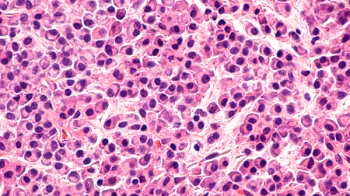
Pharmacists can educate patients about a pair of new treatment options for multiple myeloma approved by the FDA in March 2021.
Teclistamab is an off-the-shelf, T-cell redirecting, bispecific antibody targeting both B-cell maturation antigen (BCMA) and CD3 receptors.
Selinexor in combination with bortezomib and dexamethasone is used for adult patients with multiple myeloma who have received at least 1 prior therapy.
Ssatuximab (Sarclisa, Sanofi) is used in combination with carfilzomib and dexamethasone for patients with relapsed or refractory multiple myeloma.
Melphalan flufenamide (Pepaxto; melflufen) is approved for use in combination with dexamethasone to treat adult patients with relapsed or refractory multiple myeloma.

In a clinical trial of idecabtagene vicleucel in multiple myeloma, the overall response rate for the efficacy evaluable population was 72%, and 28% of participants achieved a stringent complete response.
Bristol Myers Squibb and bluebird bio are seeking FDA approval for ide-cel as a standard therapy for relapsed myeloma, with a decision expected by the end of March.
Teclistamab showed promising clinical activity and a tolerable safety profile in patients with relapsed/refractory multiple myeloma.
The FDA has approved melphalan flufenamide (Pepaxto; melflufen) for use in combination with dexamethasone to treat adult patients with relapsed or refractory multiple myeloma.
The FDA has granted an orphan drug designation to the BCMA-targeted trispecific T-cell activating recombinant protein construct as treatment for patients with multiple myeloma.
Three monoclonal antibodies, 1 antibody-drug conjugate, and 1 nuclear export inhibitor have been approved by the FDA for relapsed/refractory (R/R) multiple myeloma in the past 4 years.

Selinexor (Xpovio; Karyopharm Therapeutics Inc.) in combination with bortezomib (Velcade; Takeda) and dexamethasone was approved for the treatment of adult patients with multiple myeloma who have received at least 1 prior therapy.

CAR T-cell therapy associated with greater anti-cancer activity in treating multiple myeloma.

For patients with relapsed/refractory multiple myeloma (RRMM), teclistamab was found to have a manageable safety profile, according to data presented at the virtual American Society of Hematology conference.

Data from a preliminary phase 1b/2 study demonstrated a single low-dose infusion of ciltacabtagene autoleucel resulted in early, deep, and durable responses in heavily pretreated patients with multiple myeloma.

MEDI2228, an ADC that targets the extracellular domain of human BCMA, demonstrated clinical efficacy at all dose levels in treating patients with relapsed/refractory multiple myeloma.
Using Belantamab Mafodotin and Pomalidomide in the Treatment of Relapsed/Refractory Multiple Myeloma
By
Suzanne Trudel, MD, MSC, FRCPC, of the University of Toronto and the Princess Margaret Cancer Centre in Toronto, discusses what belantamab mafodotin and pomalidomide are, and how they work together to treat relapsed/refractory multiple myeloma.
Daratumumab (Darzalex, Janssen) is indicated for use in combination with lenalidomide and dexamethasone for patients with newly-diagnosed multiple myeloma who are ineligible for autologous stem cell transplant.
The agent should be considered for frontline use as induction therapy prior to early autologous stem cell transplant, physician says.
Advertisement
Advertisement