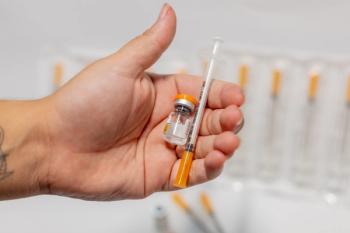
Lerodalcibep (Lerochol; LIB Therapeutics) is also a subcutaneous injection, but it can be given once monthly—just 12 times a year—and still lowers LDL 50% to 62%. We have inclisiran (Leqvio; Novartis), which came out a few years ago; it's dosed every 6 months once you get past the initial couple of doses, so twice a year, a patient can get this injectable and still receive about a 50% reduction in their LDL. But probably the newest exciting agent is that we have oral PCSK9 inhibitors now. Just last month, in July of 2026, enlicitide (Lipfendra; Merck) was approved. It's an oral capsule taken daily, and we're seeing up to a 65% reduction in LDL with it. There's another oral in the works called laroprovstat that's still under investigation, but showing the same kind of large LDL reductions.
Pharmacy Times: Lipoprotein(a) [Lp(a)] has historically had no targeted treatment. What should pharmacists know now about testing and the agents in the pipeline?
Johnson: Lp(a) is really interesting. It's something I feel like most of us are just starting to learn about. It hasn't been included in our traditional guidelines because it's such a fresh area, but it does make an appearance in the brand-new American College of Cardiology (ACC)/American Heart Association (AHA) lipid guidelines that came out earlier this year. What they're telling us now is that, while it's distinct from LDL, Lp(a) in and of itself is an independent risk factor for atherosclerosis and heart disease. It's something we're going to have to start taking seriously and learn a lot more about. We're in our earliest steps right now. Because we've identified that it's its own independent risk factor, the recommendation in the guidelines is that every adult should be screened to see what their Lp(a) level is. This is thought to be a genetically induced issue, as lifestyle doesn't have a big impact on Lp(a) levels; it seems to come from our genetics. Some people will have the genetics for Lp(a) elevations, and some won't. Right now, the main point is to get identified: if you're somebody with elevated Lp(a), you're going to need to do something about it in the future when we have approved treatments.
We have several agents in the pipeline. Nothing has been approved yet, but several are in the works, and they're potent reducers of Lp(a). There's olpasiran, zerlasiran, and lepodisiran—all subcutaneous injectables that are coming and all lowering Lp(a) levels greater than 95%, so drastic reductions. What's also interesting is their dosing frequency: they may be dosed anywhere between 2 and 6 months. None of that has been determined yet, but the trials suggest efficacious doses have been given in those windows. They're also working on an oral Lp(a)-reducing drug, muvalaplin, which is showing reductions in the 80% range. And there's another injectable, pelacarsen, on the way as well, showing about 80% reduction.
Key Takeaways
- Statins remain first-line; everything else is an add-on. Pharmacists should frame new PCSK9, Lp(a), and triglyceride agents as tools to reach stricter LDL goals (below 55 mg/dL in the highest-risk patients), not replacements for statin therapy.
- Screen every adult for Lp(a) now. New ACC/AHA guidance recommends universal Lp(a) screening; because levels are genetically driven, identifying elevated patients now positions them for targeted therapies once approved.
- Counseling extends beyond the drug to the device. With injectables, pharmacists should prioritize injection technique and storage—some require refrigeration, others are stable at room temperature up to 90 days—and stay alert for unexpected adverse effects given limited real-world data.
One important thing to keep in mind: Showing a reduction in that lipoprotein is the first step and very important, but these agents still have to prove that reducing that level actually leads to cardiovascular benefit. Those trials usually don't come along for another few years after we get approval of the agent. Most of the agents we're talking about now still have to prove that they reduce actual events—a myocardial infarction, a stroke, or cardiovascular death. While they're showing great reductions in lipoproteins, we still have to make sure they're actually going to prevent events down the road.
Pharmacy Times: For patients with elevated triglycerides who may be at risk of pancreatitis, how should pharmacists approach therapy selection with today's options?
Johnson: Triglyceride issues put patients at risk of pancreatitis as well as heart disease, so having new options is really nice. Our older agents haven't had much evidence for ASCVD risk reduction, and the new agents haven't proven that yet either, but we have some new possibilities. The older agents can only lower triglyceride levels in the 10% to 30% range, whereas the newer ones we have, olezarsen (Tryngolza; Ionis Pharmaceuticals) and plozasiran (Redemplo; Arrowhead Pharmaceuticals), are lowering triglycerides anywhere from 60% to 80%. They're much more potent triglyceride-reducing agents than what we've had in the past.
They are subcutaneous injectable agents. They might be dosed monthly; plozasiran is every 3 months. Again, we're seeing much more robust reduction. One of the main roles for these agents will be for people who have a particular syndrome called familial chylomicronemia syndrome (FCS). They're both indicated for severe hypertriglyceridemia, where triglycerides are greater than 850. I think that's probably going to be the main role for these new agents right off the bat. Olezarsen has received approval for high triglycerides, higher than 500, so that one could also have a place in therapy that matches some of our traditional agents.
Pharmacy Times: What practical counseling or monitoring points should pharmacists prioritize when starting patients on these newer agents?
Johnson: Monitoring is always important, mainly right now, looking at efficacy to make sure the medication is working. Luckily, these agents have been very well tolerated in trials. There's some injection-site reaction, as you might expect from injectables, but nothing really outstanding, which is surprising. Everyone should be on the watch for unexpected adverse effects, because not very many are being reported right now.
Other things to pay attention to: being familiar with how the actual injectable devices work. They can all vary just a little bit, so it's important to educate patients on the exact technique and even storage. Some of these are auto-injector devices; others are prefilled syringes. Some need to stay in the refrigerator, whereas some are being approved so they can be at room temperature for up to 90 days. Being familiar with those storage aspects as well as technique is important for pharmacists to share with their patients.
Pharmacy Times: Is there anything else you'd like to add?
Johnson: I just think it's a really exciting time in the world of lipid management and ASCVD risk reduction. It's sometimes difficult to get LDL levels down to those target ranges; the new guidelines are recommending that for the highest-risk patients, we try to get LDL down to less than 55 mg/dL now, and that can be difficult for a lot of patients. These new agents that have very potent LDL-reduction capabilities can really help us. So I'm just excited that we have some new tools and the ability to protect patients that much more.