
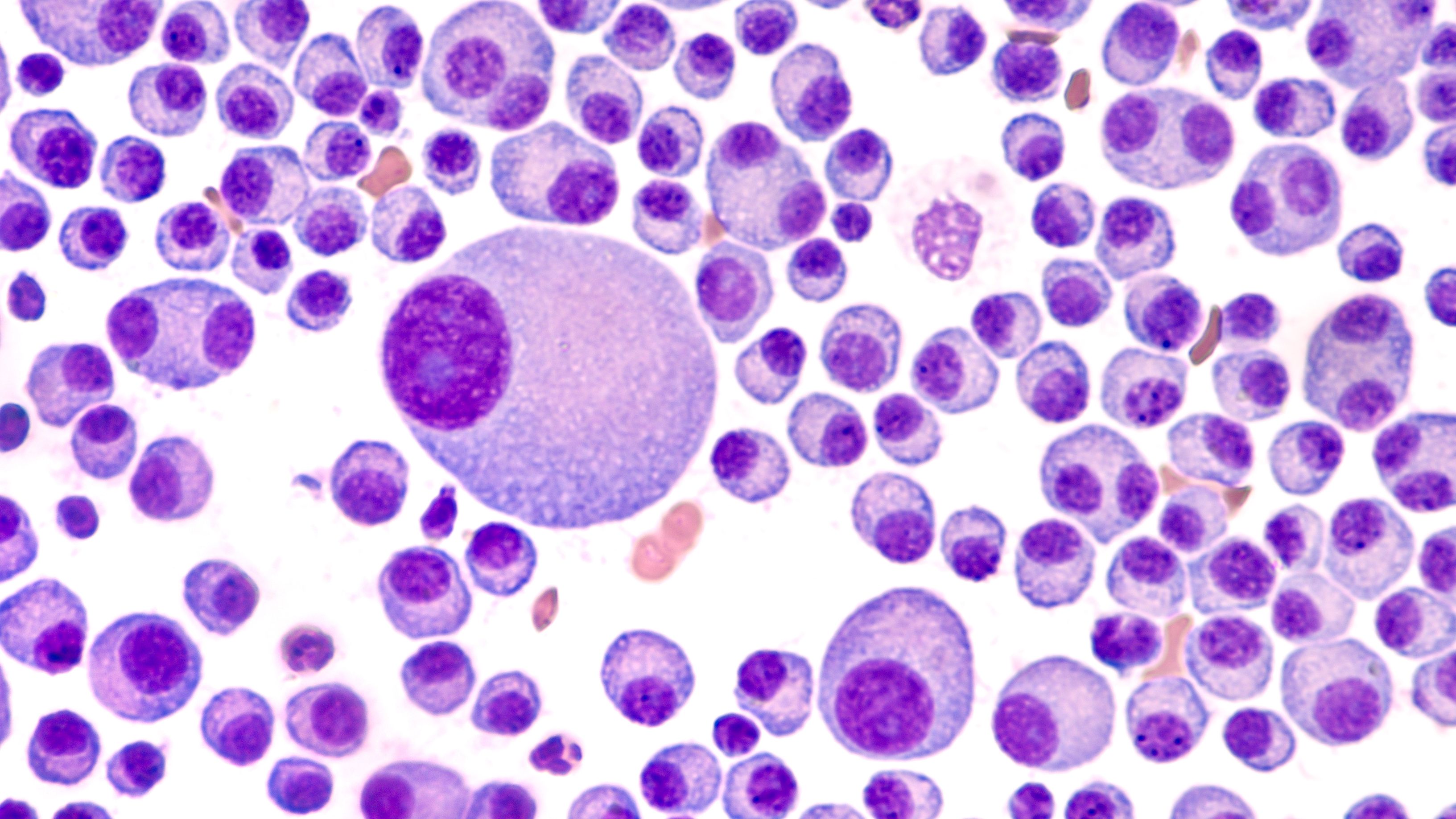



Multiple Myeloma
Latest News
Advertisement
Latest Videos





CME Content






































































































Advertisement
More News

Approximately 25% to 35% of new oncology therapies in development are oral medications.
CAR-NK therapies are also shown to have fewer adverse reactions, and 25% of mice that were treated remained disease-free.
Isatuximab-irfc (Sarclisa; sanofi-aventis) provides patients with another option for treatment and significantly reduces the risk of disease progression or death.

Robert Z. Orlowski, MD, PhD, director of the Myeloma Section at the University of Texas MD Anderson Cancer Center, reviewed novel agents in the treatment of triple-class refractory myeloma during a session at the 2021 annual meeting of the Society of Hematologic Oncology (SOHO).
A presentation at the Society of Hematologic Oncology 2021 Annual Meeting reviewed the treatment of amyloidosis in multiple myeloma.

Presenter Maria-Victoria Mateos, MD, PhD, University Hospital of Salamanca-IBSAL, Salamanca, Spain, discussed how optimal sequencing in MM has changed from those outlined in the older EU guidelines.

Nearly 20% of patients with multiple myeloma have a form of the disease in which they make high quantities of a component of monoclonal proteins, which damages the kidneys.
The FDA has granted orphan drug designation to CFT7455 for the treatment of multiple myeloma, according to a press release from manufacturer C4 Therapeutics.

According to the investigators, treatment with ruxolitinib resulted in a significant improvement in ORR after 24 weeks, with an ORR of 49.7% in the ruxolitinib arm compared to 25.6% in the best available therapy arm.

Despite the encouraging progression-free survival findings, data on overall survival resulted in a partial clinical hold instituted by the FDA.

Results from the APOLLO trial showed a significant 37% reduction in the risk of progression or death, compared to pomalidomide and dexamethasone alone in patients with multiple myeloma.
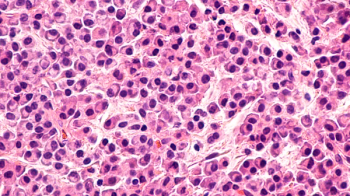
Pharmacists can educate patients about a pair of new treatment options for multiple myeloma approved by the FDA in March 2021.
Teclistamab is an off-the-shelf, T-cell redirecting, bispecific antibody targeting both B-cell maturation antigen (BCMA) and CD3 receptors.

In a clinical trial of idecabtagene vicleucel in multiple myeloma, the overall response rate for the efficacy evaluable population was 72%, and 28% of participants achieved a stringent complete response.
Bristol Myers Squibb and bluebird bio are seeking FDA approval for ide-cel as a standard therapy for relapsed myeloma, with a decision expected by the end of March.
Teclistamab showed promising clinical activity and a tolerable safety profile in patients with relapsed/refractory multiple myeloma.
Advertisement
Advertisement
Trending on Pharmacy Times
1
ASH 2026 Preview: Key Questions for Hematology Pharmacists
2
The Evolving Role of Bispecific Antibodies in Relapsed/Refractory Multiple Myeloma
3
Evaluating a 4000-mg Maximum Daily Acetaminophen Dose in Patients in Acute Care
4
The Evolution of BTK in CLL: From Blockade to Breakdown
5