



Multiple Myeloma
Latest News
Advertisement
Latest Videos































































































Advertisement
More News

The submission is supported by data from MajesTEC-1, a multicenter clinical trial evaluating the safety and efficacy of teclistamab in adults with RRMM.
Luciano Costa, MD, PhD, of the University of Alabama at Birmingham, discusses the results for all of the trial endpoints assessing daratumumab, carfilzomib, lenalidomide, and dexamethasone for patients with newly diagnosed multiple myeloma.
Luciano Costa, MD, PhD, of the University of Alabama at Birmingham, discusses the primary endpoint in the trial assessing daratumumab, carfilzomib, lenalidomide, and dexamethasone in the treatment of patients with newly diagnosed multiple myeloma.
Luciano Costa, MD, PhD, associate director for clinical research at the O’Neal Comprehensive Cancer Center at the University of Alabama at Birmingham, on the safety and efficacy of Dara-KRd in the treatment of patients with newly diagnosed multiple myeloma.
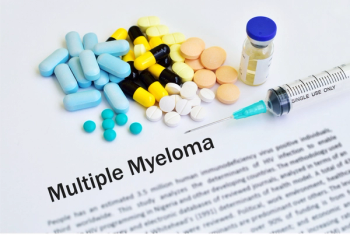
Multiple myeloma has remarkable genetic heterogeneity, which can make it challenging to identify proper prognostication and clinical management for patients.
This trial is the first to assess the use of isatuximab as a first-line treatment for newly diagnosed, transplant-eligible patients up to 70 years of age, according to the study authors.

The study demonstrates a need for novel tolerable and efficacious therapeutic agents to address the burden of illness in patients with multiple myeloma, according to the investigators.
Data support daratumumab as part of a standard of care regimen in the frontline setting for patients with newly diagnosed multiple myeloma.
Results from a study show that elderly individuals who are black or who have an immediate family member with a current or past blood cancer have higher rates of these conditions.
According to the trial results, these responses appear durable, with a target dose-dependent increase in overall response rate without any increase in the rate of cytokine release syndrome.
Daratumumab continued to demonstrate deep and durable responses, including improvements to stringent complete response (sCR) rates and minimal residual disease (MRD)-negativity.
The combination of daratumumab with hyaluronidase (Darzalex Faspro), hyaluronidase-fihj, carfilzomib (Kyprolis), and dexamethasone is indicated for the treatment of adult patients with relapsed/refractory multiple myeloma who have received 1 to 3 prior lines of therapy.
Pharmacists should keep an eye on the pipeline for autologous and allogeneic CAR T-cell therapies as well as antibody-specific treatments.

The panel also recommends considering risk factors for poor response, including uncontrolled disease, immunoparesis, the number of previous lines of therapy, and patient age.

With so many approved regimens and common use of oral agents in the treatment of multiple myeloma, oncology pharmacists are essential team members.
No new safety concerns were encountered, which the investigators said support the frontline use of daratumumab plus lenalidomide and dexamethasone for patients with multiple myeloma who are ineligible for transplantation.
The company’s decision to take melphalan flufenamide off the market was made after dialogue and interactions with the FDA.
Ciltacabtagene autoleucel (cilta-cel) CAR T-cell therapy is currently being evaluated for the treatment of patients with relapsed and/or refractory multiple myeloma.

Pharmacy Times spoke with neurologist Dr. Tirisham Gyang and pharmacist Dr. Margaret Hansen about multiple sclerosis, including diagnosis, treatment options, and the role of the pharmacist in patient care.
TAK1 restricts receptor-interacting serine/threonine-protein kinase 1 dependent cell death, and targeting TAK1 with inhibitors shifts cells from pro-survival programs to cell death, according to the study.
Monitoring for AEs, educating about drug regimens, and managing therapies are opportunities for pharmacists to make a difference.

Approximately 25% to 35% of new oncology therapies in development are oral medications.
CAR-NK therapies are also shown to have fewer adverse reactions, and 25% of mice that were treated remained disease-free.
Isatuximab-irfc (Sarclisa; sanofi-aventis) provides patients with another option for treatment and significantly reduces the risk of disease progression or death.
In an interview with Pharmacy Times®, Maria Whitman, Global Head of the Pharmaceutical and Biotech Practice at ZS, discusses the FDA’s Project Optimus, the FDA’s new guidance addressing dose optimization issues in oncology clinical trials, and how it has impacted drug manufacturers.
Advertisement
Advertisement