


























































































Among the general population, roughly 5% of people develop seborrheic dermatitis. However, seborrheic dermatitis affects 85-95% of patients with HIV.
Among the general population, roughly 5% of people develop seborrheic dermatitis. However, seborrheic dermatitis affects 85-95% of patients with HIV.

A subset of the HIV is transmitted to the child during pregnancy or through breastfeeding.

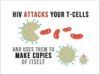
HIV transmitted to a child is less likely to be killed by CD4 helper T cells.

A novel nanotechnology approach can reduce HIV treatment dosages and improve drug delivery, according to a study.

A New Zealand woman who was intentionally infected with HIV and was the center of a high profile criminal case faces down numerous challenges related to the virus.

Scientists utilized nanotechnology to improve HIV treatments.
Even macrophages aren’t safe from HIV.

Top news of the day from across the health care landscape.

Fibroblasts in the gastrointestinal tract help HIV infect immune cells.
Study finds syringe services outreach should be more focused on whites, who now make up a large portion of injection drug users.

Gilead’s antiretroviral medication associated with the increased risk of fracture in patients with HIV.

Up to 30% of people who have HIV, and more than 80% of HIV-positive injection drug users also have hepatitis C virus (HCV) as well.
Biologic HIV drug may reduce new infections among high risk populations.
A broadly neutralizing antibody was observed to reduce HIV viral load and prevent transmission.

Top news of the week from Specialty Pharmacy Times.

The Iowa Department of Public Health released its first report on hepatitis C virus.

Statins among promising treatment options helping to progress the HIV treatment landscape.

Novel class of inhibitors may be used as a preventive measure for HIV in the future.

Anxiety and depression linked to longer time living with HIV.

A combination of dolutegravir and rilpivirine may reduce pill burden for patients with HIV.

New system could improve the implementation of pre-exposure prophylaxis-based care for HIV prevention.
Although PrEP is highly effective, few appropriate patients with HIV currently use it.
Immersion in HIV/AIDS practice is the best way to understand this infectious disease and keep current with treatment changes.
Long-acting antiretroviral maintains significant viral load reduction and increases CD4+ T cells in HIV.
Findings suggest that human genetics trigger mutations in the HIV viral genome.