
News|Articles|July 27, 2026
- July 2026
- Volume 92
- Issue 7
Vaccine Guidance Is Rapidly Changing—Here's What You Need to Know
Author(s)Jennifer Gershman, PharmD, CPh, PACS
Listen
0:00 / 0:00
Key Takeaways
- ACIP/HHS schedule revisions (eg, newborn hepatitis B and SCDM shifts) were blocked by federal ruling, prompting some states to follow AAP/AAFP guidance; pharmacists must verify jurisdictional policy.
- COVID-19 strain selection for 2026-2027 remains pending; adults ≥65 and immunocompromised patients may receive two 2025-2026 doses separated by 6 months, per current guidance.
Pharmacists can provide updated vaccine recommendations and offer immunizations during MTM consults.
Advertisement
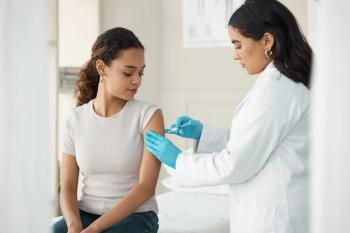
Vaccine guidance is continuously changing, and misinformation can make patients more vulnerable to vaccine-preventable diseases.1 This is evident with ongoing measles outbreaks throughout the US due to lower measles, mumps, and rubella (MMR) immunization rates.2 Pharmacists can administer vaccines and provide education about the importance of immunizations during medication therapy management (MTM) consults.
Vaccine Updates and MTM
The US Department of Health and Human Services (HHS) and the CDC Advisory Committee on Immunization Practices (ACIP) made drastic changes to the vaccine schedule over the past year.3 This included removing the universal hepatitis B vaccine recommendation for newborns and placing certain childhood vaccines under shared clinical decision-making (SCDM).3
COVID-19 vaccine recommendations were also moved under SCDM. However, a federal judge blocked these immunization schedule changes in March 2026, restoring greater access.3,4 Pharmacists should refer to their state policies regarding vaccines because some are now following organizations such as the American Academy of Pediatrics and the American Academy of Family Physicians instead of the CDC for immunization guidance.4
As of this writing, the strain for the upcoming 2026-2027 season has not been selected for COVID-19 vaccines, making an updated vaccine uncertain. Pharmacists can identify patients who are eligible for additional COVID-19 vaccines, such as those 65 years and older and immunocompromised individuals, who can receive 2 COVID-19 vaccines from the 2025-2026 season, spaced 6 months apart.5
Influenza vaccine rates for adults and pediatric patients have declined.6 Pharmacists can educate patients about the importance of receiving an annual influenza vaccine. The FDA selected the following influenza strains for the egg-based influenza vaccines for the 2026-2027 season7:
- An A/Missouri/11/2025 (H1N1)pdm09–like virus
- An A/Darwin/1454/2025 (H3N2)–like virus
- A B/Tokyo/ElS13-175/2025 (B/Victoria lineage)–like virus
The cell- or recombinant-based influenza vaccines will contain the following strains7:
- An A/Missouri/11/2025 (H1N1)pdm09–like virus
- An A/Darwin/1415/2025 (H3N2)–like virus
- A B/Pennsylvania/14/2025 (B/Victoria lineage)–like virus
In March 2026, the FDA expanded the age range for approval of the respiratory syncytial virus (RSV) vaccine Arexvy (GSK).8 It is now approved to include patients aged 18 to 49 years who are at increased risk of lower respiratory tract disease caused by RSV.8 This now falls in line with the other RSV vaccines, Abrysvo (Pfizer) and mResvia (Moderna). The CDC recommends a single dose of an RSV vaccine for individuals 75 years and older and adults 50 to 74 years at increased risk of severe RSV illness.9 The following factors can increase the risk of severe RSV illness, although health care teams can identify other factors as appropriate9:
- Chronic cardiovascular disease
- Chronic lung or respiratory disease
- End-stage renal disease
- Diabetes
- Neurologic or neuromuscular conditions
- Chronic liver disease
- Chronic hematologic conditions
- Severe obesity
- Moderate or severe immunocompromised status
- Residing in a nursing home
Pharmacists play a vital role in RSV vaccine uptake. If patients have not yet received an RSV vaccine, pharmacists can recommend 1 dose between August and October, before RSV season typically starts. Because the RSV vaccine is not an annual immunization, research is underway to determine whether additional doses are needed in the future.9
One systematic review and meta-analysis evaluated 13 studies on pharmacist-led interventions for certain recommended vaccines in patients 60 years and older.10 The vaccines included those for COVID-19, herpes zoster, pneumococcal, influenza, and RSV. The study results indicated higher vaccine uptake with pharmacist-led immunization services. Results from studies involving pharmacists as educators, facilitators, and advocates showed the highest vaccine uptake. Additionally, the herpes zoster and pneumococcal vaccines had the highest uptake with pharmacist-led immunization services. These findings highlight the importance of pharmacists as part of the health care team for encouraging vaccination.
MTM Spotlight
In an interview with Pharmacy Times, Ellen Jones, PharmD, MA, BCACP, associate professor of pharmacy practice at the Harding University College of Pharmacy in Searcy, Arkansas, discussed the pharmacist’s role in immunizations. Jones teaches the American Pharmacists Association (APhA) Immunization Certificate program to first-year pharmacy students.
“I provide a comprehensive review of how to determine which vaccines an individual needs by interpreting the CDC vaccine schedule. The APhA updates its program regularly to include any relevant updates,” Jones said.
She also discussed the new recommendation that all influenza vaccines be thimerosal-free for the 2025-2026 flu season.
“My practice site is a small direct primary care clinic, and we refer our patients to their local community pharmacy for vaccines. The most common ones would be for an annual influenza vaccine and tetanus, diphtheria, and pertussis boosters, particularly for patients who present with injuries with a high risk for tetanus,” she said. “Another one we recommend is the pneumococcal vaccine. I’m thankful for the CDC’s PneumoRecs VaxAdvisor to help navigate the different pneumococcal vaccine options.”
About the Author
Jennifer Gershman, PharmD, CPh, PACS, is a drug information pharmacist and Pharmacy Times contributor who resides in South Florida.
REFERENCES
1. Cagnotta C, Lettera N, Cardillo M, et al. Parental vaccine hesitancy: recent evidences support the need to implement targeted communication strategies. J Infect Public Health. 2025;18(2):102648. doi:10.1016/j.jiph.2024.102648
2. Vaccination coverage and exemptions among kindergartners. CDC. July 31, 2025. Accessed June 16, 2026. https://www.cdc.gov/schoolvaxview/data/index.html
3. Federal judge blocks immunization schedule changes, stays ACIP member appointments. News release. American Public Health Association. March 16, 2026. Accessed June 16, 2026. https://www.apha.org/news-and-media/news-releases/apha-news-releases/federal-judge-blocks-immunization-schedule-changes
4. Steier J, Figueroa IB. The state of US vaccine policy: special edition—Mar 17, 2026. University of Minnesota Center for Infectious Disease Research and Policy. March 17, 2026. Accessed June 16, 2026. https://www.cidrap.umn.edu/childhood-vaccines/state-us-vaccine-policy-special-edition-mar-17-2026
5. 2025-2026 COVID-19 vaccination guidance. CDC. November 4, 2025. Accessed June 16, 2026. https://www.cdc.gov/covid/hcp/vaccine-considerations/routine-guidance.html
6. Weekly flu vaccination dashboard. CDC. May 20, 2026. Accessed June 16, 2026. https://www.cdc.gov/fluvaxview/dashboard/index.html
7. Influenza vaccine composition for the 2026-2027 US influenza season. FDA. Updated March 13, 2026. Accessed June 16, 2026. https://www.fda.gov/vaccines-blood-biologics/vaccines/influenza-vaccine-composition-2026-2027-us-influenza-season?utm_medium=email&utm_source=govdelivery
8. GSK’s RSV vaccine, AREXVY, approved in US for expanded age indication in adults aged 18-49 years at increased risk. News release. GSK. March 13, 2026. Accessed June 16, 2026. https://us.gsk.com/en-us/media/press-releases/gsk-s-rsv-vaccine-arexvy-approved-in-us-for-expanded-age-indication-in-adults-aged-18-49-years-at-increased-risk/
9. RSV vaccine guidance for adults. CDC. February 24, 2026. Accessed June 16, 2026. https://www.cdc.gov/rsv/hcp/vaccine-clinical-guidance/adults.html
10. Amare SN, Yee KC, Leung M, Naunton M, Bushell M. Impact of pharmacist-led interventions on COVID-19, herpes zoster, influenza, pneumococcal, and respiratory syncytial virus vaccine uptake in people aged 60 years and older: systematic review and meta-analysis. Res Social Adm Pharm. 2025;21(11):857-871. doi:10.1016/j.sapharm.2025.06.110
Articles in this issue
Advertisement
Related Content
Advertisement



Latest CME









































































































Advertisement
Advertisement
Trending on Pharmacy Times
1
FDA Approves First OTC Acetaminophen–Naproxen Combination for 12-Hour Pain Relief
2
FDA Approves Furosemide Autoinjector for Treatment of Edema in CKD or Heart Failure
3
What Real-World Data Show About Moving Patients From Humira to Biosimilars
4
Q&A: Pharmacists' Role in CKD Grows as Finerenone Eyes Label Expansion
5