

The fast pace of information can make it difficult to efficiently apply data to care.
The fast pace of information can make it difficult to efficiently apply data to care.

Subcutaneous nivolumab had demonstrated noninferiority of Cavgd28, Cminss, and ORR compared to the intravenous form of treatment.

The statistically significant and clinically meaningful improvement in disease-free survival is “practice-changing” and may represent a “paradigm shift” in treatment, according to experts.

Timothy O’Shea, MS, PharmD, discussed the growth of home infusion programs and how they benefit patients.
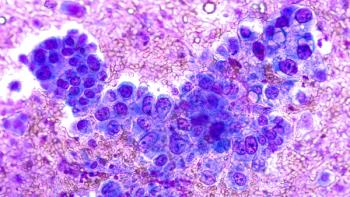
Integrating immunotherapies will continue to improve patient outcomes and quality of life.

This finding underlines the need for methods that address multiple genomic alterations and targeted therapies effective in tumors driven by variations in suppressor genes or transcription factors.

A panel hosted by HOPA, ACCC, and AVAHO discusses strategies to ensure patient access to treatment.

This patient population has had low survival rates with available treatments.

PLCOm2012 uses additional parameters to predict the risk of lung cancer and was found more effective when identifying both Indigenous and non-Indigenous individuals with lung cancer.

The updated version of the Oncology Care Model (OCM) incentivizes value-based care over volume, but some wonder if it is enough.

Kimberly Westrich, MA, discussed value assessment tools and how they can help make key decisions in health care spending.
Pembrolizumab (Keytruda) gains its sixth approval in non–small cell lung cancer (NSCLC), with the latest indication in combination with platinum-containing chemotherapy as neoadjuvant treatment, and then continued as a monotherapy for the post-surgical adjuvant treatment of patients with resectable NSCLC.

Mental health treatment may be necessary when SAEs occur.
In clinical trials, nivolumab (Opdivo) demonstrated a statistically significant improvement in recurrence-free survival compared to placebo in eligible patients with stages IIB, IIC, III, and stage IV completely resected melanoma.

AI systems can detect minute anomalies often missed by the human eye, reducing false negatives.

Trial data bolster the role of nivolumab and nivolumab-based combinations in both early and metastatic stages of multiple cancer types, especially in patient groups with high unmet needs.

TRPV1 inhibition overcomes cisplatin resistance by blocking autophagy-mediated hyperactivation of the EGFR signaling pathway.

Karline Peal, MBA of Vanderbilt Ingram Cancer Center discusses the positive impact technology has had in health care and how it can be implemented in the future.

Larger institutions have continued to treat patients who needed carboplatin or cisplatin; however, the survey results don’t include smaller cancer centers that may face access challenges.

The president of HOPA discusses the importance of mentorship in oncology pharmacy as well as the value of HOPA’s mentorship initiatives.
Encorafenib (Braftovi; Pfizer Inc) and binimetinib (Mektovi; Pfizer Inc) approved for the treatment of patients with metastatic non-small cell lung cancer who harbor a BRAF V600E mutation.

Collaboration between AI-based platforms and health care organizations offers promising results.

The clinical trial success in canines may have broader implications for applicability.

A single-center experience at a tertiary medical center precision medicine clinic provides insight.

Within this care model, pharmacists can serve an important role in caring for patients, whether it is identifying adverse medication interactions or pushing patients to seek additional support.

Providing clinical trials at community locations allows patients with travel restrictions to access novel treatments that are typically studied academic institutions.

Not only did the Navya-Patient Preference Tool help patients with decision-making, but groups who used the tool were more likely to receive their preferred form of surgery.
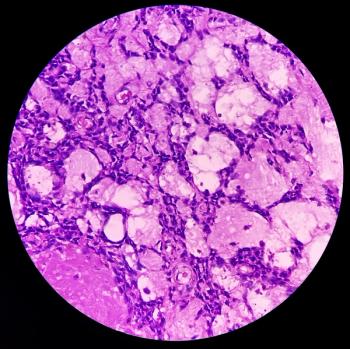
Little progress has been made in developing treatments that can help to stop Ewing sarcomas from spreading or coming back.
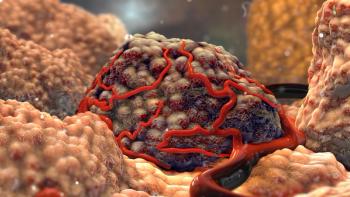
Oncolytic polymers may be the answer to circumventing therapeutic resistance in cancer treatment.

The results also indicate an association with increased risk of colorectal and noncolorectal gastrointestinal cancers as body mass index increases over time.