

The authors note that understanding the DNA methylation profile in leukemia can help predict whether or not a patient will respond to treatment.
The authors note that understanding the DNA methylation profile in leukemia can help predict whether or not a patient will respond to treatment.

The decision to vote in favor of idecabtagene vicleucel comes after positive phase 3 trial results demonstrating its efficacy compared with standard regimens.

The FDA-approved topical and oral agent is currently indicated for adult patients with patterned alopecia.

Chimeric antigen receptor T-cell therapies were associated with higher incidences, grades of severity, and longer duration of cytokine release syndrome compared with bispecific antibodies.

In a phase 1/2 clinical trial, lisocabtagene maraleucel helped patients with chronic lymphocytic leukemia (CLL) or small lymphocytic lymphoma (SLL) achieve complete response rates.

Results from the phase 3 RATIONALE 302 trial showed tislelizumab-jsgr prolonged survival compared to chemotherapy in patients who received prior systemic treatment.

This finding was evident in both examined groups and regardless of the patients' B-cell maturation antigen-directed therapy status.

Furthermore, the study authors indicated that patients with lymphoma and community-acquired pneumonia have broader dysregulated responses.

The combination of GZ17-6.02 and bortezomib reduced of HDAC, and as a result ATG13 phosphorylation was enhanced, BAK levels increased, and BCL-XL levels were reduced.

Counsel patients about smoking cessation products

This initiative aims to raise worldwide awareness of the disease while trying to strengthen the connection between members of the multiple myeloma community.

The study results also indicated that graft versus host disease status was associated with non-compliance following bone marrow transplantation.

In addition, the length of hospital admissions were greater in patients with hidradenitis suppurativa-associated cutaneous squamous cell carcinoma compared to other admissions.
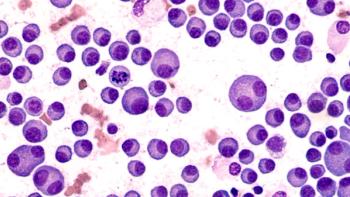
Despite the belantamab mafodotin regimen improving overall survival in patients with relapsed or refractory multiple myeloma, the trial is ongoing to confirm the presented results.

The vice president and chief pharmacy officer of City of Hope discusses obstacles women face in health care and how diversity, equity, and inclusion can be promoted within the space.

Patients with urothelial carcinoma who were treated with the nivolumab-based regimen had better OS and PFS compared with those who received cisplatin with gemcitabine alone.
The application was previously granted fast track designation and orphan drug designation.

“I see clinical pharmacy specialists (CPS) to be more like the frontline folks that would pretty much work very closely with the providers,” according to a CPS at City of Hope.

The designation is for all patients with low-grade serous ovarian cancer, regardless of their KRAS status and after 1 or more prior lines of therapy.

They also compared the approach of the European Medicines Agency and the FDA in drug approvals.

A phase 1 study previously demonstrated that MW032 and denosumab were bioequivalent in pharmacokinetics, pharmacodynamics, safety, and immunogenicity.

The CORe initiative is aimed at promoting inclusivity, reducing startup time for clinical trials, and facilitating data sharing to address recruitment and retention challenges in cancer research at community oncology sites.

Denosumab-bbdz (Wyost; Sandoz) and denosumab-bbdz (Jubbonti; Sandoz) are approved as interchangeable for all indications of denosumab (Xgeva and Prolia; Amgen).

The next-generation SRI was previously granted an Orphan Drug Designation in November 2023 and its safety and efficacy are currently being evaluated in clinical trials.

The novel therapy is also being evaluated for the treatment of solid tumors in pancreatic and non-small cell lung cancers.

Study findings could provide scientists more knowledge on why some populations face a higher risk of lung cancer compared to others.

The FDA also granted traditional approval to amivantamab-vmjw for adults whose disease has progressed on or after platinum-based chemotherapy.

Although regulation takes time, real safety concerns for patients in the rapid development of AI technology in health care are present today.

Although cancer death rates have decreased in the United States overall, they continue to rise in rural Appalachia, engendering a malaise of fatalism in the region.

Will Shapiro, vice president of Data Science at Flatiron Health, provides context into the terminology and history of these models.