
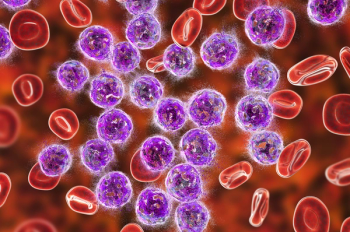
Approved indications for idelalisib include relapsed chronic lymphocytic leukemia, small lymphocytic lymphoma, and follicular B-cell non-Hodgkin lymphoma.
Approved indications for idelalisib include relapsed chronic lymphocytic leukemia, small lymphocytic lymphoma, and follicular B-cell non-Hodgkin lymphoma.

Relugolix is an orally administered treatment for prostate cancer that works by blocking the pituitary gland from making luteinizing hormone and follicle-stimulating hormone.

Previous studies have demonstrated an association between low levels of vitamin D in the blood and pain, sensitivity to infection, fatigue, depression, and lower self-rated quality of life.

The mutated genes in question, TET2 and DNMT3A, each influence the efficacy of treatment in different ways.
This designation could shorten the FDA review period to 8 months compared to the 12 months under Standard Review.

The kinase inhibitor is a promising treatment option for patients with MET exon 14 skipping mutation non–small cell lung cancer.

Silmitasertib has produced clinical benefit as a monotherapy and in combination with drugs such as gemcitabine and cisplatin.

For the study, approximately 20,000 people were followed over a span of 4 years, which showed that reports of marijuana use peaked at 9% for patients with cancer versus 14% among those with no cancer history.

The approval of Tibsovo marks the first and only targeted therapy approved for patients with previously treated IDH1-mutated cholangiocarcinoma.

Tisagenlecleucel is a CD19-directed genetically modified autologous T cell immunotherapy already indicated for B-cell precursor acute lymphoblastic leukemia and diffuse large B-cell lymphoma.

Researchers found that the levels of serum albumin and the number of metastatic sites that patients with lung cancer have were significantly associated with overall survival.

Active surveillance, intended to avoid unnecessary treatment and the resulting adverse effects, typically involves regular prostate-specific antigen (PSA) screenings, prostate exams, imaging studies, and repeat biopsies to carefully monitor prostate cancer growth or progression without compromising long-term outcomes.

Cholangiocarcinoma is a rare bile duct cancer, with physicians diagnosing approximately 8000 cases each year.

Directions in Oncology Pharmacy is getting to know oncology pharmacy professionals through a series of interviews. In this issue, we talk to Ashley E. Glode, PharmD, BCOP, who was recently named an Advocacy Champion by the American Society of Clinical Oncology (ASCO).

This research lays the foundation for future clinical trials aimed at investigating whether moderate to vigorous exercise can minimize “chemo brain,” which is a decline in cognitive function many patients with breast cancer experience.

Rylaze was granted Fast Track Designation by the FDA in October 2019 for acute lymphoblastic leukemia and was approved as part of the Real-Time Oncology Review program.

The pharmacist can provide information and support that patients with cancer need to get through what might be the most challenging time of their lives.
Median disease-free survival was nearly twice as long among patients with urothelial carcinoma who received nivolumab compared with placebo.

Kristin Ferguson, DNP, RN, OCN, outlined 4 principles for the reimbursement of oncology drugs, diagnostics, and biomarker testing that were recently released by the Association of Community Cancer Centers.
STRO-002 is a folate receptor alpha-targeting antibody drug conjugate for the treatment of patients with platinum-resistant epithelial ovarian, fallopian tube, or primary peritoneal cancer who have received 1 to 3 prior lines of systemic therapy.

The agents that have been evaluated and approved, and those that are coming in the pipeline, make for an exciting time to consider directed therapies.

As health care costs rise and cost-sharing increases, treatment-associated expenses will continue to burden patients.

A proactive approach can ensure that the patient is getting the right therapy at the right time and the right treatment plan with the least amount of waste.
The continued approval for this indication may be subject upon verification and description of clinical benefit in a confirmatory trial.

Approved by the FDA on June 29, 2020, the pertuzumab, trastuzumab, and hyaluronidase-zzxf combination therapy with chemotherapy offers several advantages to the standard treatment of pertuzumab plus trastuzumab with chemotherapy for breast cancers with HER2 overexpression.

These findings could lead to improved therapies and prolonged survival for patients with metastatic TNBC, according to the study authors.

English discussed the challenges and highlights of her time in the trial, in addition to what she feels health care professionals should learn from her own treatment experience.

Atrial fibrillation, bleeding, infection, and other adverse events may occur with this therapy.
The FDA has granted orphan drug designation to CFT7455 for the treatment of multiple myeloma, according to a press release from manufacturer C4 Therapeutics.
The designation highlights the need for new treatment options for patients with platinum-resistant ovarian cancer and the significant treatment potential of IN10018, according to a press release from InxMed, the manufacturer of the novel drug.