The most enduring resources a preceptor can give students are the confidence and tools to ask deeper questions.
Make sure your communication is respectful, personalized, and strategic for maximum benefit.
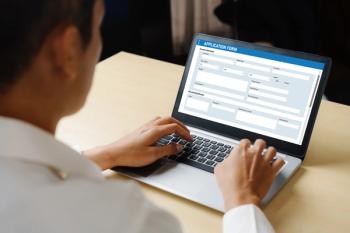
Emails can be a daunting part of pharmacy school. From the moment you set up your school email, your inbox becomes full—quickly. It is easy to ignore your email notifications and even easier not to use your email to its full potential. However, if used properly, email can become your best friend in pharmacy school. I have found email to be especially helpful in my first year.
More than likely, sometime during your orientation, email etiquette was mentioned: Do not call your professors by their first names, and do use formal titles, greetings, and endings. If you were anything like me, you tuned this part of orientation out. Maybe these tips seemed like a “no-brainer” to you, or maybe you were tired from information overload. Either way, you may have been told that the presentation can be found on Canvas for future reference (and you will probably never reference it).
Nevertheless, I would like to share a few tips that were not covered in my pharmacy school orientation that I have found helpful throughout my first year of pharmacy school.
Schedule your emails. Picture this: It is midnight. You are working on an assignment. This is a typical Tuesday night for you but not for your professor, who fell asleep around 9:00 PM. However, you have a question right this minute, and to your sleep-deprived brain, the question is urgent. Type your email and schedule it to be sent at a reasonable hour. Not only does this show you are respectful of your professor’s time, but it also shows that you are proactive and have a desire to understand the topic at hand. Plus, it is one less thing to remember to do in the morning.
Keep a contact list. Once your school shuts down your email, you cannot get it back. Several alumni from my undergraduate institution learned this the hard way. Although I recommend using your school email for all things pharmacy related, I also recommend maintaining an email that you can use in the event your school email is deleted, likely after graduation. Keeping a contact list can be crucial for future references or job opportunities. Emails are not always something that comes up on Google, and it can be very time-consuming to find the correct contact.
Stay away from using templates or artificial intelligence (AI). As AI becomes more prevalent in higher education, it has become easier to distinguish who uses ChatGPT and who does not. Although it may save you some time to have AI write your email or use a template, you may be missing out on developing crucial communication skills. There is not a template for every email, nor can you rely on AI while speaking face-to-face with an individual. Personalized emails can set you apart from your classmates.
Type out your emails. I do not recommend using voice-to-text. Your words may be misinterpreted (tone can be interpreted very differently face-to-face vs online), and your email may be sent to the wrong person or worse, your entire class. Typing out emails helps to prevent easily avoided mistakes, like the dreaded “reply all” option (which you should use very sparingly).
It is OK to treat your emails like an essay. No, I do not mean that emails should be multiple pages in length. What I mean is using the essay writing process when writing important emails. Do not be afraid to draft your emails on other platforms. Brainstorm! Have a friend or colleague read your email before you send it. Read your email aloud. First impressions, even if they are over email, are important.
Never assume someone knows who you are the first—or even second—time you email them. I always introduce myself in the first paragraph of my email. The introduction does not have to be long, but it should clarify who you are. When emailing professors at my university, I include which class I am in and which lecture I am asking about. For other pharmacy professionals, I include my year in pharmacy school and where I am generally located.
“Cold” emailing has minimal consequences, so do it. The worst thing that has happened to me from cold emailing someone is not getting a reply. Cold emailing has led me to many networking opportunities.
Keep your signature short, and conciseness is key. You do not need to include every club position you hold; that is for your curriculum vitae. I would limit my signature to including my first and last name, any professional titles, school, and year of graduation. If you want to chat more casually or in-depth with a professor, stop by during their office hours. Trust me, your professors want to speak with you.
Pharmacy is a small world. Please keep this in mind whenever you are communicating with your professors and/or pharmacy professionals. Your reputation is important. Kindness and courtesy matter!
6 months ago
The Prescription That Wasn’t There6 months ago
A New Doctor of Pharmacy Pathway