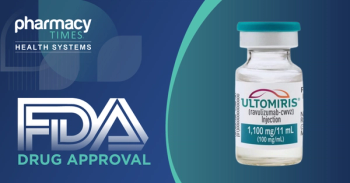
The approval gives patients aged 12 years and older a once-daily oral pellet alternative to capsules for preventing hereditary angioedema (HAE) attacks.
The NIH’s expanded All of Us data set links genomic, clinical, environmental, and wearable data from a diverse population to advance precision medicine and pharmacogenomic research.
The National Institutes of Health (NIH) has released a major expansion of its All of Us Research Program data set, providing researchers with access to genomic, clinical, behavioral, environmental, and wearable-device data from a large and diverse US population. The updated resource includes data from more than 747,000 participants, enabling the linkage of nearly 482,000 electronic health records (EHRs) connected to 535,000 whole-genome sequences.1
By connecting genetic information with longitudinal health data, the program may help researchers identify factors that influence disease susceptibility, progression, treatment response, and medication-related adverse events (AEs). This release further advances the program toward its goal of enrolling at least 1 million participants and following their health over time.1
All of Us launched nationally in 2018 and was designed in order to move biomedical research beyond a one-size-fits-all model. Participants may contribute biospecimens, EHR information, physical measurements, survey responses, and data from wearable devices. These data are organized within a secure, cloud-based research environment known as the All of Us Researcher Workbench.1,2
The updated resource contains more than 1.3 billion genetic variants, giving researchers an opportunity to study both common and rare genetic differences alongside diagnoses, laboratory findings, medication use, socioeconomic factors, and environmental exposures.1
This integrated approach is important because genetics alone often cannot explain why a disease develops, how quickly it progresses, or why patients respond differently to the same treatment. Linking genomic findings with clinical and real-world data may help researchers evaluate the combined effects of biology, behavior, environment, and health care access.
A central feature of All of Us is its emphasis on populations historically underrepresented in biomedical research. According to the NIH, more than 86% of program participants represent communities—including racial and ethnic minority groups, rural populations, individuals with disabilities, and people facing socioeconomic barriers—that have traditionally been overlooked in health research.1
The lack of diversity in earlier genomic studies has limited the generalizability of some genetic associations and risk-prediction tools. Many large genomic data sets have disproportionately represented individuals of European ancestry, creating uncertainty about whether findings apply consistently across populations.
An earlier analysis of 245,388 whole-genome sequences from All of Us identified more than 1 billion genetic variants, including over 275 million variants that had not previously been reported. Researchers also demonstrated that linking genomic results with longitudinal EHR data could support the evaluation of genetic associations across multiple diseases and ancestry groups.3
Expanding the number and diversity of available genomes may help researchers develop more representative disease-risk models, identify previously unrecognized therapeutic targets, and evaluate whether genetic variants affect treatment outcomes differently among patient populations.
One of the most significant potential applications is pharmacogenomics, which examines how genetic variation affects medication response. Larger and more diverse data sets may improve understanding of variants associated with altered drug metabolism, reduced treatment efficacy, or increased toxicity.
The resource could support research involving gene-drug relationships, medication-associated AEs, treatment adherence, prescribing patterns, and health disparities. Investigators may also be able to examine how genetic factors interact with comorbidities, concurrent therapies, environmental exposures, and social determinants of health.
All of Us has already been identified as an important resource for expanding pharmacogenomic research beyond populations that have traditionally dominated genetic studies. More representative evidence may eventually improve the accuracy of clinical decision-support tools and help prevent the inappropriate extrapolation of genetic findings across populations.4
However, the expanded data set does not immediately change medication-selection recommendations. Findings generated through the program will still require validation, prospective evaluation, and translation into evidence-based clinical guidance before they can be routinely incorporated into pharmacy practice.
It is crucial for health care professionals to remain aware of issues involving patient privacy, informed consent, data interpretation, and equitable access to genomic testing. Genetic information should be considered alongside clinical history, organ function, concurrent medications, treatment goals, and patient preferences rather than used as an isolated determinant of therapy.
The data release comes as the program faces uncertainty regarding long-term federal support. All of Us has been funded through annual appropriations and funding authorized under the 21st Century Cures Act. NIH reported that program funding fell to about $158 million in fiscal year 2025, representing an approximate 71% reduction from fiscal year 2023 levels. The agency stated that the reductions have affected enrollment, data collection, and the development of a pediatric cohort.5
Continued support will be important to maintain participant engagement, protecting stored data and biospecimens, and expanding the longitudinal information necessary to translate large-scale genomic findings into clinically meaningful tools.
For pharmacists, the program represents a potentially important foundation for more individualized medication use. Its long-term impact will depend not only on the size of the database, but on the quality of its evidence, the diversity of its participants, and the successful translation of research findings into accessible and equitable patient care.