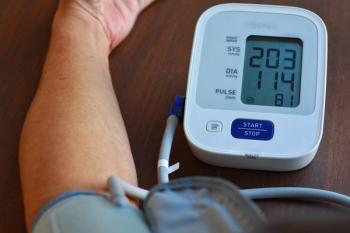
A meta-analysis of 27 trials found 15% lower cardiovascular (CV) event risk per 10-mm Hg SBP reduction, with eGFR declines but no rise in kidney failure.
A study found worsening chronic kidney disease (CKD) severity was independently associated with increased mortality risk and exponentially higher rates of kidney replacement therapy initiation following ICU admission.
Patients with more advanced chronic kidney disease (CKD) face substantially worse outcomes after admission to the intensive care unit (ICU), including higher short-term mortality, greater likelihood of requiring kidney replacement therapy (KRT), and longer hospital stays, according to findings published in JAMA Network Open.1
“This finding provides clinicians with objective prognostic information to support shared decision-making,” Gregory Hundemer, MD, MPH, clinician scientist in inflammation and chronic disease at the Ottawa Hospital Research Institute and study investigator, said in an interview with Pharmacy Times. “That information can help clinicians, pharmacists, patients, and families have more informed discussions about expectations, recovery, and goals of care.”
The population-based cohort study analyzed 531,090 consecutive ICU admissions across Ontario, Canada, and found that CKD was present in approximately 25% of all critically ill adults, which is double the disease's prevalence in the general Canadian population. Worsening baseline kidney function was independently associated with increased mortality and KRT initiation even after adjustment for illness severity, comorbidities, and critical care interventions.1
The cohort included adults admitted to an ICU between November 1, 2008, and February 28, 2021, who had a baseline outpatient serum creatinine measurement obtained 7 to 365 days prior to admission. Estimated glomerular filtration rate (eGFR) was calculated using the 2021 CKD Epidemiology Collaboration formula and used to classify patients by KDIGO CKD stage: no CKD (eGFR ≥60, mL/min/1.73 m2; 75%); stage 3a (eGFR 45-59; 12%); stage 3b (eGFR 30-44; 7%); stage 4 (eGFR 15-29; 3%); non–dialysis-dependent stage 5 (eGFR <15; 1%); and maintenance dialysis (2%).1,2
Primary outcomes included all-cause mortality at ICU discharge, hospital discharge, and 90 days. Secondary outcomes included KRT initiation during the ICU stay, KRT dependence at 90 days, and length of stay. Multivariable models adjusted for age, sex, comorbidities, illness severity via the Multiple Organ Dysfunction Score (kidney component excluded), vasopressor and mechanical ventilation use, and presence of sepsis or septic shock.1
Mortality risk increased progressively with CKD severity through non–dialysis-dependent stage 5. Relative to patients without CKD, adjusted ORs for 90-day mortality were about 1.14 (95% CI, 1.11-1.17) for stage 3a, 1.38 (95% CI, 1.34-1.42) for stage 3b, 1.95 (95% CI, 1.87-2.03) for stage 4, and 2.32 (95% CI, 2.14-2.52) for non–dialysis-dependent stage 5.1
Patients receiving maintenance dialysis did not follow this pattern, with a 90-day mortality OR of about 1.92 (95% CI, 1.82-2.04), lower than non–dialysis-dependent stage 5 and comparable to stage 4. The investigators suggested this may reflect better volume and metabolic control with dialysis, a lower threshold for ICU transfer in this population, or survival bias.1,3
Among patients not already receiving maintenance dialysis, the likelihood of initiating KRT during the ICU stay rose sharply by CKD stage. Adjusted odds ratios (ORs) for ICU KRT initiation relative to patients without CKD were 1.79 (95% CI, 1.68-1.90) for stage 3a, 3.02 (95% CI, 29.07-35.22) for stage 3b, 6.71 (95% CI, 6.23-7.22) for stage 4, and 32.00 (95% CI, 29.07-35.22) for non–dialysis-dependent stage 5.1
Among patients who survived to 90 days and had initiated KRT during their ICU stay, the proportion remaining KRT dependent increased markedly by stage: approximately 7.2% for those without CKD, 14.2% for stage 3a, 22.5% for stage 3b, 50.3% for stage 4, and 83.8% for previously non–dialysis-dependent stage 5 CKD. KRT dependence at 90 days represents a well-accepted threshold for end-stage kidney disease (ESKD).1,4
Hospital length of stay increased progressively with CKD severity, with patients with non–dialysis-dependent stage 5 CKD experiencing the longest stays. Patients on maintenance dialysis had shorter stays than those with non–dialysis-dependent stage 5 CKD, mirroring the mortality pattern.1
The authors concluded that the presence and severity of CKD were associated with adverse outcomes after ICU admission—including death, ESKD, and prolonged length of stay—and that these findings should inform risk prognostication, goals-of-care discussions, resource allocation, and health policy for this large and undercharacterized portion of the critical care population.1,5
“Patients receiving maintenance dialysis may have better control of fluid overload, electrolyte abnormalities, and other metabolic complications, and clinicians may have a lower threshold for ICU admission because dialysis is an established life-sustaining therapy,” Hundemer noted. “In contrast, patients with non–dialysis-dependent stage 5 CKD may present later in the course of critical illness and have severe metabolic complications that have not yet been treated with dialysis.”
For pharmacists practicing in or supporting critical care settings, these findings reinforce the importance of baseline kidney function as a key driver of clinical risk in ICU patients. Patients with advanced CKD admitted to the ICU are at a substantially elevated risk for acute-on-chronic kidney injury, which can rapidly alter the pharmacokinetics of renally-cleared medications (eg, antibiotics, anticoagulants, electrolyte-altering agents), necessitating close monitoring and frequent dose reassessment. Pharmacists should also anticipate the high likelihood of KRT initiation in patients with stage 4 or non–dialysis-dependent stage 5 CKD, as the initiation of dialysis introduces additional pharmacokinetic considerations related to drug clearance via the dialysis membrane.
Stay informed on drug updates, treatment guidelines, and pharmacy practice trends—subscribe to Pharmacy Times for weekly clinical insights.
Subscribe