Growing evidence points to gallstones and cholecystitis as an underrecognized risk of GLP-1 RA therapy—pharmacists are well positioned to catch it early.
The new program gives eligible Medicare Part D beneficiaries access to Wegovy, Zepbound, and Foundayo for weight management at a flat $50 co-pay, but early claim-routing errors show pharmacists have a critical role in getting patients across the bridge.
The Centers for Medicare & Medicaid Services (CMS) has launched the Medicare GLP-1 Bridge, a short-term demonstration designed to expand access to glucagon-like peptide-1 (GLP-1) medications for weight management and to test the effects of broader access on the Medicare program. Eligible beneficiaries enrolled in Medicare Part D can now obtain qualifying GLP-1 medications for weight loss or weight maintenance at a fixed $50 monthly co-pay, running from July 1, 2026, through December 31, 2027.1,2
“The Medicare GLP-1 Bridge creates a new pathway for eligible beneficiaries to afford GLP-1 medications,” CMS Administrator Mehmet Oz, MD, said in the announcement.1
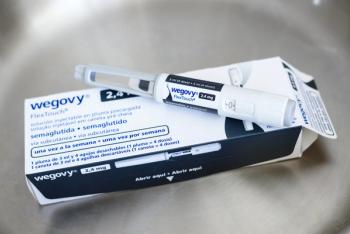
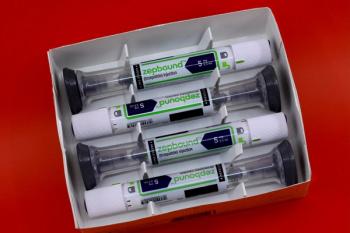
The Bridge covers semaglutide (Wegovy; Novo Nordisk), tirzepatide (Zepbound KwikPen; Eli Lilly and Company), and orforglipron (Foundayo; Eli Lilly and Company) in all formulations when prescribed to reduce or maintain weight loss. Beneficiaries already receiving GLP-1 coverage through their existing Part D benefit, including those using these drugs for type 2 diabetes or other approved indications, are not eligible for the Bridge. Coverage applies to individuals enrolled in a standalone prescription drug plan or a Medicare Advantage plan with drug coverage; most Part D enrollees qualify, although certain plan types, including private fee-for-service and PACE plans, are excluded.1-3
Unlike routine Part D claims, the Bridge operates entirely outside the Part D benefit's coverage and payment flow, meaning plan sponsors carry no financial risk and are not required to opt in. CMS is using a single central processor, assigned a dedicated bank identification number and processor control number, to manage prior authorization, claims adjudication, and pharmacy payment for the program. Because the Bridge sits outside standard Part D, the $50 co-pay does not count toward a beneficiary's deductible or true out-of-pocket costs, and no low-income subsidy applies.2,3
In the program's first days, a notable share of eligible patients were turned away at the pharmacy counter—not for lack of eligibility, but because claims submitted through a patient's standard Part D plan are automatically rejected under the Bridge's separate payment structure. Pharmacists are advised to confirm that claims route to the Bridge's designated processor rather than to the beneficiary's usual plan, and to expect an initial rejection, followed by a request for prior authorization documentation from the prescriber. Given the program's novel workflow, pharmacists are likely to field questions from confused patients and prescribers unfamiliar with the routing process in the coming weeks.3,4
“As we learn about what demand for Medicare GLP-1 Bridge coverage will be, pharmacies can make projections based on obesity prevalence in older adults and other people with a Medicare Part D plan,” Lisa Schwartz, PharmD, senior director of professional affairs at the National Community Pharmacists Association, said in an interview with Pharmacy Times.
“Most people respond well to getting information that helps them avoid wasting time, so it can be helpful to prepare talking points pharmacy staff can use to let patients know that while GLP-1 drugs are expensive and not routinely stocked, they can be ready the business day following the prior authorization,” Schwartz continued.
The Bridge was originally conceived as a runway to the Better Approaches to Lifestyle and Nutrition for Comprehensive Health (BALANCE) Model, which would have allowed Part D plans to opt into GLP-1 weight-loss coverage starting in 2027. With that model's Part D component now delayed indefinitely, CMS extended the Bridge through the end of 2027, in part to continue collecting utilization data that could inform future coverage decisions.2
“Pharmacists can focus on helping patients make the most of the GLP-1 Bridge,” Schwartz noted. “CMS has rather quickly rolled out a number of programs aimed at helping improve prescription drug access and affordability, and it’s possible BALANCE gets the reboot it needs with an extra year to fine-tune details for Part D plan participation.”
Stay informed on drug updates, treatment guidelines, and pharmacy practice trends—subscribe to Pharmacy Times for weekly clinical insights.
Subscribe