St Peter also pointed pharmacists toward key resources, including the National Kidney Foundation's CKD Intercept initiative and her own Advancing Kidney Health through Optimal Medication Management (AKOM) initiative, which offers free continuing education modules and a Learning and Action Collaborative for pharmacist-led teams. She closed by thanking the American Heart Association, American College of Cardiology (ACC), American Diabetes Association (ADA), and American Society of Nephrology (ASN) for the opportunity to contribute to the guideline.
Pharmacy Times: From your perspective, what will it take at the pharmacist level to make sure the kidney piece of CKM doesn't get overlooked in everyday practice?
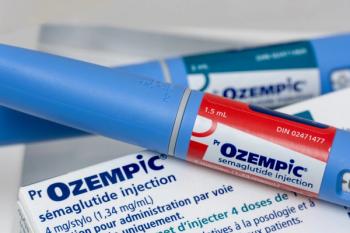
Wendy L. St Peter, PharmD, FCCP, FASN, FNKF: Luke, I'm so glad you asked that question, because of all the CKM components, it's the K in CKM that is greatly underrecognized and undertreated. I've noted that pharmacists recognize the need for dosing changes with reduced kidney function, but many pharmacists and other clinicians don't appreciate that we need to think about the kidney in the same way we think about the heart. The 2 organs are really intertwined—what is good for the heart is typically good for the kidney and vice versa. Many of the same guideline-directed medical therapies we use to manage diabetes and reduce risk of myocardial infarction or stroke also reduce risk of chronic kidney disease progression. The kidney is an important target organ for our GDMTs, like ACE inhibitors and ARBs, SGLT2 inhibitors, GLP-1 receptor agonists, and nonsteroidal MRAs. All of these have been shown to reduce the risk of kidney disease progression, as well as the risk of cardiovascular disease. So, as pharmacists, if we initiate and maintain patients on these GDMTs, we reduce the patients’ risk of kidney disease progression, and subsequently, their risk of kidney failure, cardiovascular disease, and heart failure. It's a win-win—I love that we have these amazing medications, because we can use them across all these CKM areas. It is so important for pharmacists to be in the game to do this.
Key Takeaways
- The kidney is as critical a target organ as the heart in CKM management—GDMTs like SGLT2 inhibitors, GLP-1 RAs, and nonsteroidal MRAs benefit both organs simultaneously.
- Order both eGFR and UACR for high-risk patients (hypertension, diabetes, and family history) to avoid under-diagnosing CKD.
- Resources like NKF's CKD Intercept and the AKOM Learning and Action Collaborative can help pharmacists build sustainable CKM-related CMM services.
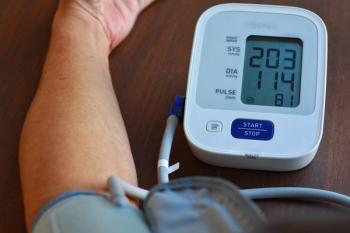
I also want to point out one more thing: pharmacists can initiate screening for CKD in patients at high risk for CKD—those with hypertension, diabetes, or a family history of kidney disease. We are underrecognizing a lot of patients who have kidney disease because we don't order both tests: the eGFR—of course, we order the serum creatinine and calculate eGFR—but we can't forget about the urine albumin-to-creatinine ratio, or UACR. Those are the 2 things needed to determine the CKD stage and that person's risk of CKD progression. We also need that information to place persons into the appropriate CKD stage and risk group and to use that eGFR and UACR as inputs into the PREVENT calculator to determine their cardiovascular disease risk.
Pharmacy Times: Is there anything else that you would like to add?
St Peter: I would like to add a couple of things. First, I want to tell pharmacists where to find resources if they want to implement CKM-related comprehensive medication management and screening. The National Kidney Foundation's CKD Intercept initiative has resources that can help pharmacists improve CKD testing, early detection, and management of CKD. I love the National Kidney Foundation because they're an interprofessional society, and it positions pharmacists as vital health care team members who can help bridge the huge gap in CKD screening and diagnosis.
Second, the Advancing Kidney Health through Optimal Medication Management initiative—we call it AKOM—I’m the director of this national initiative, and I want people to know about its 2 resources for pharmacists. First, we have free continuing education modules that address CKD screening, use of eGFR instead of Cockcroft-Gault creatinine clearance for medication-related decisions, and GDMT initiation and management in persons with CKM conditions that include CKD. Second—and this is important—we have our AKOM Learning and Action Collaborative (LAC). We just finished our first 16-month Learning and Action Collaborative with 7 diverse, pharmacist-led teams across the US. We provided coaching from experts in CKD and CKM, experts in billing and reimbursement, and experts in using electronic health record tools to help develop a comprehensive medication management service for patients with CKM. We presented results of our first LAC at the 2025 American Society of Health-System Pharmacists Midyear Clinical Meeting and the 2026 National Kidney Foundation meeting, and we have 4 publications under way to show the results. We will be deploying our second Learning and Action Collaborative, probably in 2027, so I just want to make pharmacists aware of that, because this is really implementation and action—the Learning and Action Collaborative really helps pharmacists implement that practice.
The last thing I want to do is thank Pharmacy Times for inviting me to do this and also the American Heart Association for inviting me to be on the writing committee for the new guideline, as well as the other key professional societies—the ACC, the ADA, and the ASN—for working together to develop this important guideline for persons with CKM syndrome.