
Opinion|Videos|July 16, 2026
From DREAMM-7 to DREAMM-8: Clinical Evidence, Conference Updates, and Managing Belantamab Mafodotin Adverse Events
Al-Ola Abdallah provided an overview of the DREAMM-7 trial, a multicenter phase 3 study in which belantamab mafodotin plus bortezomib and dexamethasone demonstrated a progression-free survival of approximately 3 years compared with 13 months for the daratumumab plus bortezomib and dexamethasone comparator arm, along with a 42% reduction in the risk of death and higher rates of minimal residual disease (MRD) negativity.
Advertisement
Episodes in this series
In this episode, 'From DREAMM-7 to DREAMM-8: Clinical Evidence, Conference Updates, and Managing Belantamab Mafodotin Adverse Events,' the expert oncologists and oncology pharmacists explored the following questions:
What was the study design of the DREAMM-7 clinical trial?
What were the key efficacy and safety results from this trial?
How did the DREAMM-8 trial differ from DREAMM-7 and what were the key efficacy and safety results here? How do they carry over into your clinical practice?
Can you please outline the important updates with this therapy from this year's American Society of Clinical Oncology (ASCO) and European Hematology Association (EHA) conferences?
What are the best practices for monitoring severe thrombocytopenias and infections associated with belantamab mafodotin?
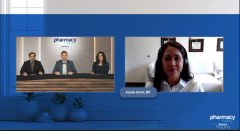
Al-Ola Abdallah provided an overview of the DREAMM-7 trial, a multicenter phase 3 study in which belantamab mafodotin plus bortezomib and dexamethasone demonstrated a progression-free survival of approximately 3 years compared with 13 months for the daratumumab plus bortezomib and dexamethasone comparator arm, along with a 42% reduction in the risk of death and higher rates of minimal residual disease (MRD) negativity. He then described the DREAMM-8 trial, which evaluated belantamab mafodotin in combination with pomalidomide and dexamethasone as an alternative for patients unable to tolerate bortezomib, noting that while overall response rates were similar between arms, the depth of response favored belantamab, with complete remission rates of approximately 40% versus 17% and a 12-month progression-free survival rate of 71% versus 51%. Dr. Abdallah also highlighted long-term updates presented at ASCO and EHA, including a median progression-free survival of approximately 35 months in DREAMM-8 and a median overall survival not yet reached in the belantamab arm of DREAMM-7. Anjulie Quick noted that ocular toxicity was observed in 92% of DREAMM-7 patients, with 83% requiring dose modifications, reinforcing the importance of regular ophthalmologic screening and proactive management. Zahra Mahmoudjafari outlined best practices for monitoring thrombocytopenia and infections, emphasizing the need to distinguish whether cytopenias are driven by belantamab or bortezomib, ensuring appropriate platelet transfusion support, maintaining infection prophylaxis including vaccinations and prophylactic antibiotics, managing hypogammaglobulinemia with intravenous immunoglobulin (IVIG), and proactively educating patients to report any unusual symptoms such as unexpected bruising or bleeding.
Throughout the conversation, the experts provided a comprehensive reflection on the field and the factors that may shape how clinicians approach care moving forward.
In the next episode, 'Ocular Adverse Events With Belantamab Mafodotin: Diagnosis, Monitoring, and Multidisciplinary Management,' panelists continue their discussion on relapsed/refractory multiple myeloma and highlight the ocular adverse events associated with belantamab mafodotin, the role of optometrists and ophthalmologists in diagnosing and managing these effects, how multidisciplinary care can be optimized for patients experiencing ocular toxicity, and a real-world case example illustrating best practices in ocular adverse event management.
Advertisement
Related to this article

Neither the lipoprotein(a) [Lp(a)]-lowering antisense oligonucleotide nor the IL-6 inhibitor cut CV events in phase 3, but patients with high Lp(a) may still bring questions to pharmacists.

Pharmacists make a difference in patients’ lives through MTM services.

Peptide cancer vaccines target neoantigens to boost T cells, with promising melanoma and pancreatic trials hinting at a new era in immunotherapy.

AI tools in pharmacy education risk eroding critical thinking, lab competency, and patient safety if used as substitutes for foundational learning.

The Main Street Pharmacy Access Act would let Medicare pay pharmacists for care they can already legally provide, if pharmacies have the time.

Ali A. Habib, MD, discusses how NIMBLE’s hospitalization findings complement symptom outcomes for investigational cemdisiran and highlights pharmacists’ role in vaccination tracking and infection-risk counseling.
Rather than requiring a new trial, the FDA extended evidence from carcinoma in situ to high-grade papillary-only disease, a new approach for this setting.

Pharmacists can address patient fears about fentanyl by distinguishing illicit from prescribed opioids and promoting safe, empathetic, evidence-based opioid use.
Advertisement
Advertisement
Trending on Pharmacy Times
1
What Cemdisiran Could Mean for Myasthenia Gravis Treatment and Patient Safety
2
VYD2311 May Offer Vaccine-Hesitant and Immunocompromised Individuals a New COVID-19 Immunization Option
3
Celebrate the Path to MTM During American Pharmacists Month
4
The Future of Health Care Access Runs Through the Pharmacy
5