
Survivor and pharmacist Kelly Gable, PharmD, BCPP, FAAPP, explains the overlooked challenges shaping patients’ day-to-day lives.
Survivor and pharmacist Kelly Gable, PharmD, BCPP, FAAPP, explains the overlooked challenges shaping patients’ day-to-day lives.

In a session at the American Pharmacists Association Annual Meeting, Craig Beavers, PharmD, FACC, FAHA, FCCP, BCCP, BCPS-AQ Cardiology, CACP, provided practical insights for pharmacists to optimize the care of patients with cardio-kidney-metabolic conditions.
Experts detail the workflows and decisions behind launching complex bispecific therapies.
Multicenter data suggests dexamethasone may safely replace tocilizumab for low-grade CRS.

The FDA removed the age requirement from the neffy 1-mg label, allowing use based solely on weight and expanding access to younger pediatric patients at risk for anaphylaxis.

Pharmacists at the 2026 HOPA Annual Meeting discuss medical misinformation and how to combat it.
Oncology pharmacists explore how GLP-1 agents intersect with cancer treatments, overlapping toxicities, and shared decision-making.

CDC flags a late respiratory syncytial virus (RSV) rise, while the NFID urges spring vigilance, vaccines, and monoclonals to protect infants and older adults from this virus.
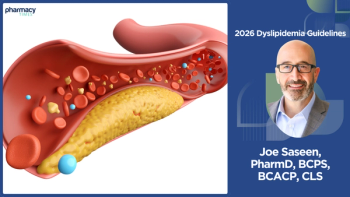
Joseph Saseen, PharmD, explains the 2026 dyslipidemia guidelines' push for universal lipoprotein A screening, clarifies when apolipoprotein B testing adds value, and outlines how new FDA-approved therapies fit into the updated lipid-lowering treatment algorithm.
Experts discuss real-world BTCE challenges, toxicity monitoring, and evolving pharmacy practice.
The safety and effectiveness of marne-cel were established in an open-label, single-arm, multicenter phase 1/2 clinical trial.

Volunteer service strengthens pharmacists’ empathy, confidence, and communication, boosting patient trust, teamwork, and community connection.
Practical insights for navigating rare, high-stakes toxicities.

Expert insights on toxicity management, resistance mechanisms, and frontline integration of Bruton tyrosine kinase inhibitors in MCL.

Insulin icodec-abae injection becomes the first and only once-weekly basal insulin option, offering personalized care for adults with type 2 diabetes (T2D).
New data, emerging targets, and evolving ADC use are reshaping second-line decisions.

Experts discuss the 340B Pricing Program, sharing updates, ongoing challenges, and solutions for pharmacists.

ABBV-744 BD2-selective BET inhibitor shows early spleen and symptom gains with manageable cytopenias in a phase 1b trial.
Matthew Warrick, PharmD, BCPS, BCOP, discusses mechanisms, safety nuances, and practical considerations shaping bispecific antibody use in lymphoma care.

Jacinda “JAM" Abdul-Mutakabbir, PharmD, MPH, discusses the adult burden of respiratory syncytial virus (RSV) and the critical role of pharmacists in vaccine access and education—especially for marginalized populations.

A panel of neurology pharmacy specialists discusses the expanding clinical role of pharmacists in multiple sclerosis care.

The FDA ramps up action on compounded GLP‑1 weight‑loss drugs, targeting telehealth ads as Novo Nordisk sues Hims & Hers and regulators hint at seizures.

Late-stage Lyme disease vaccine candidate VLA15 boosts immunization hopes as tick infections rise.

Tarlatamab, a DLL3 T‑cell engager, advances treatment of extensive‑stage SCLC.

Insights from the 2026 HOPA Annual Conference highlight the pharmacist's role in operationalizing belantamab mafodotin.
Key risks, overlooked toxicities, and real-world monitoring strategies for bispecific T-cell engagers.
Oncology pharmacist Emma Jones, PharmD, BCOP, outlines how clinicians can recognize and manage these complex cases.

The approval is a milestone for rare disease that has lacked treatments capable of crossing the blood-brain barrier and introduces a new class of agent that pharmacists will need to understand.
A dual-center retrospective study compares 2 fludarabine washout strategies to assess their impact on neutrophil engraftment, infections, growth factor use, and hospital length of stay.

Craig Beavers urges pharmacists to engage with obstructive hypertrophic cardiomyopathy (oHCM) management and explains how the alignment between mavacamten's clinical trial data and real-world outcomes validates its role as a safe, effective, and sustainable long-term therapy.