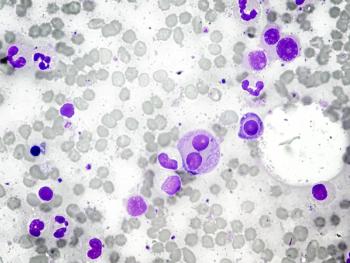
Relapsed multiple myeloma is different from being diagnosed with another type of cancer, and individuals are at an increased risk of developing acute myeloid leukemia and myelodysplastic syndrome, both of which are blood cancers.2
"The reality for most patients with multiple myeloma is a relentless cycle of remission and relapse, as their disease becomes refractory to treatments. Patients urgently need more effective treatment options that can offer more quality time with their loved ones. We see the potential for [belantamab mafodotin-blmf] in combination to help patients achieve this," Michael Andreini, president and chief executive officer of the Multiple Myeloma Research Foundation and the Multiple Myeloma Research Consortium, said in the news release.1
Clinical Trial Data Supporting Blenrep Approval
The approval of belantamab mafodotin-blmf is based on data from the multicenter, open-label, randomized phase 3 DREAMM-7 trial (NCT04246047), which evaluated the safety and efficacy of the monoclonal ADC combined with the daratumumab-based triplet (DVd).1
A total of 494 patients were included and randomly assigned to receive either BVd or DVd with a 2.5-mg/kg intravenous dose of belantamab mafodotin-blmf every 3 weeks in combination for the first 8 cycles, then continued as a single agent.1
The results of the trial demonstrated a 51% reduction in the risk of death, along with an increased median progression-free survival of 31.3 months among patients who received 3 lines or more of prior therapy.1,3
“With the approval of [belantamab mafodotin-blmf], we now have a community-accessible BCMA-targeting agent with the potential to improve outcomes for patients following 2 or more prior lines of treatment, where options are limited. This approval marks an important advance in the US relapsed/refractory treatment landscape,” Sagar Lonial, MD, chief medical officer, Winship Cancer Institute of Emory University in Atlanta, Georgia, and chair of Emory Department of Hematology and Medical Oncology, said in the news release.1
GSK noted that it is advancing the DREAMM program to evaluate belantamab mafodotin-blmf in earlier treatment settings. Ongoing follow-up from the DREAMM-7 and DREAMM-8 (NCT04484623) trials will provide overall survival data in early 2028, including patients with only 1 prior therapy.1,4
REFERENCES
2. Multiple myeloma relapse. City of Hope. Updated June 5, 2023. Accessed October 24, 2025. https://www.cancercenter.com/cancer-types/multiple-myeloma/types/relapsed-multiple-myeloma
3. Evaluation of efficacy and safety of belantamab mafodotin, bortezomib and dexamethasone versus daratumumab, bortezomib and dexamethasone in participants with relapsed/refractory multiple myeloma (DREAMM 7). ClinicalTrials.gov. Updated October 24, 2024. Accessed October 23, 2025. https://www.clinicaltrials.gov/study/NCT04246047
4. Belantamab mafodotin plus pomalidomide and dexamethasone (Pd) versus bortezomib plus Pd in relapsed/refractory multiple myeloma (DREAMM 8). ClinicalTrials.gov. Updated March 18, 2025. Accessed October 24, 2025. https://clinicaltrials.gov/study/NCT04484623