

ASCO 2026: Glofitamab monotherapy shows durable remissions in relapsed mantle cell lymphoma after BTKi, with manageable CRS.
ASCO 2026: Glofitamab monotherapy shows durable remissions in relapsed mantle cell lymphoma after BTKi, with manageable CRS.

At ASCO 2026, CHRYSALIS-2 data show amivantamab plus lazertinib extends survival in atypical EGFR-mutated NSCLC, reshaping first-line care.

Emerging evidence links GLP-1 receptor agonists to improved breast cancer outcomes and the growing importance of metabolic health in survivorship care.
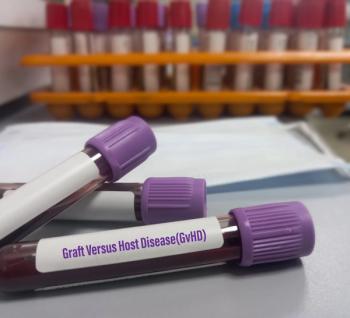
New findings suggest that differences in immune reconstitution kinetics may drive variations in graft-versus-host disease incidence, infection risk, and overall survival.

Afrezza is the only ultra rapid-acting inhaled insulin approved by the FDA to improve glycemic control in children, adolescent, and adult patients with diabetes.

This interview discusses emerging immunotherapy trends at the 2026 ASCO Annual Meeting, including cancer vaccines, cell-based therapies, ADCs, and AI-driven immune profiling tools poised to reshape oncology care.

Hidden payer site-of-care restrictions delay specialty infusions, driving administrative burden and patient harm—and show why transparent criteria and better coordination matter.

Subgroup data show ofatumumab sharply cuts relapses, MRI lesions, and neurodamage markers in highly active relapsing MS vs teriflunomide.

Genetic analysis links low vitamin D and earlier menarche to higher AQP4-IgG NMOSD risk, reshaping prevention and sparking calls for diverse studies.

Phase 3 FENhance trial data show CNS-penetrant BTK inhibitor fenebrutinib cuts relapses and MRI lesions in relapsing MS.

New data show ublituximab boosts MS quality of life fast and may start in 1 infusion for relapsing multiple sclerosis.
In an interview with Pharmacy Times at the Consortium of Multiple Sclerosis Centers 2026, Jacci Bainbridge, PharmD, FCCP, Professor Vice Chair for Research and Scholarship, Neurology Pharmacy, presenting on current evidence surrounding discontinuation and de-escalation of disease-modifying therapies in multiple sclerosis, discusses rethinking long-term MS therapy, de-escalation, biomarkers and the future of care for MS.

New data show cladribine tablets deliver strong relapse control and reassuring safety in older adults with relapsing multiple sclerosis, including 65 years and older.
In an interview with Pharmacy Times at the Consortium of Multiple Sclerosis Centers 2026, Patricia K. Coyle, MD, a Director at the MS Center at Stony Brook Medicine, presenting on current evidence surrounding discontinuation and de-escalation of disease-modifying therapies in multiple sclerosis, discusses rethinking escalation strategies in relapsing MS.

A cross-sectional analysis of nearly 30,000 US adults found that economic instability, food insecurity, limited education, and poor social context each independently elevated the odds of advanced cardiovascular-kidney-metabolic (CKD) syndrome—but not equally across all groups.

Frexalimab shows 3-year MRI and relapse control in relapsing multiple sclerosis with stable immunity and reassuring safety.
Proteomic liquid biopsy technology may improve early breast cancer detection, guide targeted therapy selection, and support longitudinal treatment monitoring in oncology care.

FDA approval brings durvalumab plus BCG to frontline high-risk NMIBC, boosting disease-free survival and expanding oncology options.

Pharmacists play a big role in biomarker testing, patient selection, and counseling on immune checkpoint inhibitor therapy in endometrial cancer.
The ability to anticipate access delays, navigate benefit changes, and protect continuity of care has become a defining role of modern pharmacy practice.
In an interview with Pharmacy Times at the Consortium of Multiple Sclerosis Centers 2026, Donald Langan, PharmD, MD, a Multiple Sclerosis and Clinical Neuroimmunology Fellow at Columbia University, presenting on the evolution of GLP-1 receptor agonists, discussed the future of GLP-1 therapies and the expansion of the pharmacist's role.
In an interview with Pharmacy Times at the Consortium of Multiple Sclerosis Centers 2026, Julie Kidd, PhD, MPH, BCPS, the director of clinical services at Blue Ridge Neurology, presenting on Supplements in Multiple Sclerosis, discussed what the pharmacist's role in MS supplement safety.

Amid the evolving landscape of MS treatments, there is an increasing emphasis on strategic approaches to early intervention and switching therapies.
In an interview with Pharmacy Times at the Consortium of Multiple Sclerosis Centers 2026, Julie Kidd, PhD, MPH, BCPS, the director of clinical services at Blue Ridge Neurology, presenting on Supplements in Multiple Sclerosis, discussed what works and what doesn't in MS supplements.
ENHANCE trial data show ublituximab-xiiy can start with a single bioequivalent infusion, easing multiple sclerosis treatment initiation.

Researchers discuss how GLP-1 receptor agonists may be associated with improved survival outcomes in breast cancer and what clinicians should consider as use of these therapies continues to grow.

Dermatology care for skin of color can be improved by understanding inflammation-driven hyperpigmentation, safer treatments, and addressing education gaps that delay diagnosis and worsen outcomes.

Phase 3 UTOPIA trial shows UGN-103 intravesical mitomycin after TURBT achieves 78% complete response with favorable safety.
In an interview with Pharmacy Times at the Consortium of Multiple Sclerosis Centers 2026, Stephanie Iyer, PhD, CPP, BCACP, a clinical pharmacist at University of North Carolina neurology clinic, presenting on management of High-risk multiple sclerosis patients, discussed what the pharmacist's role is in managing high-risk MS patients.
In an interview with Pharmacy Times at the Consortium of Multiple Sclerosis Centers 2026, Stephanie Iyer, PhD, CPP, BCACP, a clinical pharmacist at University of North Carolina neurology clinic presenting on management of High-risk multiple sclerosis patients, discussed safety, treatment, and emerging strategies.