

AI-enabled scheduling, multidisciplinary coordination, and workflow redesign can help cancer centers manage growing patient volumes without compromising safety or workforce well-being.
AI-enabled scheduling, multidisciplinary coordination, and workflow redesign can help cancer centers manage growing patient volumes without compromising safety or workforce well-being.
In the first episode of Pharmacy Focus: Financial Wellness, host Tim Ulbrich, PharmD, introduces the podcast’s mission to help pharmacy professionals manage their finances confidently and build a life aligned with their values.
Advance verification, multidisciplinary coordination, and AI-enabled forecasting can help infusion centers adjust schedules and treatment plans during chemotherapy shortages.
Agitation associated with Alzheimer disease carries clinical challenges, and Auvelity's approval can reshape treatment selection, safety monitoring, and the pharmacist's role.

Hackensack Meridian Health uses a multifaceted approach to diversion auditing and DEA/state reporting requirements, and is beginning to integrate artificial Intelligence (AI) to shift surveillance from a reactive to a proactive process.
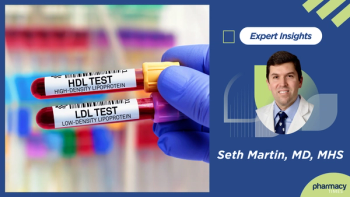
Seth Martin, MD, MHS, discusses a simplified machine-learning equation that helps labs deliver more accurate LDL-C results at no cost.

Deepika Nayyar outlines how HMH built a multidisciplinary drug diversion prevention program and shares the core elements any institution needs to detect and respond to diversion effectively.
Brendon Neuen, PhD, MBBS, discusses findings from the FIND-CKD study showing that finerenone benefits patients with nondiabetic chronic kidney disease (CKD) and glomerular disease, as well as those receiving combination SGLT2i therapy.
Jordan Hill, PharmD, BCOP, discusses the expanded first-line role of sacituzumab govitecan in metastatic triple-negative breast cancer and how PD-L1 status informs its use alone or with pembrolizumab.
Oncology pharmacy teams can integrate newly approved breast cancer therapies into practice while addressing operational barriers, monitoring requirements, and financial toxicity.
Erica Marini, PharmD, MS, BCPS, the host of "Mind the Meds," discusses the show's format, guest conversations, and upcoming episodes covering CAR T therapy and a Consortium of Multiple Sclerosis Centers Annual Meeting roundup.
Megan May, PharmD, BCOP, FHOPA, FAPO, discusses unanswered questions surrounding antibody-drug conjugate sequencing, biomarker testing, and medication safety in personalized breast cancer care.
Antibody-drug conjugates, evolving HER2 guidelines, and biomarker-driven treatment decisions are transforming breast cancer care and expanding the oncology pharmacist’s role.
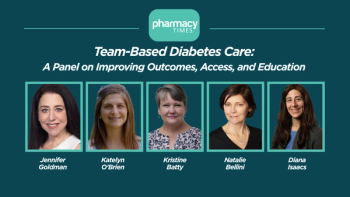
A panel of pharmacists and nurse practitioners discussed how interdisciplinary diabetes teams divide technology education, medication management, and follow-up care.

An expert discusses a JAMA study that shows who depends on the MMRV combination vaccine and how policy shifts may widen gaps—plus how pharmacists keep children on schedule.

A member of the cardio-kidney-metabolic syndrome (CKM) guideline writing committee outlines steps pharmacists can take to ensure the kidney component of CKM is not overlooked.
Andrew Li, PharmD, BCOP, discusses key targeted therapy updates in the 2026 ASCO living guideline for stage IV non–small cell lung cancer and how pharmacists can help manage treatment-related toxicities and access barriers.

Boston University researchers say flat chronic kidney disease (CKD) prevalence conceals a growing diabetes-linked burden, and pharmacists have a key role in closing screening gaps.
Beckley Retreats CEO Neil Markey discusses how the recent executive order on psychedelic therapies for veterans could reshape access to ibogaine and other investigational treatments.

Kasey Malotte, PharmD, BCPS, discusses the new credential’s strengths and areas for growth as well as why a stronger training ecosystem is necessary for long-term impact.

In addition to the upcoming Annual Forum in September, New England Institute of Ambulatory Care Pharmacists (NEIAP) provides practical education and networking opportunities to support ambulatory care pharmacists.
Wendy St Peter, PharmD, explains how the new cardio-kidney-metabolic (CKM) syndrome guideline supports pharmacist-led medication management, staging tools, and deprescribing.

Katelyn O'Brien, PharmD, BCPS, CDCES, BC-ADM, discusses the New England Institute of Ambulatory Care Pharmacists (NEIAP) Annual Forum and previews key topics of discussion.
Jennifer Goldman, PharmD, RPh, CDCES, BC-ADM, FCCP, shares the history and mission of NEIAP and explains how the organization provides practical education and networking opportunities.
In addition to explaining how NEIAP has evolved over time, Katelyn O'Brien, PharmD, BCPS, CDCES, BC-ADM, previews key topics at the upcoming September meeting.

AZA Allsop, MD, PhD, outlines what REMS-style safety monitoring could look like for psychedelic therapies and why top institutions are investing heavily.

Yale's AZA Allsop, MD, PhD, on psychedelics as medicine vs wellness tools, and why naturalistic research settings matter for the field.

Timothy Clifford, PharmD, outlines how quality-of-life impact, comorbid conditions, and prior therapy failures guide biologic selection for CRSwNP.
Aderonke Adeboye, PharmD, discusses the clinical red flags that signal a patient with CSU needs advanced therapy and how specialty pharmacists guide treatment selection and support long-term adherence for biologics and emerging oral agents.
GoodRx's David Graziano breaks down how fluctuating acquisition costs, narrow formularies, and retrospective reimbursement adjustments are squeezing independent pharmacies—and what solutions exist to help them remain competitive.