

Pharmacy Times® will be onsite in Texas providing written and video content for the SABCS, which takes place December 6 to 10.
Pharmacy Times® will be onsite in Texas providing written and video content for the SABCS, which takes place December 6 to 10.

Data to be presented at the 45th Annual San Antonio Breast Cancer Symposium suggest that the novel sequencing test can detect signs of disease recurrence across breast cancer subtypes, improving outcomes.

Patients with hormone receptor-positive breast cancer doubled their median progression-free survival following a switch to fulvestrant plus palbociclib.

Patients with breast cancer treated with pyrotinib plus capecitabine had a 31% lower risk of death than those treated with lapatinib and capecitabine

New technology provides information on the benefit of adding atezolizumab to chemotherapy as a neoadjuvant treatment for patients with early high-risk and locally advanced triple-negative breast cancer.

Uterine cancers that developed in patients with breast cancer treated with tamoxifen had fewer phosphoinositol-3-kinase (PI3K) pathway mutations and may have been driven by tamoxifen-induced PI3K pathway activation.

Fulvestrant is also the only SERD approved for patients with breast cancer, according to the researchers.

Genomic analyses show promise for patients with metastatic breast cancer, reinforcing genomics as a part of the pathway of care.

Tamoxifen is given to many patients—specifically premenopausal patients—with breast cancers that express the estrogen receptor, which drives breast tumor growth.

Certain patients with breast cancer treated with an aromatase inhibitor plus palbociclib (Ibrance) could benefit from an early switch to fulvestrant (Faslodex) plus palbociclib, study finds.

Pyrotinib combined with capecitabine found to improve overall survival in patients with previously treated HER2-positive metastatic breast cancer.

Updated phase 3 progression-free survival and overall survival data demonstrated clinical benefits in efficacy and tolerability of oral paclitaxel and encequidar versus intravenous paclitaxel in patients with metastatic breast cancer.
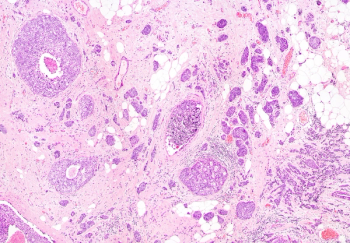
Although postoperative radiation therapy affected the risk of local recurrence of breast cancer, it did not significantly impact certain other clinical outcomes, including distant metastasis and recurrence in the opposite breast.

The higher risk of delivery and fetal complications suggests that physicians should more closely monitor pregnant breast cancer survivors.

Session at at the San Antonio Breast Cancer Symposium featured several abstract presentations on disparities in health care access in breast cancer, including research on the necessity of avoiding a one-size-fits-all approach to medicine.

Overdiagnosis of breast cancer can lead to unnecessarily aggressive treatments and mastectomies.

There were significant modifications in breast cancer treatment due to the coronavirus disease 2019 pandemic, such as high rates of NET chemotherapy, genomic assay testing on core biopsies, and delays in planned surgeries.

Tesetaxel is a novel, oral taxane with several unique properties being investigated for use in patients with HER2-negative, HR-positive metastatic breast cancer.

ET and CT are used as standard maintenance therapy for HR-positive and HER-negative MBC in clinical practice, and there was no prospective study data on which is better, according to the study authors.

Margetuximab plus chemotherapy showed positive results in a second pre-specified interim overall survival analysis for the phase 3 SOPHIA study.

Because of the vulnerabilities of CDK4/6i-resistant tumors, researchers believe that it is imperative to improve the survival of this group of patients.

By entering clinical and disease characteristics into a learning algorithm, researchers were able to create an efficacy prediction for CDK inhibitors.

Abemaciclib is a potent oral cyclin-dependent kinase 4/6 inhibitor that has previously demonstrated statistically significant improvement in PFS and ORR in combination with endocrine therapy.

Rita Nanda, MD, explains how researchers are aiming to make immunologically silent tumors more inflamed. This video was filmed at the 2019 San Antonio Breast Cancer Symposium.

Banu Arun, MD, explains the potential risks of passive genetic counseling via videos or at-home tests. This video was filmed December 12 at the 2019 San Antonio Breast Cancer Symposium.

According to results from the CORALLEEN trial presented at the San Antonio Breast Cancer Symposium, neoadjuvant treatment with the cyclin-dependent-kinase (CDK) 4/6 inhibitor ribociclib (Kisqali) and the aromatase inhibitor letrozole (Femara) produced response rates similar to multi-agent chemotherapy in patients with high-risk luminal B breast cancer.

Banu Arun, MD, explains the various reasons for the lack of genetic testing in appropriate candidates. This video was filmed December 12 at the 2019 San Antonio Breast Cancer Symposium.

Abemacilib is an oral selective inhibitor of cyclin-dependent kinases 4 and 6 approved for hormone receptor, human epidermal growth factor receptor 2 metastatic breast cancer.

A study evaluated the real-world benefit of palbociclib plus endocrine therapy as a first-line treatment in HR-positive, HER2-negative metastatic breast cancer to correlate the efficacy of the combination with neutropenia.

Patricia Spears discusses the various approaches to discussing clinical trials, and in which situations to use them. This video was filmed December 11 at the 2019 San Antonio Breast Cancer Symposium.