

































































































Increase found in the number of eligible hepatitis C patients being treated following approval of new treatments.

Increase found in the number of eligible hepatitis C patients being treated following approval of new treatments.

Raulo Frear, PharmD, general manager of OmedaRx, discusses the high initial cost of hepatitis C drugs like Sovaldi compared with the long term cost of treating the disease.

Express Scripts strikes a deal with AbbVie to provide its hepatitis C treatment to members at a discounted rate. But will this deal end up costing more in the end?

A new study has revealed that many patients infected with the hepatitis C virus do not seek treatment and become lost in the different stages of health care to manage the disease.

Multi-year agreement with AbbVie will place new drug as the exclusive option for patients with hepatitis C genotype 1.

Data for daclatasvir not suitable to prove added benefit.

Product contains 3 new drugs that work to inhibit the growth of HCV.
The FDA today approved ombitasvir, paritaprevir, and ritonavir tablets copackaged with dasabuvir tablets to treat individuals with chronic hepatitis C virus genotype 1 infection, including patients with cirrhosis.

Study finds hepatitis C co-infection not related to decreased mental function.
The CVS Health Research Institute today released a first look at the comparative utilization of two new hepatitis C treatments in the weeks following their respective launches. The analysis shows an increase in the number of eligible hepatitis C patients being treated following the October launch of Harvoni®, the newest hepatitis C treatment.

Breakthrough hepatitis C drugs promise cure rates upwards of 90%, and specialty pharmacy can play an important role in their success by addressing obstacles to adherence.

Long-term infections with other pathogens have been suspected as the cause of mental impairment in patients with HIV. However, new research suggests that this might not be the case.

To curb an estimated 6% to 11% increase in Medicare Part D spending, 3 states have already placed limitations on which patients with chronic hepatitis C are candidates for treatment with novel antiviral agents.
The Bristol-Myers Squibb Foundation today announced nine new grants totaling more than $3.5 million to strengthen efforts in China and India in the fight against hepatitis B virus and hepatitis C virus infection by focusing on the most vulnerable, high-risk patient populations.

Protective strategy may keep organs safe and functioning optimally after the procedure.
Three-drug regimen will lead to new treatment protocols for transplant patients, study finds.

A study from Merck has demonstrated high response to grazoprevir/elbasvir with and without ribavirin across various hepatitis C virus populations, including difficult-to-cure patients.
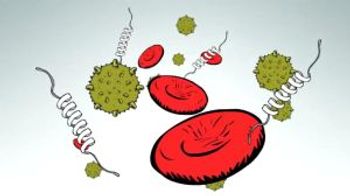
A trio of studies from AbbVie provides good news for patients with hepatitis C virus, including those with comorbid HIV or cirrhosis.
Gilead Sciences Inc. has reported positive results from its phase 2 and phase 3 studies on ledipasvir 90 mg/sofosbuvir 400 mg in patients with chronic hepatitis C virus.
A study exploring Merck's experimental hepatitis C virus treatment has provided proof-of-concept for a 6- to 8-week course of triple therapy.

Sovriad found to have caused significant increase in blood bilirubin levels in deceased patients.

Hexavalent vaccine protects against diphtheria, tetanus, pertussis, polio, invasive disease caused by Haemophilus influenzae type b, and hepatitis B.