



C. difficile
Latest News
Advertisement
Latest Videos


Advertisement
More News

The data could inform how non–steroidal anti-inflammatory drug-mediated mitochondrial uncoupling could affect other diseases.

For many patients with C diff, the experience of medical gaslighting is a common one because many health care providers lack education and familiarity with the disease.

Pharmacist-led discharge stewardship initiatives have shown promising results.

Data show these cases pose some of the most significant threats to patients and health systems.

MicroRNA has shown the potential to more effectively and accurately identify C. difficile infections and manage it after diagnosis.

Fecal microbiota transplantation is a process that restores bacterial diversity in the gut microbiome after standard-of-care antimicrobial therapy.
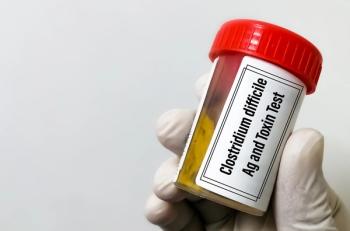
Clostridioides difficile infection can be difficult to treat, but increasing disease awareness can improve screening and treatment outcomes.

As one of the most trusted health care professionals, pharmacists play a vital role in debunking medication myths by providing patients with accurate information to make positive decisions regarding their health.

Investigators identified potential ways to inhibit the HpdBCA decarboxylase, which can reduce the production of p-cresol and make CDI more susceptible to bacteria in the gut microbiome.

Antibiotics that were found to be most commonly associated with clostridium difficile infection are piperacillin/tazobactam, meropenem, vancomycin, ciprofloxacin, ceftriaxone, and levofloxacin, according to a recent study.

Novel Combination Antibiotic Shows Efficacy in Serious Bacterial Infections due to Gram-negative Bacteria
ByPT Staff
The novel antibiotic combines aztreonam, a monobactam β-lactam, with avibactam, a broad-spectrum β-lactamase inhibitor.
Patient education and counseling play a critical role in preventing C. difficile recurrence, and pharmacists are uniquely positioned to provide treatment recommendations, educate patients and health care providers, optimize transitions of care, and reduce the risk of recurrent CDI.

Experts provide practice pearls for educating patients on and using FMTs for the management of CDI.

Joseph Reilly, BS, PharmD, BCGP, reviews the positive economic impact of use of live-jslm for treatment of CDI in a hospital setting.

Randomized clinical trials still showed that microbiota restoration is significantly more effective than antibiotics for recurrent Clostridioides difficile infection.

Rebyota is a live biotherapeutic product that is unfamiliar to many pharmacists and other health care providers with different steps in the eventual administration process.

In Greece, the stark increase in Clostridioides difficile (C. diff) incidence cannot be explained by a rise of antimicrobial use during the pandemic.

The results of a recent study suggest that a testing policy change for C. difficile could decrease the risk of additional infections and the corresponding economic burden on the hospital.

Supportive nurse managers and supervisors as well as nurses’ involvement in organizational governance may help lower hospital-onset Clostridioides difficile infection in acute care hospitals.
Advertisement
Advertisement
Trending on Pharmacy Times
1
mRNA vs Protein-Based COVID-19 Vaccines: What Pharmacists Can Tell Patients
2
FDA Reportedly Shelves Commissioner's National Priority Voucher Program
3
Inside the OCEANIC-STROKE Trial and What Asundexian Means for the Future of Stroke Prevention
4
Asundexian Receives FDA Approval, Becomes First FXIa Inhibitor for Secondary Stroke Risk Reduction
5