



503B Compounding Pharmacy
Latest News
Advertisement
Latest Videos








































































































Advertisement
More News

Case management programs or pharmacist-delivered high-touch care are critical components in medical specialty drug management.

Once the revisions to <797> become approved, there will be a minimum grace period of 6 months for pharmacies to comply.

Kevin Straughn, PharmD, clinical pharmacist at Duke Regional Hospital, said once the 2 compounding chapters, <797> and <795> become enforceable, there will be a 6-month grace period before USP <800> becomes enforceable.
Pharmacists can leverage patient medical history for formulating effective drugs, and patients can also benefit from single dosage, greater efficacy, and affordability of compounded medications.

Amy Cadwallader, PhD, director of Regulatory and Public Policy Development at US Pharmacopeia (USP), discusses how medicine quality and the medicines supply chain can affect antimicrobial resistance (AMR).

Simplifying processes reduces errors in compounding, IV pump programming, and physician order entry.

Congress expected the FDA to draft a memorandum of understanding on interstate distributions of compounded medications that states would be willing to sign, but that’s not what the agency did.

Expert notes that any unease around the use of radiopharmaceuticals is just due to a lack of familiarity with the field.

Certain areas of chapters written by US Pharmacopeia have evolved since being made official and have become standard best practices today.
US providers report substantial disruptions in vital supplies of saline injections, prefilled syringes.

They should consider many factors and use clear guidance on predicting phenotypes from genotypes to intervene optimally based on specific drug-gene interactions.

USP 800 was a necessary step to maximize safety, but it also recommended many institutions reevaluate their facilities, equipment, processes, and staffing capacity, potentially costing millions of dollars.

Although the ISMP created the guidelines for hospitals, they are applicable in other health care settings.

FDA seeks to reduce diversion of pharmaceutical products via sales by unlicensed distributers and tighten up the supply chain by vetting trading partners.
In proposed changes, the practice would fall within nonsterile compounding.

Leveraging automation capabilities and operational capacity at scale, they bridge gaps and mitigate the impact of disruptions.
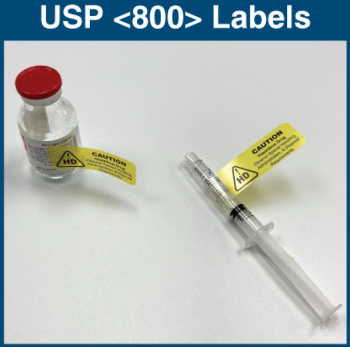

Amy Summers, consultant at Restore Health Consulting, discusses the proposed changed to the USP 795 and 797.

Ronald T. Piervincenzi, PhD, CEO of US Pharmacopeia, explains how pharmacists and USP came together in 2021 to work harder than ever before, as well as what can be done now to prepare for the next health crisis.

Ronald T. Piervincenzi, PhD, CEO of US Pharmacopeia, discusses what stands out as the biggest challenge from the past year and what role USP and pharmacists had in overcoming that challenge.

Nakia Eldridge, PharmD, MPH, senior manager of health care quality, safety, and information at US Pharmacopeia (USP), and Lindsey Clawson, MBA, USP’s lead of COVID-19 vaccine strategy, discuss the latest updates in USP’s COVID-19 Vaccine Handling Toolkit.

These materials are present in some angiotensin II receptor blockers used to treat heart failure and high blood pressure, and they have the potential to cause cancer.

State Licensing Body Begins Issuing Notices to Nonresident Pharmacies Engaged in Compounding or Dispensing Prescription Drugs for Controlled Substances

In addition to escalating workloads, the COVID-19 pandemic has exposed understaffing in the pharmacy profession.

Agency's interpretation may significantly affect how health systems and hospitals provide pharmaceuticals to patients.
Advertisement
Advertisement
Trending on Pharmacy Times
1
Bridging the Gap: Pharmacist Experiences Obtaining DEA Licenses
2
Eight Names, One Drug: Why Adalimumab Biosimilars Are Creating Real Confusion at the Counter
3
Etentamig Reduces Risk of Progression or Death by 60% in Relapsed/Refractory Multiple Myeloma
4
Comparison of Weight-Based vs Non–Weight-Based Norepinephrine Dosing in Patients With Septic Shock
5