

Study indicates hyperlipidaemia increases risk of breast cancer by 1.64 times.
Study indicates hyperlipidaemia increases risk of breast cancer by 1.64 times.

Executive at Pfizer discusses the various regulatory roadblocks and market challenges for biosimilars in a Q&A with Specialty Pharmacy Times.

Bill Barre, RPh, vice president of business development at MedImpact Healthcare Systems, discusses how MedImpact meets the needs of specialty pharmacies.

People with high levels of sedentary behavior are more susceptible to 3 types of cancer.

Diabetes control worsened for patients with diabetes who received or were receiving androgen deprivation therapy for prostate cancer.

Study finds cancer management guidelines need to be updated to account for patients with HIV.

Suzanne Tschida, PharmD, BCPS, vice president of specialty benefit and outcomes strategy at OptumRx, talks about recent research regarding specialty pharmacy and patient outcomes.

Questionnaires given to patients with psoriasis predicted probable psoriatic arthritis in a significant number of patients.

Radiation oncologists and urologists surveyed indicate the primary treatment provided by the other specialty is being overused.

In addition to finding no association between aspirin use and reduced risk of breast cancer, researchers find non-breast cancer deaths higher among aspirin users.

Biologic agent golimumab effective over 5-year span in treating disease symptoms and improving quality of life.

Researchers continue pursuit of vaccine that will lead to HIV cure.

Patients treated for Hodgkin's disease during childhood or adolescence have a greater risk of developing secondary breast cancer later in life, particularly if they receive radiotherapy during puberty.

Researchers in the United Kingdom have identified a blood test for circulating free DNA that may help physicians predict whether or not a patient with breast cancer is likely to respond to an initial round of chemotherapy, enabling earlier initiation of alternate treatments.
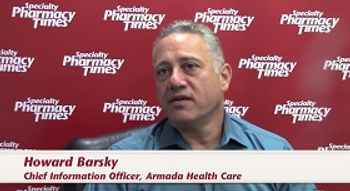
Howard Barsky, chief information officer for Armada Health Care, discusses the benefits of enhanced data analytics programs and how they can benefit specialty pharmacies.

Stephen Vogt, PharmD, Chief Executive Officer and President of BioPlus Specialty Pharmacy, discusses how BioPlus has changed to better meet the needs of their patients.

Program allows health care professionals to better access medication history.

Thomas Cohn, chief strategy officer at Armada Health Care, discusses the long term impact of the Affordable Care Act on specialty pharmacies.

Researchers find interventions targeting mental health problems and substance abuse can improve treatment outcomes.

Caregivers give thoughts on attributes they are looking for in DMD treatment.

Gary Rice, RPh, MS, MBA, vice president of clinical services at Diplomat Specialty Pharmacy discusses effective counseling of rheumatoid arthritis patients on biologic DMARD therapy.

Peter Yu, MD, director, Palo Alto Medical Foundation, president-elect, ASCO, discusses results of a review that examined men's treatment decisions after seeing a rise in their PSA levels.

This National Cancer Institute video provides key facts and statistics on prostate cancer diagnosis and treatment.

This presentation by Michael S. Cookson, MD, MMHC, vice chairman and Hart Professor of Urologic Surgery at Vanderbilt University Medical Center, addresses prostate cancer treatment options for 6 common clinical scenarios.

Charles M. Perou, PhD, professor of genetics, pathology & laboratory medicine, UNC Lineberger Comprehensive Cancer Center, discusses a trial (CALGB 40601) presented at the 2014 ASCO Annual Meeting.
Nancy Lin, MD, of the Susan F. Smith Center for Women's Cancers at the Dana Farber Cancer Institute, discusses the differences between breast cancer subtypes and looks at recent drug approvals and research directions for the future.

This presentation by Carol DeSantis, MPH, an epidemiologist with the American Cancer Society (ACS), covers key findings and statistics from the ACS report "Breast Cancer Facts and Figures 2013-2014."

In this video, Douglas Lienesch, MD, assistant professor in the division of rheumatology and clinical immunology at the University of Pittsburgh Medical Center, offers an overview of available medications for the treatment of psoriatic arthritis.
Philip Mease, MD, director of rheumatology research at Swedish Medical Center and clinical professor at the University of Washington School of Medicine in Seattle, discusses key points regarding the diagnosis and treatment of psoriatic arthritis in this video produced by the Cleveland Clinic Center for Continuing education.

In this video produced by the National Psoriasis Foundation, experts offer their insights into improving outcomes for psoriatic arthritis patients.