
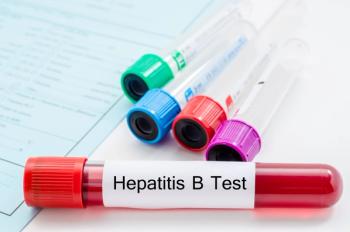
The investigators’ hypothesis is supported by phase 2 trial data in which hydronidone resulted in significant reversal of liver fibrosis in patients with chronic hepatitis B (CHB).
The investigators’ hypothesis is supported by phase 2 trial data in which hydronidone resulted in significant reversal of liver fibrosis in patients with chronic hepatitis B (CHB).

This component of scar tissue may have a role in kidney fibrosis for slowing disease progression and improving outcomes for patients with chronic kidney disease (CKD).

The in vivo gene editing program is designed to eliminate cccDNA and inactive integrated hepatitis B DNA.

The breakthrough designation is supported by clinical data from ongoing phase 1/2 trials.
Philip Kuball, MD, neurology resident at NYU Langone Health, highlights the integral role of pharmacists in monitoring patient eligibility, managing dosing schedules, and ensuring safe medication interactions for lecanemab treatment in Alzheimer disease.
Lauren B. Krupp, MD, FAAN, provides comprehensive guidance on treating pediatric multiple sclerosis, emphasizing early intervention, high-efficacy therapies, and holistic family support.

Although the rate of coronary artery lesions decreased across both cohorts of this trial of children with Kawasaki disease, there were no differences in lesion reduction between those receiving intravenous immunoglobulin (IVIG) alone and those receiving IVIG with aspirin.

In mouse models, researchers identified that immune cells within the intestine may prevent unwarranted attacks against harmless food allergens.

Some patients with aplastic anemia treated with CK0801 achieved durable transfusion independence lasting over 3 years.

Strategies for rescuing PTPRD function in diseased livers could provide potential therapeutic options, according to the study authors.

Peer Reviewed
The high acceptance rates of these interventions demonstrate the key role in optimizing patient care that clinical oncology pharmacists with access to medical records play.

The new indication expands administration methods for the combination of efgartigimod alfa and hyaluronidase-qvfc, which are already approved for the treatment of some immune-related conditions.

Nipocalimab with standard of care helped patients with generalized myasthenia gravis (gMG) maintain improvements in daily living and quantitative scores compared with placebo.

The prevalence of hepatitis D virus (HDV) antibody positivity was about 0.24% in patients with chronic hepatitis B virus (HBV).

The future holds the promise of earlier diagnosis, more targeted therapies, and personalized neurological care, said speaker William D. Freeman, MD, FAAN.

Huntington disease (HD) has no curative treatments, therefore, there is a great need for therapies that can reduce or slow the progression of symptoms.

Nilufer Ertekin-Taner contrasts current one-size-fits-all Alzheimer disease treatments with the promise of precision medicine and emphasizes the vital role of collaborative, multidisciplinary care.
The HERCULES trial demonstrates tolebrutinib's potential to slow disability progression in non-relapsing secondary progressive multiple sclerosis, offering a new treatment option for patients with limited therapeutic choices.

Pharmacy professionals gathered at the American Pharmacists Association 2025 Annual Meeting and Exposition and discussed critical insights in interviews with Pharmacy Times®.
Kayla Johnson, PharmD, BCPS, BCPP, highlights how integrating pharmacists into neurology clinics drives significant cost savings, high intervention acceptance rates, and improved care coordination.
Stephanie Miller, PhD discusses how artificial intelligence can revolutionize medical research by assisting in drug development and potentially providing more targeted treatments across various diseases.
Andrew Charles, MD, outlines why calcitonin-gene-related peptide (CGRP) antagonists are increasingly favored as first-line migraine treatments and how pharmacists play a key role in patient education and support.
A study led by Kayla Johnson, PharmD, BCPS, BCPP found that integrating specialty pharmacists into non-multiple sclerosis (MS) neurology clinics led to significantly enhanced patient care and treatment outcomes.
Nilufer Ertekin-Taner outlines how embracing the biological complexity of neurodegenerative diseases can guide the development of precision therapies akin to those used in oncology.

Compared with the original dose regimen, an antithrombin-based dose regimen of fitusiran was associated with an improved safety profile.

This action makes inebilizumab the first and only FDA-approved treatment for adults with immunoglobulin G4-related disease (IgG4-RD).

Through increased utilization of multi-omic data, health care professionals can revolutionize the treatment paradigm of countless diseases.

The registry data showed that cardiac magnetic resonance (CMR) was obtained in more clinically complex patients with recurrent pericarditis.

Given rituximab’s tendency to cause infections in patients being treated for autoimmune diseases, the addition of intravenous immunoglobulin works to reduce that risk and induce clinical improvements.

Schizophrenia is a chronic mental illness that significantly affects patients through its symptoms, associated health conditions, and treatment challenges, with long-acting injectable antipsychotics offering potential benefits in improving adherence and reducing relapses.