

Conference Coverage
Latest News

Jun 21, 2026 | Publication
Outcomes of Older Patients on Enfortumab Vedotin for Urothelial Carcinoma

Pharmacist-Led Quality Improvement Project to Optimize Abemaciclib Dosing Within a Community Oncology Network
Jun 21, 2026

McKesson ideaShare 2026: What Sets Health Mart's Pharmacy of the Year Finalists Apart
Jun 20, 2026

Radiation Recall in Modern Oncology: Evolving Triggers and Treatment
Jun 20, 2026

Leading From the Front: Precision, Practice, and the Pharmacist's Role
Jun 19, 2026


Advertisement
Shorts

1:14
McKesson ideaShare Brings Advocacy and Pharmacy Together
8 hours ago
by
Sandie Kueker, RPh(+1 more)

0:31
Independent Pharmacy Furthers Health Outcomes for All | McKesson ideaShare 2026
2 days ago
by
Niki Shah, MHSA, MBA, CCHW(+2 more)

0:52
What to Know as McKesson ideaShare Comes to Denver
2 days ago
by
Luke Halpern, Associate Editor

1:51
How Hantavirus Spreads and How to Protect Patients
2 days ago
by
Saro Arakelians, PharmD(+1 more)

1:32
Once-Weekly Insulin Icodec Approved for Type 2 Diabetes
4 days ago
by
Saro Arakelians, PharmD(+1 more)

0:42
Can Pembrolizumab Enhance Olaparib Maintenance Therapy in Metastatic Pancreatic Cancer? Insights From SWOG S2001
5 days ago
by
Vincent Chung, MD(+1 more)

1:58
Expert Cardiologists Give Advice to Pharmacists to Improve Care Tomorrow
9 days ago
by
Luke Halpern, Associate Editor(+3 more)

0:55
Anti-Amyloid Therapies Create Hope and Complexities in Alzheimer Disease Treatment
12 days ago
by
Josean Gonzalez, PharmD, BCPP(+1 more)

0:33
ePROs Help Reduce Hospitalizations and Improve Cancer Care
17 days ago
by
Debra Patt, MD, PhD, MBA(+1 more)

1:03
Why Real-World Data Is Critical to Understanding GLP-1s and Cancer Outcomes at ASCO 2026
18 days ago
by
Jessica Paulus, ScD(+1 more)
Podcasts

Videos


Continuing Education













Advertisement
All News
Advertisement
The Moderna mRNA influenza vaccine won the FDA panel vote, but ACIP turmoil and a legal fight could threaten its fall 2026 rollout.

As multimodal analgesia and novel therapies such as suzetrigine expand treatment options, non-opioid approaches are playing an increasingly important role in acute pain management while helping reduce reliance on opioids.

This abstract will be presented at the Oncology Pharmacists Connect (OPC) meeting in Austin, Texas, from June 18 to 19, 2026.

This abstract will be presented at the Oncology Pharmacists Connect (OPC) meeting in Austin, Texas, from June 18 to 19, 2026.

Pharmacy technicians are uniquely positioned to shape patient experience.

This abstract will be presented at the Oncology Pharmacists Connect (OPC) meeting in Austin, Texas, from June 18 to 19, 2026.

New breast cancer trial insights reshape metastatic care: sacituzumab benefits broadly, oral SERDs lag, denosumab every 12 weeks suffices.

From artificial intelligence (AI)-driven dispensing to specialty service diversification, Jaime Montuoro, PharmD, previews the education lineup at McKesson ideaShare 2026.

Oncology pharmacists decode 2026 ASCO/EHA breakthroughs, from breast cancer to myeloma, highlighting real-world steps for safer, faster care.

McKesson ideaShare 2026 brings independent pharmacy's premier gathering to Denver, June 18-21, with Pharmacy Times on-site for exclusive interviews and coverage.
Advertisement

Minimal residual disease (MRD) negativity exceeded 90% with 100% response and no progression in patients with treatment-naive chronic lymphocytic leukemia/small lymphocytic lymphoma (CLL/SLL).

With this approval, Capvaxive is the only PCV specifically indicated and studied in the US for use in this patient population.

Fixed-duration pirtobrutinib plus venetoclax-rituximab reduced the risk of progression or death by 45% and achieved higher undetectable MRD rates than venetoclax-rituximab alone.

This abstract will be presented at the Oncology Pharmacists Connect (OPC) meeting in Austin, Texas, from June 18 to 19, 2026.

FDA approval of the first generic version of baloxavir marboxil brings an affordable single-dose flu treatment, boosting access for the 2026-27 influenza season.

This abstract will be presented at the Oncology Pharmacists Connect (OPC) meeting in Austin, Texas, from June 18 to 19, 2026.

FDA approval expands Breztri Aerosphere from COPD to asthma, offering single-inhaler triple therapy for adults and pediatric patients 12+.

This is an encore presentation from the 2025 American Pharmacists Association Annual Meeting and Exposition in Nashville, Tennessee. This abstract will be presented at the Oncology Pharmacists Connect (OPC) meeting in Austin, Texas, from June 18 to 19, 2026.

A new Lancet study provides the first plausible evidence that a national package of food labeling, marketing restrictions, and school food policies can reduce excess weight among young children.

Data showed that talquetamab combined with daratumumab, with or without pomalidomide, significantly improved PFS, OS, response rates, and MRD negativity.
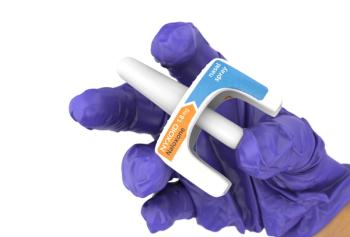
The FDA approved Rextovy, a 4-mg OTC naloxone nasal spray, expanding public access to a lifesaving opioid overdose reversal medication and increasing the availability of nonprescription treatment options.

The indication is for complicated urinary tract infections (UTIs) caused by several susceptible microorganisms in adults who have limited or no alternative oral treatment options.
Identifying high-risk patients, optimizing lipid-lowering therapy, and helping patients achieve evidence-based targets remain critical to improving cardiovascular outcomes.
Advertisement
Advertisement
Trending on Pharmacy Times
1
ADA 2026: Key Pharmacotherapy Advances in Type 1 and Type 2 Diabetes
2
ADA 2026: Lipid Management and Cardiovascular Prevention Updates for People With Diabetes
3
McKesson ideaShare 2026: Why Automation and AI Are Reshaping the Dispensing Experience
4
World Psychedelics Day: Why Pharmacy Can't Sit This One Out
5