

Opinion|Videos|November 15, 2024
Unmet Needs for Transplant-Eligible NDMM
Key Takeaways
- Pharmacists can enhance medication adherence and manage side effects, crucial for optimizing multiple myeloma therapy.
- Personalized treatment plans should consider patient-specific factors, including comorbidities and genetic profiles.
Panelists discuss how pharmacists can address remaining unmet needs and challenges in optimizing frontline therapy for patients with transplant-eligible newly diagnosed multiple myeloma (NDMM), including areas such as managing complex drug interactions, improving medication adherence, mitigating treatment-related toxicities, streamlining transitions of care, and enhancing patient education and support throughout the treatment journey.
Advertisement
Episodes in this series
Video content above is prompted by the following:
- What are remaining unmet needs or challenges you see around optimizing frontline therapy for patients with transplant-eligible newly diagnosed multiple myeloma that pharmacists can address?
Advertisement
Related to this article
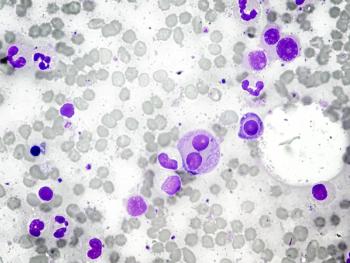
In an interview with Pharmacy Times, LINKER-SMM1 study investigator Paula Rodríguez-Otero, MD, PhD, a hematologist at Clínica Universidad de Navarra in Pamplona, Spain, explains how researchers selected high-risk patients and how she weighs infections against the potential to prevent progression to active disease.
September’s hematology coverage examined a new definition of myeloma cure, patient preferences for treatment delivery, and emerging strategies for deepening responses.

A detailed LINKER-MM1 analysis found that cytokine release syndrome (CRS) with linvoseltamab occurred early, was predominantly low grade, and became less frequent with successive step-up and full doses.
An MRD-guided strategy incorporating teclistamab-daratumumab intensification produced deep responses in newly diagnosed high-risk multiple myeloma, although infections affected more than three-fourths of treated patients.
Phase 2 MILESTONE results suggest that postinduction minimal residual disease (MRD) negativity can identify a small subset of transplant-eligible patients with newly diagnosed multiple myeloma who may defer autologous stem cell transplantation.
A phase 3 trial shows etentamig boosts response and delays progression in triple-class exposed RRMM.

Fixed-duration KRd slowed progression in high-risk smoldering myeloma, but high rates of severe toxicity temper enthusiasm.

IRAKLIA data show that isatuximab OBI boosts comfort and satisfaction vs IV in multiple myeloma, enabling fast at-home dosing with strong completion rates.
Advertisement
Advertisement
Trending on Pharmacy Times
1
Pharmacists Key to Lp(a) Counseling and Lipid Optimization
2
EloraTZP Delivers Up to 23.3% Weight Loss in Adults With Obesity and T2D
3
Semaglutide 2 mg Tied to Lower MACE Risk Than Tirzepatide Switch
4
Why Lp(a) Testing Lagged Behind LDL Cholesterol Screening
5