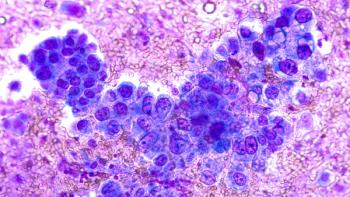
In an interview with Pharmacy Times, City of Hope researchers discuss a preclinical platform designed to redirect CAR T cells after infusion and how pharmacists could help bring this adaptable approach into clinical practice.
Pharmacy Practice in Focus: Oncology
ASCO pooled phase 3 data show that pirtobrutinib in treatment‑naive CLL/SLL delivers 93% responses, durable control, and low cardiac risk.
Pooled data from 2 landmark phase 3 trials reinforce the promise of pirtobrutinib (Jaypirca; Eli Lilly and Company) as a frontline treatment option for patients with chronic lymphocytic leukemia and small lymphocytic lymphoma (CLL/SLL), showing high response rates, durable disease control, and a manageable safety profile. The data were presented at the 2026 American Society of Clinical Oncology Annual Meeting.
Pirtobrutinib is a highly selective, noncovalent Bruton tyrosine kinase inhibitor (BTKi) with global approval for patients with CLL/SLL who have been previously treated with a covalent BTKi. Two open-label, randomized phase 3 studies—BRUIN CLL-313 and BRUIN CLL-314—are evaluating its potential in the treatment-naïve (TN) setting. CLL-313 (NCT05023980) compares pirtobrutinib with bendamustine plus rituximab (BendaR), and CLL-314 (NCT05254743) pits it against ibrutinib, the established BTKi standard of care.
The analysis included data from 253 treatment-naive patients with CLL who were randomly assigned to receive pirtobrutinib across both trials (141 from CLL-313 and 112 from CLL-314). All but 1 patient received at least 1 dose of treatment, giving a safety-evaluable population of 252. The median patient age was 66 years.
Among patients with evaluable samples, 58% had unmutated immunoglobulin heavy chain variable—a marker associated with more aggressive disease—while 6% carried the del(17p) deletion and 10% had mutated TP53, both of which are high-risk genomic features known to reduce the effectiveness of conventional therapies.
Pirtobrutinib demonstrated strong efficacy across all primary end points. The overall response rate was 93.3%, demonstrating strong efficacy across a heterogeneous patient population, including those with high-risk molecular features. Importantly, efficacy was consistent between the 2 studies, supporting the reliability of these findings.
Survival outcomes were equally strong. Median progression-free survival (PFS) was not reached at the time of analysis, and the 24-month PFS rate stood at 93.2% (95% CI, 89.1%-95.8%). Similarly, median overall survival (OS) was not reached, with a 24-month OS rate of 97.5% (95% CI, 94.6%-98.9%). The median duration of therapy was 29.1 months, underscoring the sustained tolerability of long-term dosing.
The safety data were consistent with those observed in prior pirtobrutinib studies conducted in more heavily pretreated patients. Treatment-emergent adverse events led to therapy discontinuation in 4.8% of patients, with 1.6% of discontinuations considered treatment related. This is a notably low rate for a BTKi in this setting.
Infection of any grade occurred in 59.9% of patients, and neutropenia was reported in 18.3%. Grade 3 or higher bleeding events occurred in 2.4% of patients. Class-effect toxicities commonly associated with covalent BTKis were low: Any-grade hypertension was observed in 10.7% of patients, and atrial fibrillation or flutter was reported in 2.8%.
These pooled findings position pirtobrutinib as a highly active and well-tolerated option for patients with previously untreated CLL, including those with high-risk disease biology. With strong response rates, favorable cardiovascular and bleeding profiles, and minimal treatment discontinuations, pirtobrutinib appears well-suited to address an unmet need in the frontline CLL landscape. Mature follow-up data from these phase 3 trials will be critical in determining its long-term comparative benefit.