

Opinion|Videos|March 27, 2025
Optimizing ADC Supportive Care Prescribing and AE Management With Institutional Workflows
Panelists discuss how health care professionals use standardized antibody-drug conjugate (ADC) pathways to guide dosing, adverse effect (AE) management, and transitions. Protocols ensure monitoring, toxicity mitigation, and seamless shifts between therapies for optimal care.
Advertisement
Episodes in this series

Video content above has been prompted by the following:
- How does your institution incorporate treatment pathways or workflows to guide decision-making, dosing, AE management/monitoring, and patient transitions between different ADCs?
Advertisement
Related to this article
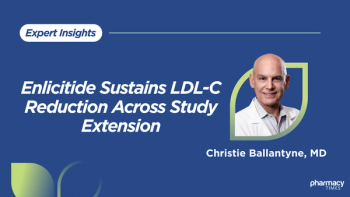
Christie Ballantyne, MD, explains how the CORALreef Extension study adds safety exposure and shows LDL-C lowering with oral enlicitide is sustained over time.

Like enzymes and coenzymes, monitoring devices and pharmacists may achieve more together than either can alone.
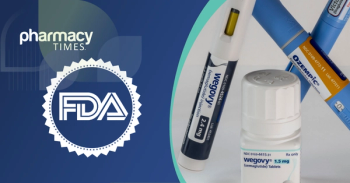
New warnings cover every GLP-1 RA, including semaglutide, tirzepatide, and orforglipron.

At SITC 2026, 10 of 15 patients with advanced melanoma responded to investigational amsokigene autoleucel at the recommended phase 2 dose, with 5 still in response 12 months after infusion.
The glucagon/GLP-1 dual agonist did not raise major adverse cardiovascular event risk in adults with obesity, but GI-related discontinuations were high.

Every responsibility described in this issue depends on a pharmacy workforce with enough time and support to carry it.

Post hoc AHA 2026 data show the oral GLP-1 receptor agonist lowered systolic blood pressure across hypertension stages, partly beyond weight loss.

The evidence for GLP-1 receptor agonists keeps growing, while access for low-income patients keeps narrowing.
Advertisement
Advertisement
Trending on Pharmacy Times
1
FDA Requires Class-Wide GLP-1 RA Labeling Changes for Potential NAION Risk
2
Understanding Kratom: Pharmacology, Safety, and Regulation
3
Survodutide Shows Cardiovascular Safety in SYNCHRONIZE-CVOT
4
Oral PCSK9 Inhibitor Enlicitide Sustains LDL-C Reductions
5