Phase 2 DeLLphi-309 data show comparable activity in previously treated SCLC with less frequent dosing.
Researchers develop a novel therapy combining molecular glues and KRAS inhibitors, showing promise in treating KRAS-mutant non–small cell lung cancer.
University of Michigan researchers reveal a promising approach for hard-to-treat lung cancers that combines a molecular glue with KRAS inhibitors to delay resistance—leading to dramatic tumor shrinkage in lab models.
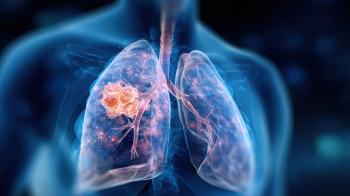
Lung cancer remains the leading cause of cancer death in the United States and the second-most common cancer overall. Among these cases, over 80% are classified as non–small cell lung cancers (NSCLC), a type characterized by larger tumor cells that generally grow more slowly than small cell lung cancers.1
Despite advances in treatment, patients with NSCLC harboring certain genetic mutations, particularly in the KRAS gene, face poor prognoses and limited therapeutic options. KRAS, which plays a critical role in cell growth and division, is mutated in roughly 30% of NSCLC cases, often leading to shorter survival and resistance to existing therapies.1,2
To address this challenge, researchers at the University of Michigan recently identified a new protein target and developed a drug aimed at KRAS-mutant NSCLC. The study, published in The Journal of Clinical Investigation, highlights the role of protein phosphatase 2A (PP2A), a protein complex known to inhibit lung cancer development.1,2
PP2A is composed of 3 proteins that must assemble correctly to function. Disruption of this assembly is commonly observed in lung, prostate, and liver cancers, prompting researchers to investigate whether stabilizing the complex could suppress tumor growth.1,2
Current FDA-approved drugs, such as adagrasib (Krazati; Mirati Therapeutics) and trametinib (Mekinist; Novartis), target KRAS in pancreatic, colon, and lung cancers, but tumor cells often develop resistance after a short period.1,2
"There are several FDA-approved drugs that target KRAS in pancreatic, colon, and lung cancer. Although they work well, tumor cells gain resistance after a short period of time,” said Goutham Narla, MD, PhD, Louis Newburgh Research Professor of Internal Medicine and member of the Rogel Cancer Center.1,2
The University of Michigan team discovered that adagrasib and trametinib destabilized the PP2A complex in KRAS-mutant NSCLC cell lines, potentially explaining the development of resistance. They then tested a novel molecular glue, RPT04402, designed to stabilize PP2A. When added to the treatment regimen, RPT04402 restored PP2A function and triggered cancer cell death. In mouse models, this combination not only shrank tumors but also delayed the onset of resistance, extending treatment effectiveness to more than 150 days.1,2
These findings were further supported by experiments showing that combining RPT04402 with RAS/MAPK inhibitors slowed cancer cell proliferation and enhanced apoptosis in both commercial cell lines and patient-derived models. The research demonstrated that restoring PP2A activity could counteract the resistance mechanisms driven by disrupted negative feedback in KRAS-mutant tumors.1,2
Although the results are promising, Narla cautions that the combination may not be effective for all NSCLC cases. The study’s focus represents about 20% to 30% of all NSCLC cases, specifically those with KRAS mutations. The research team plans to initiate clinical trials in collaboration with Spring Works Therapeutics and Merck, with hopes of eventually extending the approach to KRAS-mutant pancreatic and colon cancers.1,2
This study highlights a potential new paradigm in cancer treatment: combining molecular glues that stabilize tumor-suppressing proteins with targeted inhibitors to improve outcomes and delay resistance. If successful in human patients, this strategy could provide a critical new option for patients with KRAS-mutant NSCLC, a population that currently faces limited and often short-lived treatment success.