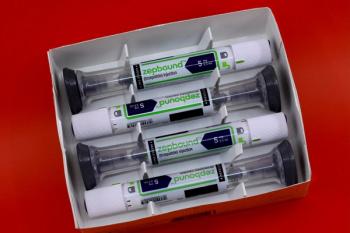
A new analysis finds a significant weight loss edge for tirzepatide under one estimand but not another; no head-to-head trial exists at these doses.
Pharmacists play a crucial role in improving BRCA testing rates for metastatic breast cancer, enhancing patient access to targeted therapies.
At the 2025 San Antonio Breast Cancer Symposium (SABCS), Siddhartha Yadav, MBBS, MD, highlighted persistent gaps in germline and biomarker testing among patients with metastatic breast cancer, despite long-standing guideline recommendations. Data presented showed that approximately 30% to 35% of patients eligible for BRCA1/2 testing are still not being tested, limiting access to targeted therapies such as PARP inhibitors. Yadav emphasized that cost and insurance barriers are no longer the primary drivers of underutilization, noting that most commercial laboratories now offer affordable testing options, even for uninsured patients.
Pharmacy Times: BRCA testing remains low in HR+/HER2− and older patients. How can pharmacists help improve timely biomarker testing and identify patients who may benefit from targeted therapies like PARP inhibitors?
Siddhartha Yadav, M.B.B.S, M.D.: So, I mean, multiple studies that we have looked at—and this is work that we have done over the last five to seven years—we continue to find that patients who are eligible for testing, and especially in metastatic breast cancer, are not getting the level of testing. It is not there, right? So even the study that we presented at San Antonio, we find that almost 30–35% of patients who are eligible for testing for BRCA1 and 2 are not getting the testing.
One of the things to think about from a pharmacist standpoint is that a lot of drugs that are being prescribed in metastatic breast cancer come through the pharmacist. So something to think about is, let’s say if a patient is going on first-line chemotherapy or frontline CDK4/6 inhibitor. This is a time, especially if you are working in a care team, to talk to your clinician and say, like, “Hey, you have prescribed this so-and-so drug. What about germline testing? Do you think a PARP inhibitor would be a certain thing to consider in this patient?” That would automatically prompt the clinician to think about germline testing as well.
Pharmacy Times: Nearly 40% of patients in 2023 still did not receive BRCA testing. What do you see as the main drivers of these testing gaps, and how can real-world practice address them?
Yadav: Yeah, I think it’s been really challenging to figure this out. I mean, you know, in the beginning, when all of this started—going back to 2010–2011—folks generally thought that BRCA testing rates were low because, one, there was no clinical therapeutic based on that. But that obviously changed with the availability of PARP inhibitors. Now, based on the test results, if somebody is a BRCA mutation carrier, we do recommend treatment with PARP inhibitors. So that has changed.
The second thought was that it was all related to cost—insurance testing—because BRCA testing in the beginning, back in the 2010s and even up to 2015 or so, used to be quite expensive. That has completely changed. Now, today, most commercial labs will do testing for less than $200, even in patients who are uninsured. The out-of-pocket cost tends to be quite low. So that is not really the issue.
So it has really come down to this thought process about systems. What I mean by that is, essentially, sometimes our systems are built in a certain way that certain tests are prioritized versus certain tests are not. Essentially, I think a lot of clinicians are “forgetting”—quote, unquote forgetting—because they are aware of it, but there are so many competing priorities in a patient that they may not be thinking about BRCA testing right up front. They may think about it after the patient has progressed through multiple lines of therapies. But I think it is a disservice to patients if we don’t do testing sooner rather than later, because there is data that suggests that PARP inhibitors, in fact, work better if we use them much earlier rather than later on.
Pharmacy Times: A substantial number of BRCA-positive patients never received follow-up testing for PIK3CA, ESR1, or PD-L1. How can care teams streamline multi-biomarker testing to avoid missed treatment opportunities?
Yadav: Yeah, and again, this plays into the same premise as BRCA testing. Essentially, there is a lot happening in breast cancer right now. There are a lot of new biomarkers coming in, and there are a lot of new therapeutics coming in, and we haven’t yet figured out a practice pattern where all of these could be standardized—what we call mainstreaming, right?
So everything needs to be in a way that it flows smoothly in a system, where everything is ordered automatically to a certain extent. That’s not happening. So what can we do to change that? I think we need to create care pathways that do not rely on a specific individual to remember ordering these tests, but rather that the system itself takes care of it. There should be reminders in electronic health records that will tell if a patient is particularly eligible for this testing and that it should be done.
So there are ways around this where we can be creative in terms of trying to get the testing rates up, but it is absolutely critical that we do that. From a therapeutic standpoint, whether it’s a PARP inhibitor, whether it’s PIK3CA and using capivasertib, we are missing out on these targeted therapeutic opportunities if we are not doing the biomarker testing.