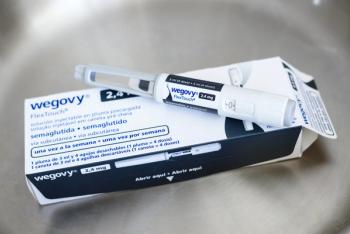
Post hoc STEP UP data at EASD 2026 show liver fat fell from 8.8% to 3.1% at 72 weeks in a 55-person MRI subgroup, though no placebo comparison was reported.
SCOUT-HCM trial showed that mavacamten reduced left ventricular outflow tract obstruction in adolescents with obstructive HCM.
For children and adolescents with hypertrophic cardiomyopathy, effective targeted treatment options have long been out of reach — until now. At the 2026 American College of Cardiology meeting, Pharmacy Times spoke with Joe Rossano, MD, MS, FAAP, FACC, pediatric cardiologist and chief of cardiology at the Children's Hospital of Philadelphia, about the SCOUT-HCM trial (NCT06253221), the promise of mavacamten (Camzyos; Bristol Myers Squibb) in younger patients, and what these results could mean for the future of pediatric hypertrophic cardiomyopathy (HCM) care.
Pharmacy Times: What gaps in the current management of obstructive HCM in adolescents prompted the SCOUT-HCM trial, and why is this population particularly challenging to treat?
Joseph Rossano, MD, MS, FAAP, FACC: There are no medications currently approved for the treatment of hypertrophic cardiomyopathy in childhood. The medicines we use are not based on strong pediatric data—they are extrapolated from adult practice. Unfortunately, that leaves many children without effective medications and without therapies that are truly targeted to the underlying pathophysiology of the disease.
Pharmacy Times: Can you discuss mavacamten and its mechanism of action? Why does this make it a promising option for adolescents?
Rossano: Mavacamten is a genuinely exciting breakthrough for the treatment of hypertrophic cardiomyopathy. It belongs to a class of medications called myosin inhibitors, which block the fundamental abnormality driving HCM. The myosin protein governs how the heart contracts, and in children with HCM, the heart contracts excessively — and that excess contraction leads to the problems we see with the disorder. This is the first medication specifically targeted to that underlying mechanism.
Pharmacy Times: Can you walk us through the key design features of SCOUT-HCM—patient eligibility and how the trial was structured?
Rossano: SCOUT-HCM was a prospective, randomized controlled trial enrolling adolescent patients with obstructive [HCM], meaning patients with significant obstruction where the heart's contraction creates a meaningful blockage of blood flow leaving the ventricle. The trial enrolled 43 patients who were randomized to either placebo or mavacamten, and the primary end point was a reduction in the left ventricular outflow tract gradient with the Valsalva maneuver at 28 weeks.
Pharmacy Times: How did the efficacy outcomes in adolescents compare to what has been observed in adult trials such as EXPLORER-HCM (NCT03470545)?
Rossano: The mavacamten group did very well. We saw a dramatic reduction in the degree of obstruction. Actually, somewhat greater than what was observed in adults, though certainly in the same range. The treatment effect was strong in both populations, which is very encouraging.
Pharmacy Times: What did the safety and tolerability profile look like, and were there any age-specific signals of concern?
Rossano: The safety profile was very reassuring. The overall incidence of adverse events was low in both groups and evenly balanced. Nothing suggestive of a concerning safety signal. Importantly, no patients experienced a clinically significant drop in ejection fraction, no patients developed atrial fibrillation, and there were no deaths during the study.
Pharmacy Times: How might these results change the way clinicians approach treatment decisions for symptomatic adolescents with obstructive HCM?
Rossano: We saw very encouraging results—both in the primary end point of outflow tract gradient reduction and across multiple secondary end points—which suggests this medication could fundamentally change how we approach treatment in this population. Mavacamten is not yet FDA-approved for use in children, but we are very hopeful that approval is on the horizon. I believe this represents a major breakthrough in how we care for these patients.