

Opinion|Videos|July 29, 2026 (Updated: June 30, 2026)
Getting CRS Right: Clinical Presentation, Appropriate Response, and Building a Well-Educated Care Team
In 'Getting CRS Right: Clinical Presentation, Appropriate Response, and Building a Well-Educated Care Team,' our panel of experts delve into the following critical questions:
Advertisement
Episodes in this series
In 'Getting CRS Right: Clinical Presentation, Appropriate Response, and Building a Well-Educated Care Team,' our panel of experts delve into the following critical questions:
What does Grade 1 CRS usually look like clinically, and what is the appropriate response versus what tends to happen in practice?
In terms of CRS, how would you educate nursing staff, emergency department teams, and inpatient providers so they're neither over-reacting nor under-reacting?
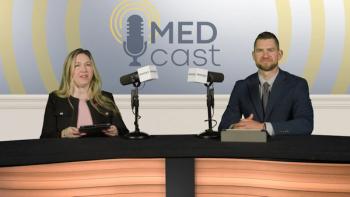
Led by the moderator, the panelists examined what Grade 1 CRS looks like in clinical practice, emphasizing that its presentation, most commonly a fever, can appear benign and is easily confused with infection or sepsis, making comprehensive workup essential every time a bispecific antibody patient presents with symptoms, regardless of how mild they appear. The discussion highlighted the critical educational challenge of ensuring that clinical teams maintain a broad differential when a patient presents with fever or other nonspecific symptoms. The panelists also outlined a range of practical educational strategies that have proven effective across both community and academic settings, building the clinical muscle memory needed to respond confidently and appropriately when a real event occurs.
Throughout the conversation, the experts provide a comprehensive reflection on the field and the factors that may shape how clinicians approach care moving forward.
The next episode in this series, 'From Treatment to Prevention: How Pharmacists Are Refining CRS Management for Bispecific Antibody Therapy,' features the panelists advancing their conversation on multiple myeloma and focusing on how tocilizumab and dexamethasone are being differentiated in CRS management practice, what proactive prophylactic measures institutions are implementing to reduce CRS risk, and what the emerging low-dose prophylactic tocilizumab data may mean for the future of bispecific antibody administration.
Advertisement
Related Content
Advertisement

























































































Advertisement
Advertisement
Trending on Pharmacy Times
1
Beyond Cost Avoidance: Advancing Unit-Level Pharmaceutical Economics in Health Systems
2
Pharmacist Care Gets BP Patients to Goal Faster, Safer
3
Higher Pulmonary Microplastic Burden Observed in Patients With Lung Cancer
4
Adult Pneumococcal Immunizations: A Practical Guide for Pharmacists
5