Mounjaro becomes the first GIP/GLP-1 receptor agonist cleared to lower MACE risk, based on the SURPASS-CVOT head-to-head trial.
The FDA approves a new dose of Omlyclo, the first interchangeable biosimilar to Xolair, enhancing treatment options for allergic and inflammatory conditions.
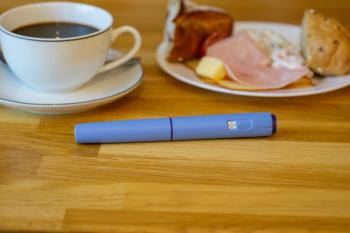
The FDA approved a 300-mg/2-mL solution of omalizumab-igec (Omlyclo; Celltrion USA), which comes in a single-dose prefilled syringe for subcutaneous injection.1
The action follows an earlier approval in March 2025, when the FDA approved Omlyclo as the first and only biosimilar to be granted interchangeability with its reference product, omalizumab (Xolair; Genentech, Novartis).1,2
Reference omalizumab is an injectable medicine used to treat certain patients with moderate to severe persistent allergic asthma, chronic rhinosinusitis with nasal polyps, food allergy after accidental exposure, and chronic idiopathic urticaria. It is an IgE blocker designed to bind IgE, which is produced at high levels in individuals with allergies, thereby triggering an allergic response to an allergen. The biosimilar blocks IgE from binding to its receptors. Although Omlyclo is administered subcutaneously for all indications, the dosing differs by indication.1,3
"The approval of the additional 300-mg presentation of Omlyclo underscores our dedication to patients in the US, by broadening treatment choices and expanding flexibility, addressing diverse needs of patients with allergic and inflammatory conditions," Juby Jacob-Nara, MD, senior vice president and chief medical officer at Celltrion USA, said in a news release. "The new dosing option of Omlyclo can help reduce the number of required injections and ease the overall treatment burden and discomfort for patients with these diseases."1
Omlyclo’s initial approval and interchangeability designation were based on clinical evidence, including that from a global, multicenter, double-blind, randomized, active-controlled, parallel-group phase 3 clinical trial (NCT04426890) in which Omlyclo demonstrated comparable efficacy and safety with Xolair during treatment and off-dose periods.2,4,5
In the trial, patients aged 12 through 75 years were randomly assigned to either treatment period 1 (n = 619) or treatment period 2 (n = 579), both of which were 12 weeks. In the first treatment period, patients were randomly assigned to receive either 300 mg or 150 mg of Omlyclo (300 mg: n = 204; 150 mg: n = 107) or Xolair (300 mg: n = 205; 150 mg: n = 103), and in the second treatment period, patients who were treated with 300 mg of Xolair were randomly assigned again to switch to Omlyclo (n = 96) or continue Xolair (n = 97).4,5
Those who were initially randomly assigned to 300 mg of Omlyclo continued the same treatment regimen (n = 187), and those initially randomly assigned to 150 mg of Omlyclo or Xolair continued receiving the same treatment at an increased dose of 300 mg (Omlyclo: n = 101; Xolair: n = 98). Treatments were administered subcutaneously at weeks 0, 4, and 8 in treatment period 1 and weeks 12, 16, and 20 in treatment period 2.4,5
According to the findings, the mean change from baseline in itch severity score (ISS7) was similar across treatment groups at week 40. There were notable improvements in ISS7 observed after the overall 24-week treatment period, and improvement had gradually decreased up to week 40 following the end of treatment; however, it did not return to baseline mean values, and there were no notable differences among the treatment groups during follow-up. Similar findings were observed for the weekly urticaria activity score and the weekly hives severity score.4
Additionally, changes in the number of antihistamine tablets used as rescue therapy per week were similar across the treatment groups. The investigators observed during the follow-up period that less than 10% of patients in all treatment groups had initiated an additional nonsedating H1 antihistamine as a second background medication. These ranged from 3.7% (n = 4) in the Omlyclo 150-mg group to 5.4% (n = 11) in the Omlyclo 300-mg and Xolair 300-mg groups.4
"We are proud of the expansion of Omlyclo’s dosing options, marking another significant milestone in our commitment to increasing access to biologic treatments in the US," Thomas Nusbickel, chief commercial officer at Celltrion USA, said in the news release. "We remain steadfast in our efforts to support physicians with flexible, high-quality treatment options and ensure that more patients can benefit from best-in-class care."1