ENDURANCE trial finds fixed 2-year lenalidomide maintenance matches continuous therapy for standard-risk multiple myeloma survival, guiding oncology pharmacists on MM regimen toxicity.
A new dual-antibody therapy shows promise in treating extramedullary multiple myeloma, offering hope for patients with limited options.
New study findings from Mayo Clinic found that a readily available dual-antibody therapy can produce strong and lasting responses in extramedullary multiple myeloma, a highly aggressive and treatment-resistant form of the disease. The study authors, who published their findings in the New England Journal of Medicine, noted that the therapy uses talquetamab (Talvey; Janssen Biotech) and teclistamab (Tecvayli; Janssen Biotech) to activate T cells against myeloma cells through dual pathways.1,2
Talquetamab and teclistamab work together to activate T cells to attack myeloma cells through 2 different immune pathways. Unlike chimeric antigen receptor T-cell therapy, this treatment is given as a standard injection in an infusion center rather than requiring custom manufacturing.1,2
"We are seeing powerful responses in a disease that historically has resisted every therapy," Shaji Kumar, MD, a Mayo Clinic Comprehensive Cancer Center hematologist and senior author of the study, said in a news release. "By recruiting T cells in 2 distinct ways at once, this dual-target antibody strategy can generate responses in patients who have had very few effective options."2
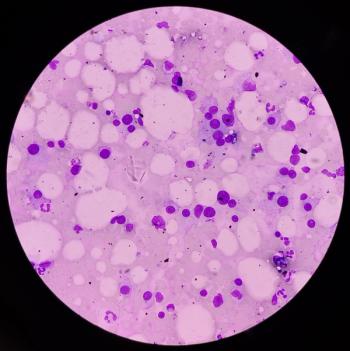
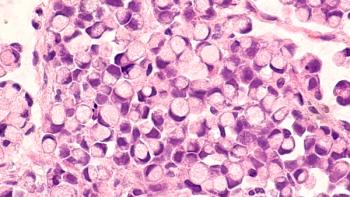
Multiple myeloma is a cancer of plasma cells, which are a type of white blood cell that normally helps fight infections by producing antibodies. In this disease, cancerous plasma cells accumulate in the bone marrow, crowding out healthy blood cells and producing faulty proteins.3
Symptoms of multiple myeloma are often not present in the early stages. When they do appear, patients could experience bone pain, fatigue, weakness, mental fog, nausea, constipation, loss of appetite, weight loss, increased thirst, frequent urination, and a higher risk of infections.3
Oftentimes, treatment for multiple myeloma is not always immediately necessary. If the disease is slow-growing and symptom-free, doctors may initially recommend careful monitoring.3
Previous research has shown that patients with extramedullary myeloma, which is a form of multiple myeloma where plasmacytomas form outside the bone marrow, face a high risk of disease progression or relapse. Results from a phase 1b RedirecTT-1 clinical trial (NCT04586426)4 found significant effectiveness of a dual-antigen therapy combining talquetamab and teclistamab in heavily pretreated patients with relapses of refractory multiple myeloma, including those with extramedullary disease.1
Furthering these results, researchers conducted the phase 2 study, which examined the combination of talquetamab and teclistamab specifically in patients with drug-resistant, true extramedullary myeloma. A total of 90 patients were included in the study as researchers measured overall response using functional imaging while also assessing response duration, progression-free survival (PFS), overall survival (OS), and safety.1,2
The results demonstrated that the treatment produced a response in 79% of patients, with nearly two-thirds of responders maintaining their response for at least 1 year. At 12 months, PFS was 61%, and OS was 74%. The findings suggest that most patients with drug-resistant, true extramedullary myeloma responded to treatment with the combination of talquetamab and teclistamab.1,2
The most common adverse effects (AEs) included oral symptoms, cytokine release syndrome, and skin effects. Serious AEs were frequent, including infections, and a small number of patients discontinued treatment or died due to treatment-related causes.1,2
The study authors noted that the next key steps include determining whether this dual-target approach can be used earlier in treatment and improving safety through better infection monitoring and prevention.1,2