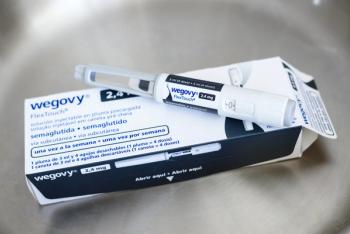
Eric Lawitz, MD, explains how pharmacists can raise liver risk with patients with obesity and why a FIB-4 score from routine blood work is a good first step.
Joe DePinto of McKesson outlines the workflow barriers slowing CGT migration to community oncology, the reimbursement reforms needed to scale access, and the pharmacist’s pivotal role in making it all work.
In an interview with Pharmacy Times, Joe DePinto, head of cell, gene, and advanced therapies at McKesson, outlined the 3 core infrastructure barriers—clinical, operational, and financial workflows—that must be addressed site by site to enable the migration of cell and gene therapies (CGTs) from academic medical centers to community oncology settings, which was discussed at Asembia’s AXS2026 Summit.
DePinto emphasized that as CGTs shift from rare diseases to larger patient populations, the reimbursement system will need to evolve beyond single-case rate agreements, with emerging risk-management models and optionality between buy-and-bill and specialty pharmacy as promising levers. He also highlighted the critical role of the pharmacist across all 3 workflow areas—from formulary and patient selection to standard operating procedures and payer negotiations—as essential to operationalizing CGT delivery at the community level. Throughout the discussion, he emphasized that solving these challenges is a team sport that requires collaboration across multiple organizations, payers, providers, and biopharma partners.
Pharmacy Times: What is the primary infrastructure barrier preventing the shift of CGT delivery from academic centers to community oncology practices?
Joe DePinto: When we think about the infrastructure barriers involved in the migration of cell and gene therapy from academic centers to the community—and we have been involved in this from the beginning, which is now many years—it comes down to 3 key areas: time, effort, and the plan. We have to address certain components of this migration at the individual site level. Whether it is a community hospital or a community clinic, we need to understand what clinical workflows need to be changed or added, what the operational workflows are, and what the financial workflows look like. Then the question becomes: how do you coordinate and sequence that activity? What I mean by that is, what is most important to individual providers of health care, and how do you sequence it? Do you work on the clinical workflow first, the financial workflow second, and the operational workflow third? That could differ site to site, but those are the 3 workflows that must be addressed before embarking on delivering cell and gene therapy.
There are a variety of groups working on this now, especially as we sit at the precipice of cell and gene therapy moving from rare diseases and smaller patient populations to larger ones. The Alliance for Regenerative Medicine has a community working group, and there are industrywide organizations developing different playbooks to operationalize and execute this migration from academic centers to community centers. It is a hot topic in the marketplace. I wish I could say there is one right answer. I do not believe that is the case, but I do believe that, like anything in cell and gene therapy, it is a team sport. It will take multiple organizations aligning to address it. And it all comes back to time, effort, and the plan.
Pharmacy Times: As CGTs move from rare diseases to larger patient populations, what must change to ensure the reimbursement system doesn’t collapse under the volume?
DePinto: We talked a great deal about reimbursement challenges at the Asembia panel. When you think about the current commercial environment for cell and gene therapy, much of it is administered in academic centers and reimbursed through single-case rate agreements. The question is whether that model continues as these therapies move from small, rare-disease populations to larger ones—and as delivery shifts to the community setting. We discussed the cost density of these products: a 1-time treatment, a reimbursement event, and then a durable benefit over time. More and more 3- to 5-year follow-up data—especially for the earlier patient populations treated with some of the first [chimeric antigen receptor T-cell] therapies—is beginning to be reported publicly. It also comes down to risk management.
At the Asembia panel, we had Will Schrank from Aerodyne, the founder and CEO, who is looking at how to build a payer and provider network to manage the risk associated with these complex therapies. That is an innovative and emerging area. Another theme that came up in the reimbursement discussion was raised by Dr Navneet Majhail, the physician in charge of blood cancers at HCA and Sarah Cannon Cancer Institute. He spoke about optionality in the value chain—specifically, the ability to use buy-and-bill or specialty pharmacy to obtain the product—and his preference for having that choice based on payer mix, patient mix, and the practical ability to treat patients who need these products. There are many different areas people are exploring, but it all comes back to working within the existing reimbursement system and refining it in a way that allows it to scale as the patient populations grow and unmet need is addressed.
Pharmacy Times: Is there anything you would like to add?
DePinto: The pharmacist plays an important and critical role in cell and gene therapy [CGT]. When we talk about operationalizing CGT, you really need to understand the clinical workflow, the operational workflow, and the financial workflow—and because of the depth and breadth of their training and experience, pharmacists are uniquely positioned to contribute across all three. On the clinical side, pharmacists can help with product selection, formulary decisions, and appropriate patient selection.
On the operational side, they can help define the standards that treatment centers need to meet—the SOPs and service-level agreements—and ensure the drug gets to the patient within the confines of the treatment center. On the financial side, pharmacists can support payer discussions, negotiation, and prior authorization efficiencies and work closely with revenue cycle management teams at these organizations. As we think about the pharmacist’s role in cell and gene therapy, it is a critical one—helping more patients gain commercial access to these truly groundbreaking therapeutic interventions.