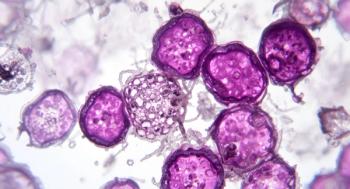
Evidence suggests that psilocybin-assisted therapy for those who have not responded to standard interventions may be beneficial.
Pharmacy Practice in Focus: Oncology
Pharmacy technicians enhance safety and efficiency in hazardous drug compounding.
Pharmacy technicians have been involved in drug compounding, particularly with hazardous agents, for the past several decades. Prior to this, nurses were the primary hospital-based personnel who compounded sterile products.1 In the 1960s, with advocacy from the pharmacy profession, sterile compounding within pharmacies became the standard.2 The increased complexity of hazardous drug (HD) aseptic compounding expanded the need for specialized drug preparation within pharmacy sterile compounding areas and, therefore, trained staff.1 In the 1980s, the American Society of Health-System Pharmacists recognized the need to train pharmacy technicians and created accredited programs for sterile compounding.3 Since then, overseeing sterile drug compounding is a pharmacy practice, with technicians serving as the primary personnel performing the task.
With expanded compounding responsibilities, concerns about the risk of occupational exposure to HDs led to the development of guidelines by organizations such as the Occupational Safety and Health Administration and, later, the American Society of Clinical Oncology.4,5 These guidelines emphasized that only trained personnel, including pharmacy technicians under pharmacist supervision, should prepare HDs, and that appropriate engineering controls, closed system transfer devices, and personal protective equipment must be used.4,5
In 2004, the United States Pharmacopoeia (USP) published Chapter <797>, which set the enforceable standards for sterile compounding.6 That same year, the National Institute for Occupational Safety and Health (NIOSH) released the first version of the HD list.7 This list identifies drugs that pose potential risks to health care workers due to their carcinogenicity, teratogenicity, reproductive toxicity, organ toxicity, or genotoxicity.7 More recently, in 2016, USP published Chapter <800>, which addresses the handling of HDs through the entire medication use process.8
The regulatory landscape continues to change as newer therapies and modalities become commercially available; however, pharmacy technicians continue to be integral in the compounding of hazardous medications. Although there are a plethora of resources related to the safe handling of HDs—despite laws to enforce safety standards and major health care societies endorsing these regulations—there remain several gaps in practice related to technician compounding of HDs.9
Technicians are well versed in compounding practices because they perform the detailed tasks of aseptic manipulations involved during the regular preparation of sterile products. This experience lends itself to practical experience regarding the compounding of HDs, including those that utilize closed-system transfer devices. Specialized skills and training are required for personnel involved in preparing or checking compounded sterile products; becoming a certified pharmacy technician provides one method for acquiring these skills.10,11 Technicians develop a high level of skill in handling these drugs due to their extensive hands-on experience, which often exceeds that of pharmacists. Technicians are also well versed in utilizing myriad HD attachments required for compounding and are more likely to recognize potential issues with these attachments on the frontline.
The utility of the technicians’ practical knowledge base is an asset that should be further investigated, expanded upon, and effectively utilized. As demonstrated by a sterile compounding training and competency program at a large, multisite academic medical center, pharmacy technicians can be incorporated into compliance programs that help address increasing regulatory requirements and the expansion of organizational programs.12 Pharmacy technicians also play pivotal roles in the training of pharmacists. Newly hired employees, recent graduates, and resident pharmacists are often paired with technicians to be trained in the operational aspects of their responsibilities. Compounding sterile and nonsterile HDs is often incorporated into this training, as technicians have the most experience in this area. Although often underrecognized for their contributions, pharmacy technicians have been shown to play a critical role in the sterile compounding training of resident pharmacists and should, ideally, be acknowledged as preceptors.13
Technicians understand the medication use process, and their skill set has utility in onboarding medications, developing standard operating procedures, and training other colleagues. When technicians are involved in the full scope of the medication use process, particularly as it relates to HDs, they can also advocate for themselves in terms of both safety considerations and professional skill development. Incorporating technicians into the onboarding process for HDs and advanced therapeutic modalities can also provide a platform for their career advancement, which could lead to expanded roles for the technician(s).14
As cellular and gene therapies (CGTs) are being adopted by organizations at an increasingly rapid pace, the role of pharmacy technicians should be reconsidered. The preparation of CGTs can take several hours, from equipment setup to finished product. Additionally, there is currently no standardized process for assigning either a pharmacist or technician to coordinate and compound these medications. As the movement of these therapies transitions from inpatient to outpatient settings, pharmacy technicians assisting with the preparation of CGTs must be considered. The benefit of having pharmacy technicians compound CGTs not only generates cost and time savings, but also utilizes the experience of the technician in the preparation of the products from a practical perspective.
Advancing pharmacy technician roles in HD compounding can facilitate the professional development of technicians and advance the organization’s HD program overall. Per USP <800>, organizations are required to develop a hazard communication program to protect health care workers as HDs are handled throughout the medication use process.8 Facets of the program include a written plan on implementing standards, ensuring staff are adequately trained before working with HDs, and developing robust standard operating procedures. Technicians can and should be involved in all aspects of this program, and the opportunity should be afforded to them to do so.
Another method to promote and advance technician roles includes organization-funded certifications for career advancement and the development of a career ladder.12,15 Offering to cover the costs of the compounded sterile preparation technician certification process would encourage more technicians to pursue that credential. Incentive pay, or an hourly differential, for maintaining certification or for working in specialized areas is likely to benefit both the individual technician and the institution, as it will raise the overall level of training and expertise of its staff. There are no published position statements from pharmacy organizations or survey data regarding hazard pay for technicians who compound HDs. Compensation for this work is typically institution-specific and is not addressed by national workers' unions or published workforce statistics.
A Dutch study, from 2020, found that technicians handling HDs, particularly during preparation tasks, had some exposure to HD residue from the outside of chemotherapy vials.16 While one solution should include institutional enforcement of appropriate PPE use, as newer therapies evolve, it may be hard to predict the types of future exposures that could take place. In this setting, it may be necessary for institutions to consider providing hazard pay for certain shift types or responsibilities.
In the same vein, technicians involved in HD compounding and handling should also be afforded the option to participate in a medical surveillance program. Medical surveillance is a recommendation per USP <800> if health care workers handle HDs as part of their regular job assignment.8 The foundation of these recommendations relies on consistency in identifying which medications are considered hazardous. Although the NIOSH list of HDs was recently updated, it did not include CGTs, leaving institutions to perform assessments of risk for each agent.17 This opens the door for inconsistencies between health care systems and may leave technicians and other health care workers without appropriate protection. Additionally, organizations such as the Oncology Nursing Society and the Hematology/Oncology Pharmacy Association recognize that HDs and biohazardous agents are continually evolving therapies. They emphasize the importance of standard-setting organizations maintaining and updating lists of HDs to help ensure ongoing protection of health care workers.18
As more HDs and advanced therapeutic products are onboarded at organizations, the creation of a dedicated HD technician specialist can be immensely helpful in ensuring safe and consistent practices are followed. Pharmacy technicians should have the opportunity to spearhead the coordination, training, and compounding of these medications. CGT products can take several hours for a pharmacist to coordinate, organize equipment, thaw (if applicable), compound, clean biological safety cabinets, and complete documentation. The amount of time for pharmacists to complete these tasks is more expensive for an organization, and therefore, utilizing pharmacy technicians’ expertise can reduce costs. Additionally, the role of pharmacists continues to evolve, presenting opportunities for technicians to expand their scope as well.
Pharmacy technicians have long been integral in the HD use process. As we look toward the future, we must recognize the contributions technicians have made in the past and acknowledge their role in the future of HD compounding. To ensure continued success and safety, we must also consider expanding the role and scope of technicians to reflect their growing responsibilities. With this expansion, it is essential to provide appropriate training, support, and fair compensation to match technicians’ evolving contributions to the pharmacy team.
REFERENCES