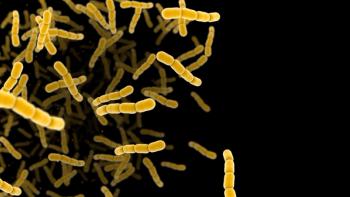
A suspected plague death in Russia has renewed attention on the rare infection. Here's how to spot pneumonic plague, and which antibiotics the CDC recommends.
As the new chair of the Advisory Committee on Immunization Practices (ACIP) signals interest in revisiting childhood and adolescent vaccine schedules, immunologist Morgan McSweeney, PhD, stresses that any changes must be anchored in decades of rigorous safety and efficacy data.
As the new chair of the Advisory Committee on Immunization Practices (ACIP) signals interest in revisiting childhood and adolescent vaccine schedules, immunologist Morgan McSweeney, PhD, stresses that any changes must be anchored in decades of rigorous safety and efficacy data—not ideology. In this interview with Pharmacy Times, McSweeney explains why evidence-driven principles, transparent expert review, and real-world population outcomes are essential to safeguarding public health, and clarifies what current immunology research shows about vaccines, early immune development, and allergy risk.
Q: The new ACIP chair has referenced reexamining childhood/adolescent vaccine schedules. What scientific principles and real-world data must guide any changes to those schedules to avoid compromising public health?
Morgan McSweeney, PhD: In normal circumstances, I'd actually be OK with someone saying, “OK, we're going to rigorously evaluate the childhood vaccine schedule and see if there's anything we can do to improve it, to make it safer, to make it more effective.” And when I say normal circumstances, I mean where I trust that the people who are going to be doing that review are going to do so in a rigorously evidence-based way. Unfortunately, what we've seen with RFK [Robert F. Kennedy] Jr's vaccine panel [is that] he kicked out all the actual experts in the field with decades of experience [and] put in an entirely new group of people who just happened to agree with his ideas about the COVID-19 pandemic and COVID-19 vaccines, who don't have much deep expertise in evaluating vaccine data, and who have shown that they don't want to even hear from people who do have that expertise. For example, not allowing career CDC scientist experts to present at the meetings. They don't even want to hear the evidence at these meetings. So my concern is that while I'm OK, in principle, with the idea of evaluating the childhood vaccine schedule, seeing if there maybe is anything that can be done to improve it, in practice, what I fear would happen is they may recommend changes based purely on opinion, not rooted in data, to the detriment of the health of children for no good reason.
Here, I see the burden of evidence, the burden of proof being on any recommended changes. We have decades of data showing in very great detail the safety profile, the risk profile, the benefit in efficacy, and the reduction of risks from all of these different things that we protect against with vaccines. There's a really large amount of data showing what we're doing now, how well it works right now, what are the risks associated with that. What I wouldn't want to do is abandon that very well-understood approach and move to something totally experimental, based on someone's hunch, based on one observational study they read that supported their preexisting opinion. That's what I'm afraid will happen.
Q: Some discussions have raised concerns about vaccines contributing to allergies. How does current immunology research understand the relationship between early-life immune system priming and the development or prevention of allergic disease?
McSweeney: There are a few things we know a lot about when it comes to risk for allergies for kids, including vaccines, including foods, including other exposures, through the lungs or through the skin, and what does or does not increase risk for allergies, including specific vaccines, including like aluminum in vaccines. All these things—you won't be surprised—they've all been studied in great detail. There are a few things we know that do contribute to allergies. First of all, I should say vaccines don't increase risk for allergies, and there are some very clear data, both from specific vaccines and overall.
There was a very big study actually published this year, 2025, with 1.2 million children out of a big health system in Denmark, specifically looking at the question of aluminum, which is commonly claimed to be potentially increasing the risk of allergens for children. And what they showed was that there was zero relationship between the cumulative dose of aluminum that children got from vaccines and risk for not only allergies, but also autoimmune disease, also autism spectrum disorder and other neurological manifestations. [It’s a] really big data set showing that vaccines don't influence your risk for allergies in that respect.
What we do know influences risk for allergies is other types of exposures. So, for example, early and frequent exposure to food allergens decreases risk of those food allergies later in life. This is something that the scientific community got wrong initially, actually, and has since updated its opinion. For a while, parents were told to maybe stay away from peanuts, for example, because we don't want to accidentally sensitize your child to peanuts. Turns out they actually studied that pretty rigorously and found, well, the data are actually showing that if you introduce peanut allergens earlier and more consistently, you can get something like an 80% reduction in odds of peanut hypersensitivity. And so there has to be some humility in the scientific process, where, when you do get new data that show that what you used to recommend was wrong, you update your opinion. You tell parents, “Sorry, that's wrong. This is what we now believe based on the best quality evidence is correct.” So, you know, obviously, this is a discussion to have with your pediatrician. But what I suspect they're going to tell you is that early and frequent introduction of allergens is a safe way to do it, and they'll tell you how to do it. For example, you're not going to hand a peanut to your 4-month-old. It's going to be some type of peanut powder that you introduce into bottles or purees or whatever it might be.
The other things that we know influence risk for allergies in kids are like skin sensitization. If you have damage in your skin barrier and you have inflammation there, and then you introduce potential allergens onto that broken and inflamed skin surface, whether it's from a cream or a lotion or whatever it might be, in the context of that sort of inflamed circumstance, that may be one route for increasing risk for allergies to some things. Same thing with the airways, and there are a lot of things that factor into this. This is obviously people's entire career studying this. But when there are more pollutants causing inflammation in the airways, that changes the context in which these allergens are presented to your immune system, [and] maybe that shapes risk for allergies. There's still a lot of unknown in this. What is known pretty clearly, though, is that vaccines don't increase the risk for allergies.