
Experts on Lp(a) testing, statin myths, cognitive safety, and the 2025-2030 Dietary Guidelines share counseling points from the National Lipid Association's Fall Clinical Lipid Update meeting.
Experts on Lp(a) testing, statin myths, cognitive safety, and the 2025-2030 Dietary Guidelines share counseling points from the National Lipid Association's Fall Clinical Lipid Update meeting.
A lipidologist outlines how PREVENT, coronary calcium scoring, and restored LDL-C targets guide personalized lipid therapy and where pharmacists fit in.

When even federal guidance sparks debate, an expert advises pharmacists to consider the source and point patients to long-standing healthful eating.
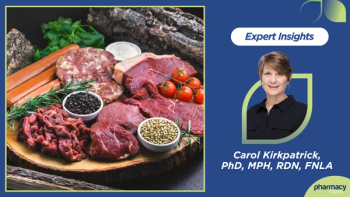
From red meat to 'big and fluffy' LDL, a lipid expert unpacks fat and cholesterol misconceptions that persist among patients and clinicians.
Validating patient concerns and then reframing them around stroke prevention can help pharmacists counsel patients who worry that statins harm memory.
Alexander Turchin, MD, MS, recommends shared decision-making, time-limited lifestyle trials, and gentle persistence to move patients toward statins.

A lipidologist traces patient fears to 2012 FDA label language and reviews observational and randomized data showing no cognitive harm from statins.
An expert explains why plant-based cooking oils remain the NLA's recommendation for patients at cardiovascular risk, despite new federal advice.
Pharmacists can prompt once-in-a-lifetime Lp(a) testing, reinforce statin adherence, and put muscle aches in context, according to the NLA president.
An expert outlines the new emphasis on protein, whole grains, and added sugars in the guidelines—and why some shifts call for careful counseling
Lp(a) guidance trailed low-density lipoprotein (LDL) cholesterol by decades, but the NLA, ESC, EAS, and now ACC/AHA advise testing all adults at least once, says Dinesh Kalra, MD.
From lifestyle-only approaches to fears about memory, an expert outlines the statin misconceptions pharmacists are most likely to hear.
Cheeley maps out the resources—courses, certifications, communities, and a retail pharmacy call to action—that can take any pharmacist deeper into lipid management.
Cheeley takes listeners inside her clinical decision-making process—from statin intolerance to PCSK9 inhibitors to omega-3s—and explains why patient buy-in is as important as the prescription itself.
Correcting the misinformation around statins and cardiovascular disease, and reframing Lp(a) as a genetic condition, not a personal failure, can be a powerful clinical tool.
From prior authorization barriers to population health gaps, Cheeley explains why adherence — not initiation — is where pharmacists can make their biggest impact.
New 2026 lipid guidelines push earlier screening, PREVENT risk scoring, and tougher LDL/ApoB targets with expanded nonstatin options.
Mary Katherine Cheeley, PharmD, BCPS, CLS, FNLA, highlights key data and events at the 2026 NLA Scientific Sessions.
Joseph Saseen, PharmD; and Joel C. Marrs, PharmD, discuss key updates in the 2026 dyslipidemia guidelines and their implications for clinical and pharmacy practice.
2026 dyslipidemia guideline updates highlight earlier risk-based lipid management, expanded biomarker use, and a growing pharmacist role in cardiovascular prevention.
Joseph Saseen, PharmD, addresses statin intolerance and misinformation and provides a look at aggressive new LDL targets and emerging therapies not yet captured in the 2026 guidelines.
Joseph Saseen, PharmD, explains the 2026 dyslipidemia guidelines' push for universal lipoprotein A screening, clarifies when apolipoprotein B testing adds value, and outlines how new FDA-approved therapies fit into the updated lipid-lowering treatment algorithm.
Joseph Saseen, PharmD, breaks down how the new PREVENT ASCVD calculator improves on its predecessor and what the expanded LDL-C goal framework means for treatment decisions in pharmacy practice.

Expert consensus highlights more than a decade of advances in screening, diagnosis, and treatment of familial hypercholesterolemia.

The National Lipid Association aims to enhance the science and practice of lipidology and promote optimal cardiometabolic health.