Study investigator David Berg explains why volume overload shouldn't decide which hospitalized patients get an SGLT2 inhibitor.

Cheeley maps out the resources—courses, certifications, communities, and a retail pharmacy call to action—that can take any pharmacist deeper into lipid management.
Mary Katherine Cheeley, PharmD, BCPS, CLS, FNLA, makes a direct pitch to pharmacists who want to specialize in lipids: start with the National Lipid Association. She highlights the NLA's Foundations in Lipidology course, Lipid Scholar trainee program, and ABCL certification pathway as the field's most accessible on-ramps and points to the NLA's culture of genuine multidisciplinary collaboration as something she hasn't found anywhere else. She closes with a challenge to retail pharmacists specifically—to use their unique patient access to close adherence gaps, counter statin misinformation, and connect patients back to their providers before cardiovascular disease advances further.
Q: For pharmacists who want to build deeper expertise in lipid management, what resources, certifications, or professional communities — including what the NLA itself offers — would you point them toward?
Mary Katherine Cheeley, PharmD, BCPS, CLS, FNLA: As a pharmacist coming out of residency, I was so impressed with how welcoming the National Lipid Association was. When you think about cardiology and lipids, you think about the ACC; you think about the AHA. I want people to start thinking about the NLA, because the NLA is so multidisciplinary in everything it does. I had the pleasure of co-chairing the NLA’s paper on multidisciplinary care in cardiometabolic disease. I work with some amazing physicians, dietitians, APPs, and nurses. There’s no other organization that gives you that exposure. There’s no other organization that would say, “Hey, you’re a pharmacist — come on in, here’s a paper you can write, here’s your team.”
The NLA also has a Lipid Scholar program for trainees who really want to get involved and learn more. You get membership, you get assigned a mentor, you have your own process, you have the ability to publish and do podium presentations. If lipids are your passion—like they are for the rest of us giant lipid nerds—the NLA is where you need to be. As a pharmacist, I would never have been given the opportunities in any other organization that I’ve had in the NLA.
If you want to get certified, the American Board of Clinical Lipidology (ABCL) is also a great resource. They have self-assessment programs and additional content to help you get more familiar with the field. One thing I also love about the NLA is their Foundations in Lipidology course. It’s really cool—you go back to a classroom setting, taught by giants in the field, with maybe 20 or 30 people in the room. You get to talk to people who are the coolest nerds you’ll ever meet and also incredibly smart. They break it down in a way where you can actually understand it, learn how to teach your patients about it, and really get into the nitty-gritty of how this works. The science has advanced so much over the last 10 to 15 years that anyone who wants to get involved in lipids—I say go to a Foundations course. They’re usually right before the NLA meetings, and if you’re a trainee, you have access for a lower cost or for free depending on your status. They also have a Master’s course. I took the Foundations course when I was starting out and have never attended the Master’s course, but by all accounts, it is phenomenal.
I also think there’s an amazing community of pharmacists in this space—there are at least a dozen of us I know of in the United States who all congregate together and do this together. If you’re really interested in lipids, go to the NLA website, use Find a Provider, filter for pharmacists in your area, and get in touch with one of us. We are all really happy to get involved. I’ve also noticed that APhA, ACCP, and ASHP are having a lot of content around lipids now too. It’s just really cool to be involved in an organization where you can stand shoulder to shoulder with giants in the field—with physicians, APPs, nurses, and dietitians—and really truly work as one team. That’s not always the case. When I’ve gone to ACC, I don’t feel that way as a pharmacist. At NLA meetings, I feel like a complete equal and a huge part of the team.
Q: Is there anything you’d like to add?
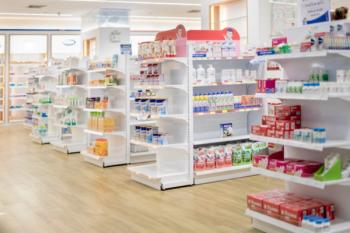
Cheeley: In my role as Executive Director of Ambulatory Pharmacy, I oversee all of our retail pharmacies at Grady. I think there is a huge gap in our retail space — not just in education, but in identifying specific issues patients are having with their meds and encouraging them to go talk to their providers. We know that statin intolerance is a real thing. We know that patients have a lot of thoughts about it. They’re going to go to the pharmacy counter and say, “I don’t really like this medicine, but I want this over-the-counter option — can you help me?” Those are instances where we can make huge educational differences for patients and encourage them to go talk to their doctor.
Providers don’t always have full visibility. If they’re not in an integrated health system, they may not know that their patient’s PDC for their statin is poor — they just know they prescribed it. If they’re not in an accountable care organization, they may not understand the weight placed on statin measures, or on adherence to statins in persons with diabetes. Those are instances where we can make not just a medication difference, but an overall disease management difference for patients. These drugs are easy to take, they are super safe, but for some reason they get this bad rap — and our patients need education on that. We as pharmacists are the right place for them to get it.
It’s really hard at the retail counter — I completely understand that — but there’s a way we can make a difference. “I want to jot this note to your provider — do you mind bringing this to them?” Or: “I noticed you’re a little bit late on your fills. Is there something I can help you with, or some barrier?” Just opening up that space for patients to have time to talk. A lot of that can also be done over the phone. It’s hard at the window when there are six people in line behind you — I feel that pain — but this is going to make a huge difference from a public health and population health standpoint. For some reason, we have all these drugs and all this amazing science coming out, and we still cannot get a handle on ASCVD. I can’t quite understand why, with all the tools in our toolbox — but I know we can get there. It’s just going to take some education and some buy-in from pharmacists to make that difference.