

The Cleveland Clinic team's real-world findings presented at ESC 2026 are hypothesis-generating and need prospective confirmation but point to a low threshold for OSA screening.
The Cleveland Clinic team's real-world findings presented at ESC 2026 are hypothesis-generating and need prospective confirmation but point to a low threshold for OSA screening.

Milind Desai, MD, MBA, explains the domino effect linking obesity, obstructive sleep apnea, and hypertrophic cardiomyopathy—and why treating obesity may break the chain.

A landmark joint guideline on cardiovascular-kidney-metabolic syndrome offers clinicians a comprehensive, stage-based road map for screening, prevention, and treatment of an increasingly prevalent interconnected condition.

Joseph Saseen, PharmD; and Joel C. Marrs, PharmD, discuss key updates in the 2026 dyslipidemia guidelines and their implications for clinical and pharmacy practice.
2026 dyslipidemia guideline updates highlight earlier risk-based lipid management, expanded biomarker use, and a growing pharmacist role in cardiovascular prevention.
Pharmacists play a central role in shared decision-making by guiding patients through lipid-lowering options, cost considerations, and ongoing monitoring aligned with updated dyslipidemia guidelines.
Pharmacists can improve statin adherence and refine triglyceride management by leveraging patient-centered counseling, adherence strategies, and updated guideline recommendations prioritizing statins and targeted adjunctive therapies.

Pharmacists play a central role in implementing new dyslipidemia guidelines, including ApoB testing, earlier risk assessment, and expanded use of combination lipid-lowering therapy.

A FINEARTS-HF subgroup analysis shows patients with HFpEF and comorbid sleep apnea face a 43% higher adjusted cardiovascular risk.
Evolocumab produced a 31% relative risk reduction in major cardiovascular events.
SCOUT-HCM trial showed that mavacamten reduced left ventricular outflow tract obstruction in adolescents with obstructive HCM.
The CADENCE trial showed that sotatercept reduced pulmonary vascular resistance and improved right ventricular function in CPC-PH.

Finerenone consistently reduces heart failure events and cardiovascular death regardless of ischemic heart disease history, according to the FINEARTS-HF trial.

The KARDINAL trial demonstrated meaningful angiotensinogen reduction with a novel monthly injectable therapy.
The 2026 guidelines bring clinically meaningful updates to specific LDL-C targets, risk calculation, earlier intervention strategies, and expanded use of ApoB.

Emerging therapies, AI, and patient-centered approaches are reshaping cardiovascular pharmacy.
Artificial intelligence is emerging as a vital tool for pharmacists in cardiovascular care—supporting clinical decisions, patient education, and adherence while maintaining guideline alignment.
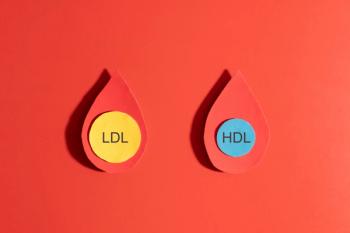
New American College of Cardiology/American Heart Association dyslipidemia guidelines reset LDL goals, add PREVENT risk scoring, and expand Lp(a)/apoB testing for earlier, tougher prevention.
Despite persistent gaps in cardiovascular risk management, pharmacists are proving essential in improving LDL control, guiding statin use, and supporting evidence-based care across clinical settings.
Pharmacists have become central to titration, access, patient education, and logistics as GLP-1 use grows and cardiometabolic management evolves.
Experts discuss guideline adoption, therapeutic advances, and team-based care.
Experts discuss practice expansion, guideline updates, and team-based care.

The guideline establishes a novel clinical classification framework and recommends direct oral anticoagulants over vitamin K antagonists for eligible patients.

Experts Craig Beavers and Kristen Campbell discuss what pharmacists should know heading into ACC 26.
Biykem Bozkurt, MD, PhD, FACC, highlights the need for reliable activity monitoring in heart failure care, addressing challenges of digital wearables in clinical practice.
Discover how objective activity monitoring with accelerometers transforms cardiovascular risk assessment and treatment evaluation, enhancing patient care for pharmacists.
A new wrist-worn accelerometer device effectively monitors activity levels in heart failure patients, revealing critical insights into cardiovascular health.
Shoa Clarke, MD, PhD, discusses the need for improved cholesterol testing and treatment in young adults, emphasizing the vital role of primary care teams and pharmacists in early intervention and adherence.

William Van Decker, MD, discusses the key priorities of the upcoming ACC Legislative Conference, including telehealth, cardiovascular rehab, prior authorization reform, and the role of pharmacists in shaping patient-centered cardiovascular policy.