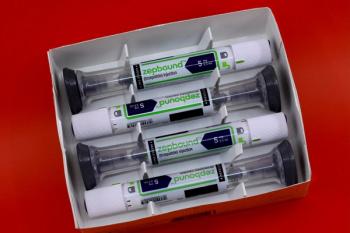
A Novo Nordisk-funded claims analysis of adults with type 2 diabetes found an adjusted HR of 1.06 for MACE with switching, though the findings cannot show causation.
Finerenone consistently reduces heart failure events and cardiovascular death regardless of ischemic heart disease history, according to the FINEARTS-HF trial.
Heart failure with mildly reduced or preserved ejection fraction affects millions of patients and has historically been one of cardiology's most difficult treatment challenges. At ACC 2026, Pharmacy Times spoke with Jawad Butt, MD, PhD, from the Department of Cardiology at Copenhagen University Hospital and research fellow at the University of Glasgow, about finerenone's mechanism, the FINEARTS-HF trial (NCT04435626), and what a key subgroup analysis means for clinicians managing patients with both heart failure (HF) and ischemic heart disease (IHD).
Pharmacy Times: Can you discuss the current treatment landscape and burden of heart failure with mildly reduced or preserved ejection fraction (HFpEF)?
Jawad Butt, MD, PhD: The burden of heart failure with mildly reduced or preserved ejection fraction is substantial. In the US alone, more than 3 million people live with this condition. It carries a significant burden not only for individual patients but also for society and the healthcare system as a whole. These patients face a meaningfully higher risk of hospitalization, a higher risk of dying from heart failure and other causes, and a significantly reduced quality of life.
Pharmacy Times: Can you briefly explain what finerenone is and why it was studied in a condition that has historically been so difficult to treat?
Butt: Finerenone is a non-steroidal mineralocorticoid receptor antagonist. It works by blocking overactivation of the mineralocorticoid receptor in the heart, vasculature, and kidneys. It was studied in the FINEARTS-HF trial, which enrolled patients with HFpEF and evaluated the efficacy and safety of finerenone compared with placebo in this population.
Pharmacy Times: What were the key findings from this subgroup analysis, and what does it mean clinically that ischemic heart disease did not modify the treatment benefit?
Butt: In the overall FINEARTS-HF trial, finerenone significantly reduced the risk of the primary outcome—a composite of total heart failure events and cardiovascular death—compared to the placebo. In this analysis, we examined the treatment effect according to the history of IHD, and we found that ischemic heart disease did not modify that effect. In other words, finerenone reduced the risk of the primary end point as well as HF events in patients both with and without a history of ischemic heart disease.
Pharmacy Times: Were there any safety signals that differed between patients with and without ischemic heart disease?
Butt: In the overall trial, finerenone was associated with increases in creatinine levels, as well as increased risks of hyperkalemia and hypotension. Importantly, finerenone also significantly reduced the risk of hypokalemia. In this subgroup analysis, those safety signals were entirely consistent regardless of IHD history—no meaningful differences were observed between the 2 groups.
Pharmacy Times: For clinicians treating a heart failure patient who also has ischemic heart disease, what is the practical takeaway from this analysis?
Butt: Managing patients with HFpEF is inherently complex. These findings are important and reassuring because they simplify clinical decision-making considerably. We now know that finerenone works—in patients with and without ischemic heart disease, in older patients, and across different frailty strata. That consistency across key subgroups makes it much easier for clinicians to feel confident applying these findings to the patients in front of them.