
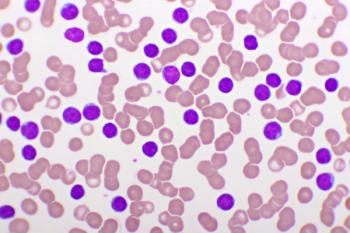
The MRD-guided treatment approach has a significant advantage over chemotherapy.
The MRD-guided treatment approach has a significant advantage over chemotherapy.

It can also help identify patients who would benefit from disease-specific therapies.

Data support the quadruplet regimen as a new standard of care for transplant-eligible patients.
Public Health Pharmacist discussed wearable technology and AI assisted technology that was displayed at the 2024 Consumer Electronics Show

Significant study results could inform clinical practice strategies.

Presentations detail clinical trial results and focus on drugs in the pipeline.

2023 was an impactful year for the field of oncology pharmacy.

In the Augment-101 phase 2 study, 63% of patients experienced overall response rate with revumenib.
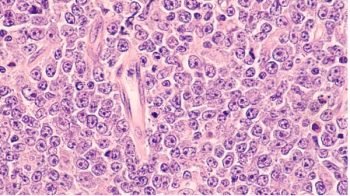
This therapeutic could work for diseases of the B cell receptor signaling transduction pathway that do not respond well to single-agent BTK inhibitor.

According to the findings, the use of venetoclax, as well as other new therapies, improved overall survival from 28.6% to 45.3% in non-Hispanic Black patients with AML.

Expert discusses positive, real-world findings from a claims-based study looking at this therapeutic.

Investigators will evaluate prophylactic tocilizumab prior to treatment with teclistamab.

Douglas Warner, MD, chief medical officer at eFFECTOR, provides a comprehensive overview of zotatifin and its current status in a Phase 1/2 dose escalation and expansion study, with a focus on ER+/HER2- breast cancer.

Heather McArthur, MD, clinical director of breast oncology at UT Southwestern Medical Center, discusses the toxicities associated with antibody-drug conjugates (ADCs) used in breast cancer treatment at the 2023 San Antonio Breast Cancer Symposium.

There is progress being made regarding research on immunotherapies and the mutation, which adversely affects a higher number of patients in this population.

Troy Bremer, PhD, chief scientific officer at PreludeDx, discusses biosignature model and it's potential in predicting radiation therapy response for those with early-stage invasive breast cancer.

These data support the combination of daratumumab plus VRd followed by daratumumab and lenalidomide maintenance as a new standard of care for transplant-eligible patients.

Compared to placebo plus chemotherapy, quizartinib plus chemotherapy improved OS without significant AEs and impact on QOL in patients with AML.

In a recent study, people who lived in disadvantaged or rural areas were just as likely to receive the second-generation medications as people in urban areas.

However, a survival benefit was observed with using a signaling inhibitor in general for patients with angioimmunoblastic T-cell lymphoma.

The authors note that CAR-T cell therapy could change the treatment standard for patients with DLBCL, who previously had few options if standard chemotherapy treatment was ineffective.
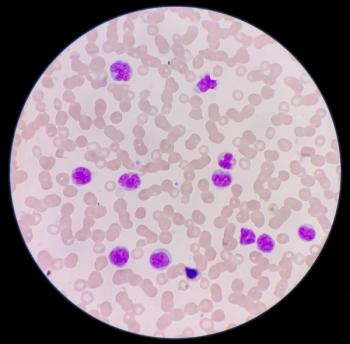
The model may help clinicians identify patients who would benefit from disease-specific therapies or enrollment into clinical trials.

The pharmacist can help patients to manage symptoms throughout the entire treatment journey.

Expert breaks down these findings and more from the GLAMM1 study at the 2023 ASH Annual Meeting.

Only 20% of the patient population were reported as being “very good” sleepers when it comes to sleep disturbances.
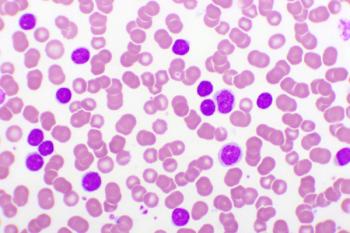
This is the first trial to show that a measurable residual disease (MRD)–guided approach with treatment beyond MRD negativity has a significant advantage over chemotherapy, both in terms of progression-free survival and overall survival.

The study results shine a light on the potential need for further policy changes that promote gender equity and bridge the gap in R01 funding awarded to female applicants.

Median overall survival is set to be more than 2 years, which is more than double the overall survival of current frontline therapies.

He also provides insight for students training in classical hematology, oncology hematology, or oncology pharmacy.
The efficacy of treatments, which is the outcomes in the ideal clinical trial setting, are known to often be better than the effectiveness of those treatments, which are the outcomes of patients in the real-world setting.