

The study findings have implications for the identification of novel pathways with which to selectively target folate-metabolism blood cancers.
The study findings have implications for the identification of novel pathways with which to selectively target folate-metabolism blood cancers.
The president highlights a new curative treatment option for sickle cell disease while also expanding on the changing treatment landscape for hematologic conditions.

Study results indicate insignificant differences between PFS and OS in patients with HR[+]/HER2[-] breast cancer who received either palbociclib-letrozole or palbociclib-fulvestrant treatment.

Cole Daniels, PharmD, BCPS, discusses a quality improvement initiative for glycemic outcomes with pharmacist management of insulin.

Tera Moore, PharmD, BCACP, discusses how the integration of pharmacists into team-based models could benefit patient access to care in rural populations.
In an interview at the 2023 San Antonio Breast Cancer Symposium, Ana Ferrigno Guajardo, MD, discussed research into the safety and efficacy of taxane-based chemotherapy use in pregnant patients with breast cancer.

As the use of sequencing, proteomics, and immunopeptidomics increases, more targets will also be discovered, as well as more biomarkers that predict responses to treatments.

Tera Moore, PharmD, BCACP, discusses the principles of trauma-informed care, along with the physiologic response to trauma.

Mara Hofherr, PharmD, a clinical oncology pharmacist at Washington University, highlights key findings of the KEYNOTE-522 trial in comparison of outcomes between Black and White patients with triple-negative breast cancer.

Gabriel Hortobagyi, MD, FACP, professor and chair emeritus of the Department of Breast Medical Oncology at the University of Texas MD Anderson Cancer Center discusses the changes in breast cancer management over the past decade.

Tom Kraus, JD discusses current federal regulatory and legislative issues that impact the practice of health-system pharmacy.
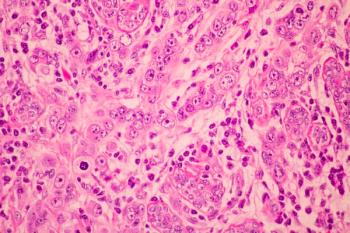
Amelie G. Ramirez, DrPH, MPH, director of the Institute for Health Promotion Research at UT Health Science Center San Antonio, discussed the need for standardized questionnaires for clinicians to discuss social determinants of health with their oncology patients.

The discussion delves into the results and implications of the clinical trials, shedding light on the efficacy and safety profile of this combination therapy.

Improvements in PFS were also seen among patients with brain metastases.

pCR rates were improved with the addition of pembrolizumab regardless of whether patients received the full chemotherapy doses.

MONARCH 3 final OS data show that the combination of abemaciclib and a NSAI in the first-line resulted in numerically longer OS compared to an NSAI alone.

Amanda Hickman, PharmD, MPH, MSCS, discusses the clinical assessment to lower migraines (CALM) in an HSSP setting.

Individuals with HR+ breast cancer could pause endocrine therapy for up to 2 years to become pregnant, without increasing the risk of recurrence.

Patients with an estrogen receptor measure greater than 8% and those with little to no TIL expression showed no benefit with the addition of nivolumab.

Carly Giavatto, PharmD, discusses the CPS conducted study that highlights a first of its kind linkage to care initiative performed by health systems specialty pharmacists.

The investigational combination also delayed the median time to first chemotherapy in all age groups.

Biologic rationale, biomarker precision, and efficacy results in the biomarker-negative population all helped FDA officials decide the final indication.

Evidence has shown that reversing pro-cancer effects requires significant weight loss as well as substantial metabolic reprogramming.

Patients with breast cancer who underwent chemotherapy and skipped RNI did not face an increased risk of disease recurrence or death 5 years post-surgery.

Although PFS was improved in patients with unresectable locally advanced or metastatic HER2-positive breast cancer, OS data were immature, requiring further research.

Mridula George discusses the role of personalized circulating tumor DNA monitoring in predicting the response to neoadjuvant therapy for early-stage breast cancer.

Trastuzumab deruxtecan and elacestrant both represent important new treatment options for subgroups of patients with breast cancer.

Peter J. Siavelis, discusses the role of the InteLogix platform to enable a more rapid response to changes in the pharmaceutical supply chain.
Pharmacy Times will be covering the 2023 San Antonio Breast Cancer Symposium (SABCS), happening December 5 through 9 in Texas.

Jennifer N. Clements PharmD, BCACP, BC-ADM, BCPS, CDCES, FADCES, FCCP discusses the role of Semaglutide and Tirzepatide for type 2 diabetes and obesity